
 There are two key features in successful mystery thrillers: context and plot. In my opinion, context is often the most informative and dramatic element. This book is about two young women in two time-lines: THEN as high school students, and NOW, as post-doctoral researchers in a University medical research laboratory. Given my own background as a biomedical researcher, clearly the context is novel and appealing, the description of lab smells, the equipment, everything is described perfectly. But this is a book about relationships, in particular a friendship complicated by academic competition. And there are dark secrets: a key phrase repeated in the book is “You don’t have a self until you have a secret”. A key progression from dark secrets are lies and then paralyzing “Crime & Punishment” type guilt. Finally, this is a book about women. Highly recommended. Thanks, Karen, for this book suggestion.
Category: Book themes
An Ocean of Minutes – Thea Lim
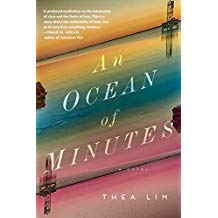 This Giller short-listed first novel is fabulous. The setting is 1980. To obtain medical treatment for her partner who has been stricken with a virulent flu, Polly agrees to time travel 12 years into the future to work for the TimeRaiser Corporation to rebuild America. So this is debt bondage, a form of indentured labour. The issue of time is considered in two ways: more time for her partner and time in the sense of memory. Will Polly be reunited with her partner Frank in 12 years, when he will have aged and she will not? The future is decidedly dystopian and so this book successfully melds several genres: what will you do to survive a pandemic, the dislocating effects of time travel forward and the return to your home, social issues of income inequality, the power of memory and the complexity of enduring love. This is just excellent story-telling.
Songs For The Cold Of Heart – Eric Dupont
 This Giller short-listed book by a Quebec author is hard to describe. It is epic story-telling told with great detail, so there is much content about many many topics. Sometimes I wished that some of the content had been edited out as this is a very long book. Part of the book takes place in Quebec and it is very French-Canadian, with complex family dynamics, wicked nuns, etc. The last half takes place in Berlin and Rome, albeit with characters that are linked by family to the first part of the book. The Lamontagne family is always surprising; the writing is imaginative and often dark.
There There – Tommy Orange
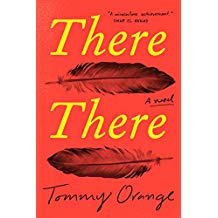 Orange is one of a group of impressive Indigenous authors introduced to me during the Calgary Word Fest. This is a superb first novel with intersecting characters assembling in Oakland for a Pow-wow. These individuals have links to the Cheyenne and Arapaho tribes of Oklahoma but their Indian identity is very limited: these are urban Indians. For example, a young boy, Orvil Red Feather, learns pow-wow dancing from YouTube videos. The intersecting multi-generational story-lines can be complicated to follow sometimes because of uncertain or unknown parentage, but the culminating climax is presented powerfully. This is excellent story-telling about identity, violence and recovery, of belonging and un-belonging, loss and hope.
The Lost Girls of Camp Forevermore – Kim Fu
 Previously, Ms. Fu wrote the very fine For Today I Am A Boy, and this new book is even better. Five young girls (ages 9-11) are stranded in the woods after an overnight kayaking trip, producing some “Lord Of The Flies” crises. This narrative is interspersed with the subsequent lives of the survivors: how are lives shaped by an early traumatic event? How are friendships tested by cruelties and betrayals? This is evocative writing and is highly recommended.
A Gentleman in Moscow – Amor Towles
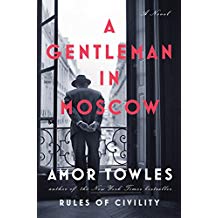 In 1922, Count Alexander Roskov, a member of the Russian aristocracy, is declared an enemy of the state and subjected to “house” arrest in the Hotel Metropol. The description of his demeanour and manners is exquisite and impeccable, hardly surprising for an author whose previous book was Rules of Civility. Alexander creates new and changing relationships with individuals who work in the hotel over the next 32 years. The prose illustrates beautifully the importance of virtues like loyalty. The Soviet Union undergoes dramatic change in this post-revolution period, so Alexander has to be adaptable. The most impactful change occurs when he becomes guardian of a 6-year-old little girl. This is a wonderful book with masterful writing, so a joy to read.
Washington Black – Esi Edugyan
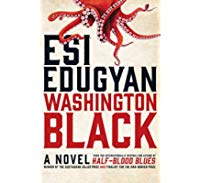 Washington Black is an 11 year old slave in Barbados in 1832; his life is cruel. A chance encounter with the brother (nicknamed Titch) of his Master changes his life entirely. In fact, one of the strongest features of this impeccably written historical fiction is that it is impossible to predict how the story will progress. Washington makes an incredible escape from Barbados with Titch, and then makes journeys to the Arctic, Nova Scotia and England over the next 7 years. The relationship between Wash and Titch unfolds in an unexpected fashion, and there are rich details about marine biology and painting. This is tour-de-force writing from the Giller Prize-winning author of Half Blood Blues, who will undoubtedly be a strong contender for this year’s Giller.
Warlight – Michael Ondaatje
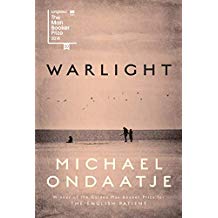 Full disclosure: I have not always been a fan of Ondaatje’s writing; I thought I was never going to get through The English Patient. This book is entirely different because it is enjoyably readable. Warlight is a post-WWII story of Nathaniel, abandoned by his parents at the age of 14 to undergo a bizarre, slightly delinquent upbringing by “guardians”. Ondaatje is a master of withholding in terms of story, so the book essentially is a slow reveal. Why did his mother Rose leave Nathaniel and his sister in the care of a truly odd set of characters, nicknamed The Moth and The Darter? What role did Rose play in the War? There is much left unstated or just left to our wonderment. Masterful writing.
All Things Consoled – Elizabeth Hay
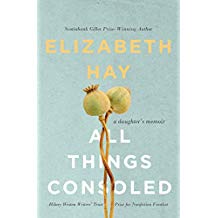 This book is subtitled “A Daughter’s Memoir”, and chronicles the last years of her parent’s lives after relocating from their home to London to a seniors residence in Ottawa. Ms. Hay’s wonderful prose describes her aged mother: “her loose skin hung off her like silken parchment … (her) bare arms were as pitiable as a ballerinas”. The decline in the health of her parents is described in depressing and brutally honest detail, proving once again that growing old is not for sissies. Ms. Hay’s relationships with her parents (and her siblings) is examined thoughtfully, carefully and critically, in particular her often fraught relationship with her tempestuous father. This is very fine writing, introspective and compelling.

