
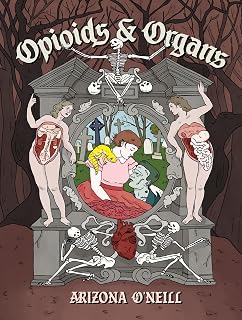
Arizona’s first graphic novel is autobiographical, prompted by the death of her estranged father from a drug overdose. Her surprising designation as next-of-kin meant having to make a dramatic decision about organ donation. This leads to a somewhat obsessive analysis of the ethics of organ donation. Are brain-dead addicts after an overdose serving as a supply of a valuable resource, namely organs? Is there an imbalance between those giving organs and the recipients? This is a moving and often irreverent exploration of grief and family – highly recommended.
Category: Book themes
The Astral Library – Kate Quinn
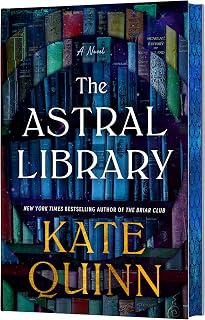
Ms. Quinn has written some superb historical fiction (The Alice Network, The Rose Code). And now for something entirely different: she offers a foray into magic realism. The heroine Alix is a misfit product of parental abandonment and the foster-care system. She takes refuge in a reading room at the Boston Public Library, and accidentally gains entry to the magical Astral Library which permits access to book lovers in need. Patrons in the Astral Library can enter and live inside books; imagine living in Jane Austen’s world in Pride and Prejudice, or in The Great Gatsby! Importantly, this book is a love letter to literature and libraries, with some exquisite book trivia. But there is peril and danger in the form of attacks on the library, requiring original defences. Simply put, this is a great read!
The Keeper – Tana French
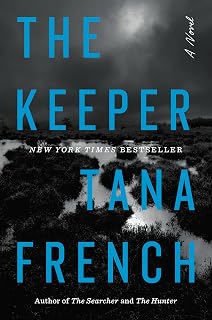
Ms. French is a superb crime writer of some excellent police procedural stories. This third and final book in the Cal Hooper trilogy is entirely different. First, there are only two deaths in this story about a village in West Ireland, one at the beginning and one at the end of a 489-page book. The context is the village; casual dialog reveals subtle conversational codes. And most of the violence comes from rumours, generational grudges and power struggles. A compelling question: what is justice? Finally, the last 8 pages are … perfect.
Taipei Story – R.F. Kuang
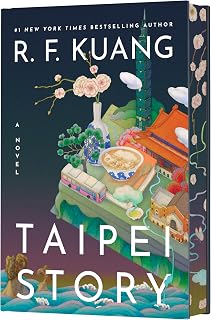
Rebecca Kuang is an extraordinary author, in part because each of her novels uses different genres. In this book, Lily Chen is a Chinese-American Yale student who decides to spend a summer in Taipei in an intensive language program to improve her Chinese. Now, Lily is a young woman experiencing culture shock for the first time, and she makes some epic mistakes. Her program is difficult and her roommate is super annoying. And then mid-program she experiences a personal tragedy, the death of her maternal grandfather (Gonggong) in China which results in a profound identity crisis. Thus, the story is intensely introspective, all about belonging. Some of the writing is transcendent, like attending a piano concert. Overall, an amazing coming-of-age novel about self-discovery and understanding.
Watership Down – Richard Adams
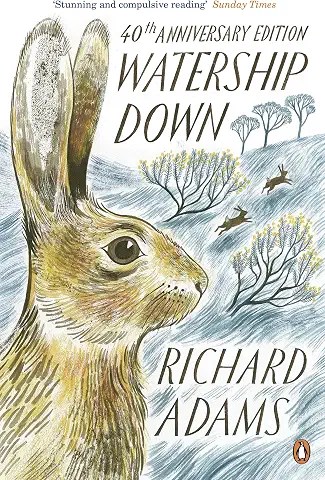
This book was purchased in San Diego in March 1975, and kept because it is a classic. It is a magical story about … rabbits! Brothers Hazel and Fiver and some other rabbits make an epic journey to find a new home Thus, this compelling story is about friendship and leadership, of unexpected heroism and yes, survival. And there is conflict with another rabbit warren, and considerable peril from enemies (elil, from a Lapine Glossary): stoats, cats, dogs, kestrels and humans. Simply put, this is an original spell-binding and often astonishing story. Highly recommended.
The Things We Never Say – Elizabeth Strout
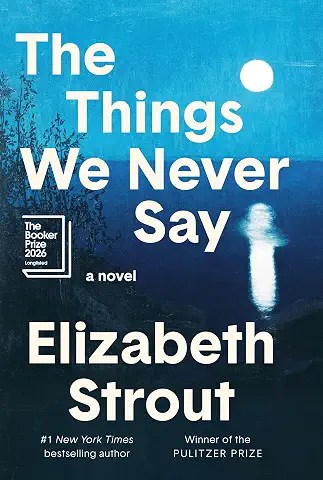
Let me make something perfectly clear: this is a great book, high praise for the author of Olive Kitteridge and other literary masterpieces. The story is often profoundly simple, and there are descriptions of exquisite small events that will take your breath away. Artie is a 57-year-old married high-school history teacher with one son. What happens when he learns a family secret? Has he been living a lie? What does Artie do with this knowledge? Thus, the story becomes a meditation on sadness, loneliness and yes, melancholy; in other words, this is a moving exploration of what it is to be human. And finally, the book title is perfect!
Fahrenheit 451 – Ray Bradbury
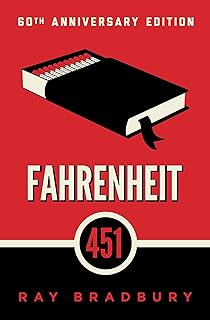
This short novel published in 1953 is prescient in its portrayal of fear and paranoia, markedly influenced by the Cold War and McCarthyism. This is a predictive story, of a future where firemen set fires (and thus destroy books) rather than prevent fires. Why are books hated and feared? Can knowledge in the form of forbidden literature be saved? This is a powerful Orwellian look at a dystopian future that has uncomfortable parallels with our current world.
The Valley Of Vengeful Ghosts – Kim Fu
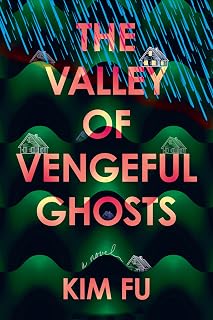
Simply put – Kim Fu is an excellent writer. This is a story of grief and loneliness, of excruciating isolation. Eleanor is increasingly unmoored after her mother’s death. And it is delicious irony that she is a clinical psychologists, ostensibly offering useful advice to virtual clients. The purchase of a new house is an unmitigated disaster. And there are ghosts: what is real? Overall, a troubling and surreal story, so reader – be warned.
The Book Of Lost Hours – Hayley Gelfuso
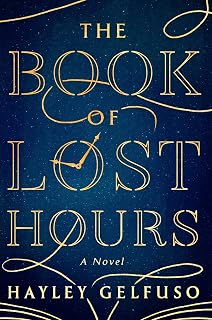
This imaginative book is a fine example of speculative fiction, and thus hard to describe. Imagine a reality where past and present memories are stored in books, in libraries in the “time space”. Timekeepers are tasked with the collection and storage of memories. But what if some memories are considered dangerous? What if individuals can alter time and erase memories, and what if some of these individuals work for nefarious government agencies to alter history? And in fact, this book is also a thriller, with a very complicated love story – highly recommended.

