
David notes in his review of Kiss of the Fur Queen that his intention is to read more indigenous authors, in light of the ongoing issues of reconciliation and appropriation.
I (Amy) have added a new tag, “indigenous author” so that David’s book reviews can be more easily found on this blog. After discussion with David, I have chosen to tag Joseph Boyden and Thomas King as indigenous authors, as they both identify as indigenous. I know there individual arguments for each that their identification is appropriation. An important discussion. In light of the importance of indigenous stories, I’m choosing in this context to go with authorial self-identification.
 A gritty angst-filled guy book set in West Newfoundland. The context – geography and people- is described perfectly. A father and son are paralyzed by grief, so they retreat and psychologically “run away” into a life of drink and anger. The book then becomes a murder mystery with deception and lies and misunderstandings. Annoying behaviour to be sure but the descriptions of the people in a fishing outport trying, usually badly, to have each other’s back is compelling. This is one of Morrissey’s best books.
 Fallis won the 2011 Canada Reads competition with The Best Laid Plans, a very funny book about Canadian politics. This new book is set in Orlando Florida. Everett Kane starts an anonymous feminist blog called Eve Of Equality which becomes wildly popular. Parts of the plot are unrealistic and sometimes predictable, but it is a guilty pleasure to read a feel good novel from time to time.
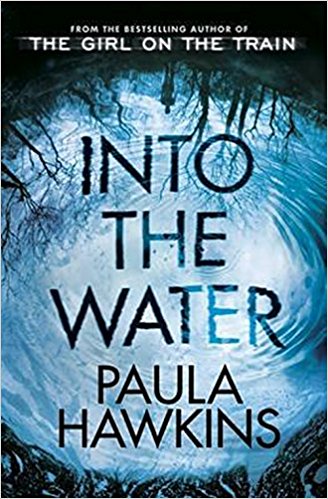 The huge success of The Girl On The Train meant high expectations for Hawkins’ next book, and Into The Water delivers, in my opinion, another well written mystery/thriller. The setting is Northern England, a town with a drowning pool where too many women have drowned over many centuries, usually under mysterious circumstances. Many standard issues are present: lies and deceit and memories that are selective. The key relationship is between two estranged sisters – how did this estrangement begin and how did it evolve? The outcome, aka big reveal, is tantalizing and completely surprising. A thoroughly enjoyable read.
 Another Harry Hole novel – hurrah! The story is rather bloody: a serial killer in Oslo with vampirism (you will have to look up the precise meaning of this word). There are two main reasons why this book is a splendid read. First, there are long discussions of moral philosophy – why does Harry obsessively pursue the solution to murders, knowing the strain this obsession places on his relationships? And second, the plot is intricate and impossible to predict. This is great summer reading.
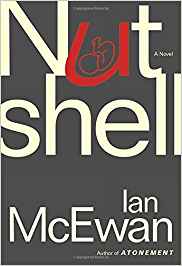 First, a confession – my opinion on McEwan books runs hot and cold: there are great books (Atonement, Amsterdam, On Chesil Beach) but many are not so great, in my opinion. This new novel belongs firmly in the great category. First, there is a unique point-of-view; the narrator is an 8-month fetus. The description of his acquisition of consciousness is fantastic, and sage commentaries on placenta-filtered wines are provided. And then there is the great prose: “Long ago, many weeks ago, my neural groove closed upon itself to become my spine and my many million young neutrons, busy as silkworms, spun and wove from their trailing axons the gorgeous golden fabric of my first idea, a notion so simple that it partly eludes me now”. Exquisite writing.
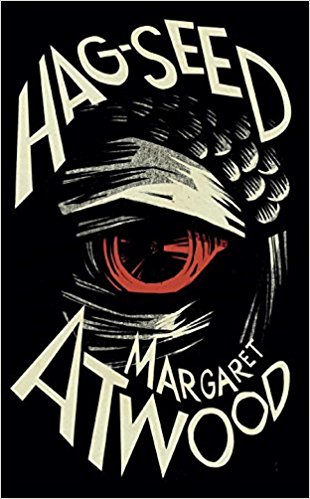 The Hogarth Shakespeare project enlists accomplished authors to retell Shakespeare classics (e.g. Hamlet retold by Gillian Flynn, Macbeth retold by Jo Nesbo). Hag-Seed is Atwood’s version ofThe Tempest, and it is exceptional. First, there is Atwood’s sublime prose: “The door clicks and he walks into the warmth and that unique smell. Unfresh paint, faint mildew, unloved food eaten in boredom, and the smell of dejection, the shoulders slumping down, the head bowed, the body caving in upon itself”. This wonderful passage describes a prison, hence the evocative phrasing. And second, Atwood’s plot emphasizes a delicious revenge. So the book is great fun, with a detailed exposition of the enigmatic parts of the Tempest at the end of the book.
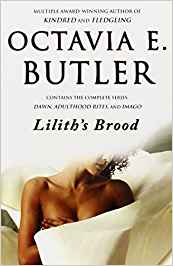 This is a trilogy, comprised of Dawn, Adulthood Rites, and Imago. Earth has had an apocalyptic world war, and the few remaining humans have been “rescued” by aliens and kept in stasis for hundreds of years. What follows is a brilliant description of the human instinct for violence, and the complexity of feelings when humans encounter the aliens for the first time. Lilith is utilized to choose humans to be re-animated, and so there is the strong psychology of humans learning about aliens and distrusting Lilith’s role. The aliens have breath-taking powers or healing, aka resurrection, but have their own agenda. The human-alien relationships are an imaginative form of symbiosis with genetic sharing in offspring. Thus there is yet another interesting new relationships, that of parents and offspring. Butler wrote these books almost 30 years ago, so she anticipated and described genetic engineering very accurately. She also wrote the great
  A young Australian woman was on a Rotary Exchange to Iceland, where she discovered a story of Agnes who was beheaded in 1828 for alleged murders. This was the last execution in Iceland. The story is all context, life in Iceland in the early 19th century and the place of an independent woman, with issues of poverty and religion. HK was a participant in a Vancouver Word Fest session on archival research about 2 1/2 years ago that I attended. She talked about the issue of cultural appropriation, for example. This is an excellent debut novel, and my enjoyment was enhanced by the fact that I read this book in Iceland!
 What David Read