Another very fine Indigenous novel from Ms. Erdrich, this time the Turtle Mountain Indians (North Dakota) in 1953-54 who have to counter a USA Government plan to “emancipate” Indian tribes. In fact, this government plan will terminate all support to Indians and force their relocation to cities with loss of their lands. Much of the story concerns the community response to this existential threat. One of the most attractive aspects of this story is the ordinariness of the community. There is angst, to be sure: poverty, substance abuse, human trafficking. But the story does not dwell on the negatives, but rather on the community action. Who are the leaders? How can their initiatives be financed? And there are ghosts! A very fine read.

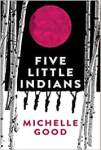 A graphic and powerful story of five indigernous children who have experienced Residential Schools, especially the aftermath on their post-school lives. Some tragic endings, some examples of resilience. This book should be assigned reading for those who dismiss the Residential School tragedy and for those who acknowledge hardship but then suggest that “survivors” should just get over it.
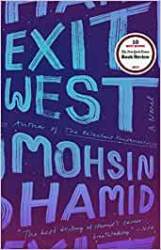 This is a very satisfying novel. First, the literary style is intriguing: long sentences with lots of commas and yet reading is smooth. Second, the subject matter is very topical; a dystopian future that begins in a localized fashion with two young lovers in an unspecified Middle Eastern location. Escalating conflict leads them to escape through doors that are portals to distant locations (London, Mykonos). Their future becomes uncertain in new lands that are overwhelmed by the arrival of increasing numbers of refugees/migrants like themselves. How do relationships survive when tested repeatedly – highly recommended.
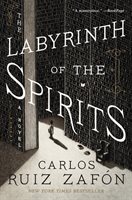 Labyrinth is the 4th and final book in the Cemetery of Forgotten Books series. Context (time and place) is an important feature of Ruiz’ books and this is especially true of Labyrinth: Barcelona is presented as an eerie Gothic wonderland and 1959 features nefarious political and criminal activities. (And at 800 pages, there is lots of space for context!). Labyrinth features the enigmatic Alicia Gris as an investigator tasked with a missing person case, leading to much intrigue as secrets are revealed. And there is some shocking violence. This is a haunting story – highly recommended.
 In 2010, a very old woman, Vivian, receives a letter with a question: “If you now feel comfortable telling me what you were to my father?” Thus begins a long remembering of Vivian’s life, starting in New York as a 20-year old in 1940. Vivian is the epitome of white privilege, a delightfully hedonistic person with self-deprecating humour. The description of the NY theatre scene in the 40s is fabulous. Overall a recounting of both strong and toxic female relationships for a completely entertaining story. Thanks Amy.
 Full disclosure: I love Anne Tyler’s writing. In this slim novel, she continues her theme of writing about ordinary but quirky people in Baltimore. Micah is a 42-year old man who lives a predictable life, constrained by precise patterns of behaviour. “Sometimes when he was dealing with people he felt like he was operating one of those claw machines on a boardwalk, those shovel things where you tried to scoop up prizes but the controls were too unwieldy and you worked at too great a remove”. Can Micah find happiness? Tyler describes funny and poignant situations with introspective wisdom.
 What if you found an old mis-shelved fiction book in a University Library that contains an incident from your own life, described in perfect detail? This is the beginning of this wildly inventive novel and it gets better! Doors are painted on surfaces that become portals to an underground maze of tunnels and rooms filled with books/stories. Characters in reality interact with characters from stories, and time is very flexible. But this magical place is under attack and great quests ensue. Morgenstern’s writing is wonderfully imaginative; previously she wrote the fabulous
 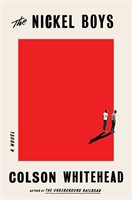 The Nickel Academy was a notorious reform school in Florida; young African-American boys could be assigned for months-years for trivial reasons. And they were subjected to horrible abuse: beatings, sexual assault, etc. The story focusses on two boys in the early 60s, Elwood and Turner, who have remarkably different viewpoints. Elwood has ideals based on the words of Martin Luther King; Turner is a cynical schemer. Which boy is more likely to survive the Nickel nightmare? The Jim Crow era in the South in the 1960s has evils that are perpetuated in the current #BLM times. Whitehead won the Pulitzer Prize for his previous book
  What David Read