
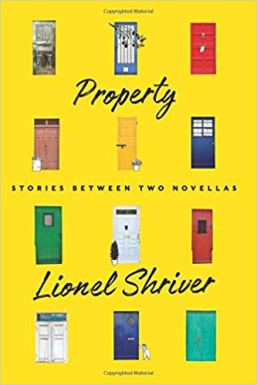
 As a general rule, I do not read short stories (with a notable exception for the sublime writing of Alice Munro) for a simple and somewhat trivial reason: short stories are too short to engage me. However, Lionel Shriver is a fabulous author (Big Brother, Double Fault, the fantastic We Need To Talk About Kevin…) so I decided to read her first book with ten short stories and two novellas. Shriver is such a keen observer and reporter of human behaviour, and these stories, almost without without exception, are masterful. As is clear from the title, the stories are about the relationships people have with possessions. Her writing is insightful, sometimes hilarious and such a pleasure to read in this format. Highly recommended.
Category: Genre
Sing, Unburied, Sing – Jesmyn Ward
 Ms. Ward previously wrote the excellent Salvage The Bones, and this new book is even better. The setting is Mississippi, a multi-generational family struggling to live, to love and to survive. Past atrocities live on in the form of ghosts. There are indelible portraits in this story: a thirteen year old boy trying to find his place in the world, his mother who is incapable of loving her children, his mixed-race grandparents. Powerful and evocative storytelling.
The Only Cafe – Linden MacIntyre
 This is a superb book, a mystery in the John LeCarre mold. Secrets abound: What will someone do to survive in a genocidal war? Was do we really know about a father when he goes missing? The setting is contemporary Toronto with topical issues like Jihadist recruitment. The back-story is the tragic conflict in Lebanon from 1976-83=2. Unanswered questions are rampant – this is just great writing, in part about journalism: can the truth ever be revealed.
All Our Wrong Todays – Elan Mastai
 This first novel is an exemplary example of speculative fiction at its best. The story is complicated: time travel creating multiple alternate realities. And there is much philosophy about the nature of self, plus a love story to boot.
The Plague – Kevin Chong
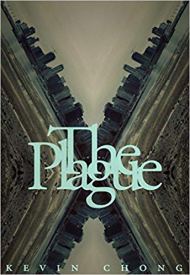 There is much to admire in this book. First, it is set in Vancouver, particularly the city core, so much is familiar. Second, as is evident from the title, Vancouver experiences an infectious disease disaster but the storyline is novel. Rather than focus on the cause and search for a cure (vaccine), the story is about the aftermath of the plague: how do people cope? There are three distinct points-of-view for coping: a family doctor who experiences directly the expanding disease first hand, and two people who are trapped in Vancouver’s core when a quarantine is put in place: a newspaperman who can’t return to his home in the suburbs, and an American writer on a book tour. Explorations of their behaviours in the face of suffering and futility, together with the psychological stress of quarantine, makes this an excellent read – highly recommended.
Amy notes: in 2011, there was a riot in Vancouver after the Canucks lost the final game for the Stanley Cup. The downtown peninsula was closed off by the police; people who had watched the game at friends apartments unable to leave, for example. An inspiration for this downtown quarantine?
The Last Neanderthal – Claire Cameron
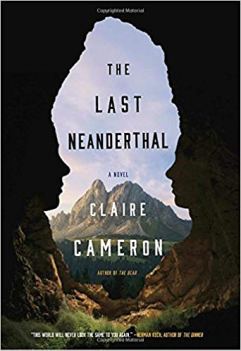 This fascinating book has two story lines. The first, obvious from the title, is a Neanderthal woman known as Girl whose extended family is being decimated by disease and animal predation. The second is Rose, the modern day archeologist who is excavating a grave site in Europe containing two bodies, a Neanderthal woman and a Homo Sapiens. Neanderthal life is imagined as harsh with brutal struggles for survival, few verbal skills but sensitive senses for smells and heat. There are some striking parallels in the two stories that may be too contrived for some readers, but were satisfying to me. In the end, this is book about what it means to be human.
Speak No Evil – Uzodinma Iweala
 This remarkable book is about two young people in Washington DC. Niro is a 17-year-old African-American who is graduating from High School and then on to Harvard. But Niro has a painful secret – he is gay, a wicked abomination to his conservative Nigerian parents. Niro’s best friend is Meredith but she is unable to provide Niro with the help and support that he needs. Niro is emotionally lost and conflicted with heartbreaking self-loathing and his relationship with Meredith comes to a tragic ending: powerful storytelling.
Prussian Blue – Philip Kerr
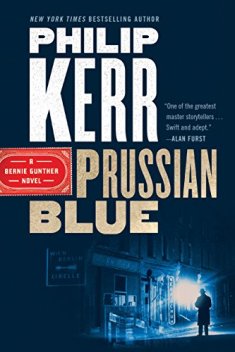 Kerr has written a number of novels about a German police detective, Bernie Gunther, and this is the best so far, in my view. Gunther is the epitome of the hard-boiled Philip Marlowe-like PI. The context of the BG plots is Nazi Germany; Prussian blue takes place in 1939. Gunther is a socialist and anyone not a member of the Nazi party will always be viewed with suspicion by Gunther’s superiors. Then add in the characteristic that Gunther is a Berliner, which makes him flippant, disrespectful, subversive, sarcastic – the list goes on! But he is a good cop in difficult times, and his deductive skills force the Nazi superiors to use him in difficult and sensitive investigations. The novel dwells on the existential crisis of investigating a murder in the Nazi context. This is mystery writing at its best.
The Shoe On The Roof – Will Ferguson
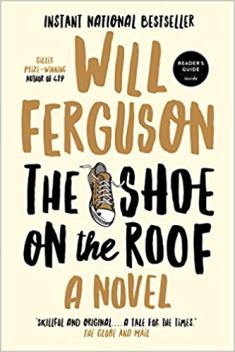 A comic treatment of the neurobiology of behaviour. Thomas is a medical student who initially uses his knowledge of neurobiology for hook-ups with women. He then digresses to try and “cure” three delusional homeless men. Not surprisingly, much chaos ensues. This book has a very entertaining treatment of sanity versus madness, with a bit of magic reality at the end. Overall, a fun alternative for those readers stuck with too many angst-filled plots!
 What David Read