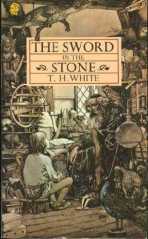
 This is the first book of White’s magnificent 4-book collection entitled the Once And Future King, an epic retelling of King Arthur legends. In this first book, the young Arthur (nicknamed Wart) is tutored by Merlyn so much magic is involved. Lessons frequently involve Wart’s transformation into different animals: fish, birds, a badger, etc. There are also some gut-busting hilarious illustrations of the difficulties of jousting. Imaginative writing is coupled with impressive knowledge of natural history (how to fly, how to swim) makes this an enchanting read.
Amy adds: still laughing at the jousting descriptions!

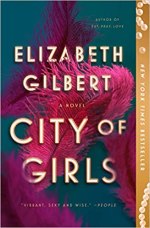 In 2010, a very old woman, Vivian, receives a letter with a question: “If you now feel comfortable telling me what you were to my father?” Thus begins a long remembering of Vivian’s life, starting in New York as a 20-year old in 1940. Vivian is the epitome of white privilege, a delightfully hedonistic person with self-deprecating humour. The description of the NY theatre scene in the 40s is fabulous. Overall a recounting of both strong and toxic female relationships for a completely entertaining story. Thanks Amy.
 What if you found an old mis-shelved fiction book in a University Library that contains an incident from your own life, described in perfect detail? This is the beginning of this wildly inventive novel and it gets better! Doors are painted on surfaces that become portals to an underground maze of tunnels and rooms filled with books/stories. Characters in reality interact with characters from stories, and time is very flexible. But this magical place is under attack and great quests ensue. Morgenstern’s writing is wonderfully imaginative; previously she wrote the fabulous
  The Nickel Academy was a notorious reform school in Florida; young African-American boys could be assigned for months-years for trivial reasons. And they were subjected to horrible abuse: beatings, sexual assault, etc. The story focusses on two boys in the early 60s, Elwood and Turner, who have remarkably different viewpoints. Elwood has ideals based on the words of Martin Luther King; Turner is a cynical schemer. Which boy is more likely to survive the Nickel nightmare? The Jim Crow era in the South in the 1960s has evils that are perpetuated in the current #BLM times. Whitehead won the Pulitzer Prize for his previous book
 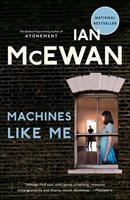 McEwan has created an alternative 1982 London in which Britain loses the Falklands War and PM Thatcher is defeated by Tony Benn. Most significantly, Sir Alan Turing achieves an artificial intelligence breakthrough resulting in the creation of humanoid robots; prototypes are named Adam and Eve. Charlie purchases an Adam and together with his girlfriend Miranda, Adam’s personality (mind) is personalized. What follows is a fascinating 3-way relationship story. With machine learning, what makes us human? This provocative and enthralling story is one of McEwan’s best.
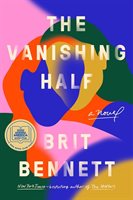 Two African-American twin sisters grow up in rural Louisiana in the 1950-60s with a unique feature – they are very light-skinned. Eventually their lives separate because Stella chooses to live as a white woman. In the 1980s, the daughters of the estranged sisters (one black, one white) meet by chance. So this is a relationship book: twin sisters, mother-daughters, cousins. Of particular interest is the strained and curious relationship between the two cousins which drives the latter half of the story. This is a really excellent identity book with a story line that is never trite or stereotypical – highly recommended.
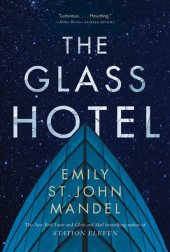 It is a tribute to Ms. Mandel’s skill as a writer (previous book, the brilliant
 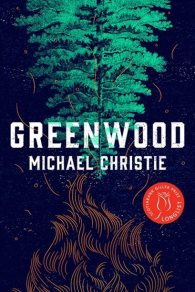 A sweeping saga of four generations of the Greenwood family, told more or less backwards from 2038 to 1908. What is most interesting in the story-telling is that the Greenwood family is a construct. Two orphans are raised as “brothers’ but have no biological ties; a “daughter” is rescued and adopted into the family under mysterious conditions. Even the name Greenwood is an artificial construct, a name arbitrarily applied to the two (unrelated) orphans. The story has a strong ecological focus, from the dirty-thirties to a global ecological disaster called the withering in 2028. Very strong character, a vivid description of place – highly recommended.
 Trigger warning: this a disturbing story about sexual abuse, an inappropriate and illegal relationship between a 42-year old teacher at a high school and a 15-year old female student. After a year, the young girl lies; she states that accusations of an inappropriate relationship are a fabrication by her and so she is expelled. Thus the teacher is not revealed as a manipulative pedophile because the young girl, a naive child really, protects him; she believes that the teacher loves her and that everything done to her was consensual. And when she turns 18, she re-initiates a relationship that proceeds on and off for 15 years! This is a complex telling of complicated relationships. Be prepared for some tough reading – the emotions are presented graphically and honestly. Given these warnings, this book should be required reading in this #MeToo era.
 What David Read