 Trigger warning: this a disturbing story about sexual abuse, an inappropriate and illegal relationship between a 42-year old teacher at a high school and a 15-year old female student. After a year, the young girl lies; she states that accusations of an inappropriate relationship are a fabrication by her and so she is expelled. Thus the teacher is not revealed as a manipulative pedophile because the young girl, a naive child really, protects him; she believes that the teacher loves her and that everything done to her was consensual. And when she turns 18, she re-initiates a relationship that proceeds on and off for 15 years! This is a complex telling of complicated relationships. Be prepared for some tough reading – the emotions are presented graphically and honestly. Given these warnings, this book should be required reading in this #MeToo era.

 Another sublime Bernie Gunther crime thriller. The plot is intricate with vivid characters, and Kerr’s books always have superb context. In this book, it is Berlin in 1928 so lingering effects of WWI and the rise of facism are all key features of difficult Berlin life. Gunther is a republican meaning neither a socialist or fascist so he has to navigate complex and dangerous social politics. And there is much moral philosophy about the origins of crime and the role of police. Regretfully Kerr died in 2018 so this will be the last of his writing
 A graphic and powerful story of five indigernous children who have experienced Residential Schools, especially the aftermath on their post-school lives. Some tragic endings, some examples of resilience. This book should be assigned reading for those who dismiss the Residential School tragedy and for those who acknowledge hardship but then suggest that “survivors” should just get over it.
 Labyrinth is the 4th and final book in the Cemetery of Forgotten Books series. Context (time and place) is an important feature of Ruiz’ books and this is especially true of Labyrinth: Barcelona is presented as an eerie Gothic wonderland and 1959 features nefarious political and criminal activities. (And at 800 pages, there is lots of space for context!). Labyrinth features the enigmatic Alicia Gris as an investigator tasked with a missing person case, leading to much intrigue as secrets are revealed. And there is some shocking violence. This is a haunting story – highly recommended.
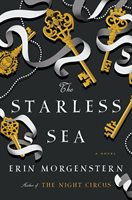 What if you found an old mis-shelved fiction book in a University Library that contains an incident from your own life, described in perfect detail? This is the beginning of this wildly inventive novel and it gets better! Doors are painted on surfaces that become portals to an underground maze of tunnels and rooms filled with books/stories. Characters in reality interact with characters from stories, and time is very flexible. But this magical place is under attack and great quests ensue. Morgenstern’s writing is wonderfully imaginative; previously she wrote the fabulous
 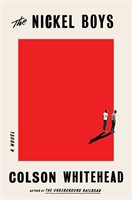 The Nickel Academy was a notorious reform school in Florida; young African-American boys could be assigned for months-years for trivial reasons. And they were subjected to horrible abuse: beatings, sexual assault, etc. The story focusses on two boys in the early 60s, Elwood and Turner, who have remarkably different viewpoints. Elwood has ideals based on the words of Martin Luther King; Turner is a cynical schemer. Which boy is more likely to survive the Nickel nightmare? The Jim Crow era in the South in the 1960s has evils that are perpetuated in the current #BLM times. Whitehead won the Pulitzer Prize for his previous book
 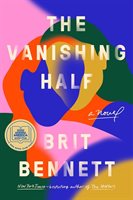 Two African-American twin sisters grow up in rural Louisiana in the 1950-60s with a unique feature – they are very light-skinned. Eventually their lives separate because Stella chooses to live as a white woman. In the 1980s, the daughters of the estranged sisters (one black, one white) meet by chance. So this is a relationship book: twin sisters, mother-daughters, cousins. Of particular interest is the strained and curious relationship between the two cousins which drives the latter half of the story. This is a really excellent identity book with a story line that is never trite or stereotypical – highly recommended.
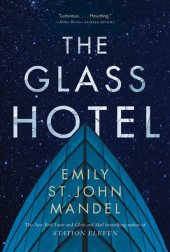 It is a tribute to Ms. Mandel’s skill as a writer (previous book, the brilliant
  What David Read