

Allison is a nearly 40-year-old public radio pop culture journalist. Her past life has been messy and complicated: escaping a deeply conservative family, teenage rebellion epitomized by membership in a riot girrrrl punk band and issues with mental illness. Her current somewhat stable life is upended when her ex-husband is murdered; consequently, Allison takes on the guardianship of her angry 11-year-old daughter. Needless to say, she is unprepared for parenting. This is a brilliant novel about unresolved baggage and healing, with precise descriptions of Winnipeg and Toronto life. Both funny and poignant, a great read.
Amy notes; I am sure I didn’t get all the Canadiana inside jokes, but I got enough to appreciate their presence! Propulsive read.

 A graphic and powerful story of five indigernous children who have experienced Residential Schools, especially the aftermath on their post-school lives. Some tragic endings, some examples of resilience. This book should be assigned reading for those who dismiss the Residential School tragedy and for those who acknowledge hardship but then suggest that “survivors” should just get over it.
 Elaine, a middle-aged painter who lives in Vancouver, returns to Toronto (where she grew up) for a retrospective show of her paintings. This causes her to reminisce about her life. The entire book is great but for me, the first 1/3 is perfect. Atwood wonderfully captures the relationships between 8- to 10-year-olds, alternating between friendships and toxic competitions. School with corporal punishments and skipping grades, shopping and shoplifting things at Woolworths. And how children acquire (mis)information in an era when parental communication was non-existent. Another gem.
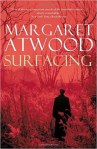 An early Atwood treasure from the 1970s with beautiful descriptive writing – this description off a restaurant meal is on page 1: “two restaurants which served identical grey hamburger steaks plastered with mud gravy and canned peas, watery and pallid as fish eyes, and french fries heavy with lard”. Is your mouth watering? The narrator is an un-named young woman who travels to a remote lake in Northern Quebec with three friends, to seek her missing father. There is an eerily effective transition to sinister happenings, but the true gem of the writing is the unfiltered dialog in the narrator’s head: this story is both spooky and brilliant, a must read.
 Ms. Itani has written two superb books about an Ontario community coping with the aftermath of WWI, Deafening (2003) and
 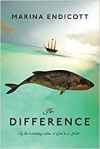 Although I generally do not read much historical fiction (Washington Black is an obvious exception to this statement), Ms. Endicott is just an excellent storyteller. The book has two parts. The first is an around-the-world journey by a sailing ship in 1911-12. Two disparate sisters are on this long sea journey, 12 year-old Kay and her much older sister Thea who is married to the ship’s captain. Kay is temperamental and impetuous but is a keen observer; she is also tormented by memories of her early childhood in Alberta where her stern father ran a Residential School. After two miscarriages at sea, Thea “acquires” young Micronesian boy they name Aren, an exchange for four tins of tobacco. The second part of the book takes place 10 years later at the sister’s home in Nova Scotia. Predictably Aren does not fit in so Kay ranges for a second sea trip back to the island of his origin. The writing is enchanting; a description of a mid-Pacific eclipse is breathtaking. This is a powerful story about differences, especially those that cannot be overcome.
