
 This is a fantastic Indigenous novel, set in North Dakota in 1999. There is a powerful start to the story, a tragedy on page 2. What follows is an attempted reparation, guilt and paralyzing grief; a long-standing grudge which leads to revenge; and a gradual reconciliation. The story shifts back and forth in time, and has a mystical element. There is, amidst all this angst, a delightful plainness, a simplicity that engages and delights. For example, there is a transcendent passage about a volleyball game that captures the psychology of young adolescents perfectly! Although this is a multi-generational story, it is the children who are the most complex characters, particularly in circumstances where they are forced to be mature beyond their years (similar to Glass Castle). This book is wonderful storytelling.
Category: Contemporary
The Child – Fiona Barton
 Barton’s very successful debut novel, The Widow, was going to be a tough act to follow, and admittedly The Child is not as good. However, there are some very strong aspects to this second novel. Once again, this is a well-written psychological thriller/mystery. What is the relationship between skeletal remains of a child found in a construction site with a child abduction case from the 1970s? Also this is a story almost entirely about women including Kate, the intrepid reporter from The Widow. Male characters other than the plodding police are either inconsequential or sleaze balls. And finally, one of the female characters has incredibly poor parenting skills, setting up the engrossing question – what will she say/do next? Overall, this is a book that becomes hard to put down.
Sailor Girl – Sheree-Lee Olson
 Sometimes a story can capture time and place perfectly, and this book is a prime example of that success. The time is 1981; the place is a Great Lakes steamship. And Kate is a rebellious 19 year-old: too much drinking, too much casual sex in a very sexist environment. Her reckless lifestyle has an incredible intensity that is intoxicating. A very good read.
Kiss Of The Fur Queen – Tomson Highway
 Given the struggles with reconciliation and ongoing issues of cultural appropriation, I have decided to read more Indigenous authors. This novel begins in Northern Manitoba in 1951 with fishing and hunting as dominant activities in a simple but harsh life. Two brothers experience abuse at a Residential School and then settle in Winnipeg where alienation and estrangement complicates their struggle to survive. Dance and music provide a welcome respite. Although emotionally complex, the novel has a triumphant tone. And throughout, the brothers are watched over by the trickster fur queen. An excellent look at remarkable changes in Indigenous life over a 40 year period.
The Fortunate Brother – Donna Morrissey
 A gritty angst-filled guy book set in West Newfoundland. The context – geography and people- is described perfectly. A father and son are paralyzed by grief, so they retreat and psychologically “run away” into a life of drink and anger. The book then becomes a murder mystery with deception and lies and misunderstandings. Annoying behaviour to be sure but the descriptions of the people in a fishing outport trying, usually badly, to have each other’s back is compelling. This is one of Morrissey’s best books.
Poles Apart – Terry Fallis
 Fallis won the 2011 Canada Reads competition with The Best Laid Plans, a very funny book about Canadian politics. This new book is set in Orlando Florida. Everett Kane starts an anonymous feminist blog called Eve Of Equality which becomes wildly popular. Parts of the plot are unrealistic and sometimes predictable, but it is a guilty pleasure to read a feel good novel from time to time.
Into The Water – Paula Hawkins
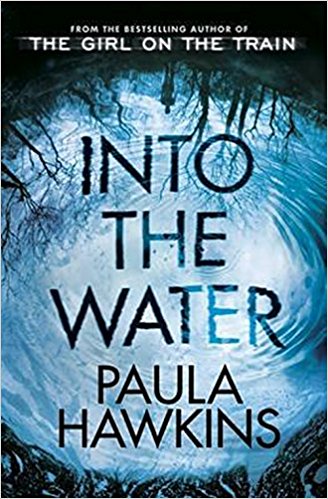 The huge success of The Girl On The Train meant high expectations for Hawkins’ next book, and Into The Water delivers, in my opinion, another well written mystery/thriller. The setting is Northern England, a town with a drowning pool where too many women have drowned over many centuries, usually under mysterious circumstances. Many standard issues are present: lies and deceit and memories that are selective. The key relationship is between two estranged sisters – how did this estrangement begin and how did it evolve? The outcome, aka big reveal, is tantalizing and completely surprising. A thoroughly enjoyable read.
Nutshell – Ian McEwan
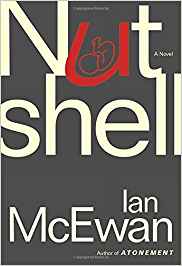 First, a confession – my opinion on McEwan books runs hot and cold: there are great books (Atonement, Amsterdam, On Chesil Beach) but many are not so great, in my opinion. This new novel belongs firmly in the great category. First, there is a unique point-of-view; the narrator is an 8-month fetus. The description of his acquisition of consciousness is fantastic, and sage commentaries on placenta-filtered wines are provided. And then there is the great prose: “Long ago, many weeks ago, my neural groove closed upon itself to become my spine and my many million young neutrons, busy as silkworms, spun and wove from their trailing axons the gorgeous golden fabric of my first idea, a notion so simple that it partly eludes me now”. Exquisite writing.
Hag-Seed – Margaret Atwood
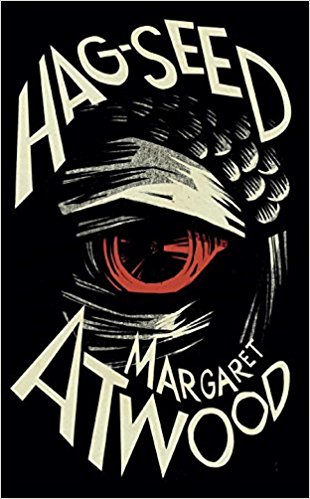 The Hogarth Shakespeare project enlists accomplished authors to retell Shakespeare classics (e.g. Hamlet retold by Gillian Flynn, Macbeth retold by Jo Nesbo). Hag-Seed is Atwood’s version ofThe Tempest, and it is exceptional. First, there is Atwood’s sublime prose: “The door clicks and he walks into the warmth and that unique smell. Unfresh paint, faint mildew, unloved food eaten in boredom, and the smell of dejection, the shoulders slumping down, the head bowed, the body caving in upon itself”. This wonderful passage describes a prison, hence the evocative phrasing. And second, Atwood’s plot emphasizes a delicious revenge. So the book is great fun, with a detailed exposition of the enigmatic parts of the Tempest at the end of the book.
 What David Read