
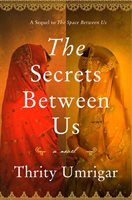
 A story of two women in contemporary Mumbai India who have a difficult life for three reasons: they are women, they are poor, and they are on their own. This is a powerful story of survival and the struggle to attain some degree of dignity.
Category: Contemporary
Starlight – Richard Wagamese
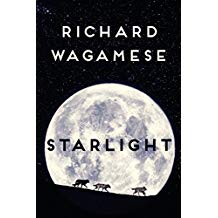 This is the continuing story of Frank Starlight. Much of the story is quiet and contemplative, describing how to live as one with the land through solitude and your senses (sight, hearing). The result is healing and redemption, expressed in two very different lives. The story was unfinished at the time of Wagamese’s death in March 2017 but the conclusion is evident. This is just masterful story-telling, a final fitting legacy for a remarkable author.
The Last Painting of Sara de Vos – Dominic Smith
A fascinating book set in three time periods: 1630s in Holland, 1958 in New York, and 2000 in Sydney. The story divulges impeccable information on art and art forgery, provided in the context of a mystery of how an original painting and its forged copy come to be reunited. Thanks Amy for giving me this book.
Tilly and the Crazy Eights – Monique Gray Smith
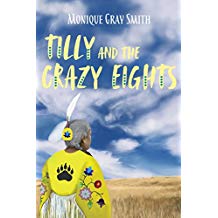 Smith’s first book about Tilly (Tilly: A story of Hope and Resilience) was largely about recovery from addictions. This second book has Tilly driving eight Indigenous elders from Canada to a pow-wow in Albuquerque. Along the way, each of the elders has a bucket-list destination. There is both laughter and tears in this unashamedly sentimental book with significant insights into Indigenous spirituality. The spectre of residential school abuse looms in the background of some of the elders, but the story is mainly about resilience.
Amy notes; we saw her speak at the Vancouver Writers Fest.
Beartown – Fredrik Backman
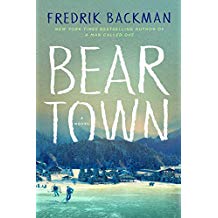 Simply put, this is a superb book. The setting is universal, a small forest town in decline, where all the town’s hopes and aspirations are placed on the 17-year old shoulders of the boy’s hockey team. Importantly, the story is so much more than sports competition, the emotions of winning and losing. In fact, winning in hockey is the benchmark for success of the entire town; in essence, the future of the town depends on winning at hockey so the stakes are incredibly high. And then a sexual assault tears the town apart. The book explores with great insight many key relationships: coach and team, teammates pledging unwavering loyalty, husbands and wives and their children. It is unexpected to have a discussion on sorrow and longing but the book is rich in philosophical musings. Backman also uses foreshadowing very effectively. Highly highly recommended.
Songs For The Cold Of Heart – Eric Dupont
 This Giller short-listed book by a Quebec author is hard to describe. It is epic story-telling told with great detail, so there is much content about many many topics. Sometimes I wished that some of the content had been edited out as this is a very long book. Part of the book takes place in Quebec and it is very French-Canadian, with complex family dynamics, wicked nuns, etc. The last half takes place in Berlin and Rome, albeit with characters that are linked by family to the first part of the book. The Lamontagne family is always surprising; the writing is imaginative and often dark.
There There – Tommy Orange
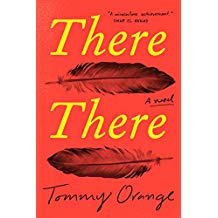 Orange is one of a group of impressive Indigenous authors introduced to me during the Calgary Word Fest. This is a superb first novel with intersecting characters assembling in Oakland for a Pow-wow. These individuals have links to the Cheyenne and Arapaho tribes of Oklahoma but their Indian identity is very limited: these are urban Indians. For example, a young boy, Orvil Red Feather, learns pow-wow dancing from YouTube videos. The intersecting multi-generational story-lines can be complicated to follow sometimes because of uncertain or unknown parentage, but the culminating climax is presented powerfully. This is excellent story-telling about identity, violence and recovery, of belonging and un-belonging, loss and hope.
The Lost Girls of Camp Forevermore – Kim Fu
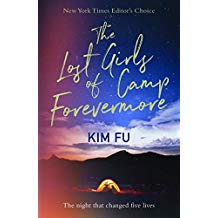 Previously, Ms. Fu wrote the very fine For Today I Am A Boy, and this new book is even better. Five young girls (ages 9-11) are stranded in the woods after an overnight kayaking trip, producing some “Lord Of The Flies” crises. This narrative is interspersed with the subsequent lives of the survivors: how are lives shaped by an early traumatic event? How are friendships tested by cruelties and betrayals? This is evocative writing and is highly recommended.
Lethal White – Robert Galbraith (pseudonym for JK Rowling)
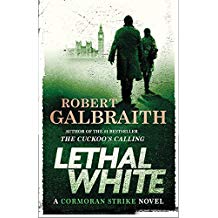 The fourth Cormoran Strike book has a complex plot and, as in previous books, the evolving relationship between Cormoran and his associate Robin is central to the story. In many ways, this is a superb procedural book: how are clues discovered and interpreted? The procedural emphasis is reminiscent of Michael Connelly’s detective Harry Bosch. But the real joy in this Galbraith book is how Cormoran and Robin interact, how ideas and theories are discussed and debated (much like Inspector Lynley and Havers in the E. George mysteries). Both characters are completely dissimilar and have some significant human frailties that are often endearing. Finally the choice of certain words requires the use of a dictionary, a delicious practise that I find completely satisfying. Violence is minimal; this is an excellent book about plot and motive.

