
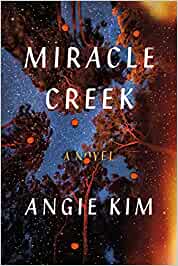
Simply put, this is a great book. On one level, it is a court room thriller – a woman is accused of killing two people, one of whom is her severely autistic son. There is an immigrant family from Korea who experience subtle racism: forced charity, politely understanding actions. There are the relationships between parents and children with all the range of emotions from love to anger. And there is the legal drama of shifting suspicions, compounded by secrets and lies, unintended consequences of (good) people’s mistakes. White lies are defined as answers that are technically untrue but serve a greater good. Just brilliant storytelling.
Category: Female author
The Mothers – Britt Bennett

Ms. Bennet wrote the fabulous The Vanishing Half, so I wanted to read her first book. The Mothers is about 3 teenagers in Oceanside, north of San Diego; there is teenage sex and a pregnancy and an abortion, actions that have consequences over the next 6 years. This is an excellent relationship book about community in contemporary Black America, friendships undermined by secrets, the aftermath of youthful choices. Finally, the title The Mothers refers in part to elderly church women who are a Greek chorus, commenting on events. And also, the title refers to the issue of absent mothers for two of the characters. This is an insightful, thoughtful engaging story – highly recommended.
Ridgerunner – Gil Adamson
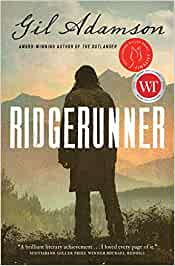
This is a beautifully written book set in 1917. After the death of his mother, 12-year-old Jack is delivered to the care of Sister Beatrice while his father, William Moreland, leaves to raise money to support Jack. However, Moreland’s only skill is as a thief; some of his escapades are Butch Cassidy-like. Much of the setting is the Banff-Lake Louise corridor with the World War in the background. The characters are rich, and the depictions of the natural world are breath-taking. Hopefully, this book will be a strong Giller contender. Ms. Adamson previously wrote the well–regarded The Outlander.
The Pull of the Stars – Emma Donoghue

Not surprisingly, this is another superb historical fiction story by Ms. Donoghue, a writer who never fails to entertain. Dublin in 1918 is suffering the ravages of the Spanish flu pandemic. The story follows three women over just 3 days in a small Maternity/Fever ward: a nurse, volunteer, and physician. There is impeccable medical detail. But the dominant theme is hopelessness – an inability to effectively treat influenza patients with an over-arching issue of mistreatment of orphans and children of unwed mothers by Catholic residentials schools/homes. Highly recommended but be prepared for some profound sadness.
A Large Petal of the Sea – Isabel Allende
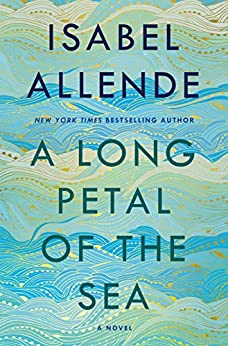
Allende’s latest historical fiction novel follows two young Spanish people as they flee the Spanish Civil War in 1938. Roser is a pregnant widow; Victor is the brother of her deceased lover. Their flight to the French border is harrowing. Eventually they are chosen by the great Chilean poet Pablo Neruda to immigrate to Chile but must be married to qualify for the journey. Thus, a long caring relationship is initiated in a new country. A replay of the Spanish Civil War conflict is encountered by the military overthrow of the Allende government in 1973, another battle between freedom and repression. After a 12-year exile in Venezuela, Roser and Victor return to Chile which is their true home. This is an epic story told with Allende’s typical lucidity.
Magic for Liars – Sarah Gailey
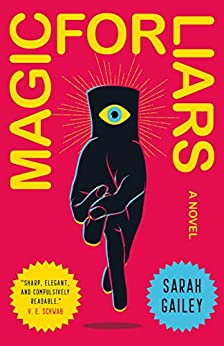
This imaginative story takes place at the Osthorne Academy for Young Mages, aka a magic school. The writing is delightful with similes like: “mist was draped across the school grounds like a headache clinging to the temple of a mildly concussed and half-hungover private investigator”. A teacher has been killed at the school. Imagine how difficult it is to be a non-magic PI attempting to uncover a murder mystery when magic is used to confuse, confound and deflect. Very entertaining – thanks Amy for this recommendation.
Polar Vortex – Shani Mootoo
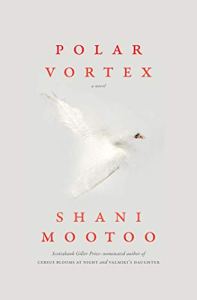
This is a superb introspective relationship story. Priya and Alexandra have a six-year marriage that is disrupted by the impending visit of Prakash, a long-time friend of Priya’s. What are Prakash’s motives for this visit? Why has Priya been withholding information on the significance of this friendship from Alex? And why can memories between friends be so selectively remembered and interpreted? A bit gloomy but overall an excellent read (on the Giller long-list).
The City We Became – NK Jemisin

A very imaginative example of speculative fiction about the soul of cities, specifically New York which is protected by five avatars in the five boroughs: Manhattan, Brooklyn, the Bronx, Queens and Staten Island. The personalities of the avatars reflect the borough characteristics. But there is conflict, a city takeover by malevolent forces! Highly entertaining with extraordinary visual scenes. Thanks Amy for this recommendation.
Five Little Indians – Michelle Good
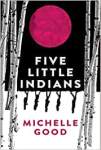 A graphic and powerful story of five indigernous children who have experienced Residential Schools, especially the aftermath on their post-school lives. Some tragic endings, some examples of resilience. This book should be assigned reading for those who dismiss the Residential School tragedy and for those who acknowledge hardship but then suggest that “survivors” should just get over it.
