
 Messud wrote the very excellent The Woman Upstairs, about the relationships of a mature woman. In this new novel, Messud has turned her perceptive gaze to a coming-of-age story of two girls, best friends since nursery school whose lives begin to diverge in middle school. What does friendship entail? What stories do we create for others and for ourselves? This is a beautifully poignant book.
Category: Female author
Faithful – Alice Hoffman
 A contemporary story about survivor guilt, and ultimately redemption because of a mother’s unconditional love (and many rescue dogs). Sometimes the story descends dangerously close to soap-opera but this is an enjoyable and worthwhile read. Hoffman’s writings are very diverse and dependable, so I faithfully read all her books.
Hunger – Roxane Gay
 Previously, I used the words “brutally honest and uncomfortably candid” to describe Camilla Gibbs’s memoir This Is Happy, and the same descriptors can be applied emphatically to this memoir by Roxane Gay. Gay is subjected to a brutal sexual assault at age 12; she discusses being both a survivor and a victim. There are two dramatic aspects to the aftermath: her silence and her reaction to eating, to become fat and undesirable in order to be safe. Gay vividly describes living in a wildly undisciplined body as she becomes categorized as morbidly obese. The cruelty of public opinion of her appearance (i.e. fat shaming) is tragic. Her own analysis of her psychology is self-loathing. This is a deeply personal memoir that is often disturbing but occasionally comic as she describes how much she hates exercise. An amazing story.
The Historian – Elizabeth Kostova
 This fascinating book has a Dan Brown-like plot (but with much better writing). Academics search for clues to find missing persons and to research Vlad Dracula’s life (is he still living?). This research is conducted in medieval libraries (yay!) with much travel: Oxford, Istanbul, Budapest and Bulgaria. Actions happen in three times: the 1930s, 1950s and 1970s, often with parallel stories so the complex plot with much historical detail requires the full attention of readers. This is a really enjoyable read; thanks Steph, for this recommendation.
The Golem and the Jinni – Helene Wecker
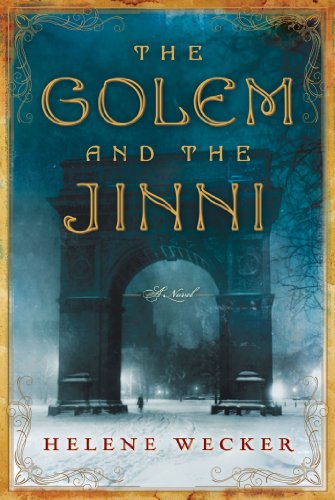 A second recommendation from Steph, so thanks again. This book is another example of a remarkable first novel, notable both for its imagination and context. A golem is created from clay and brought to life by her master who then promptly dies, leaving her adrift in New York. A jinni is accidentally released from a copper container. Much of this book is about alienation – how to fit into a human population. And the context is glorious: New York in 1899 with detailed descriptions of Little Syria and the Jewish enclave with some fantastic trips to Central Park. And yes, there is a wicked villain! This is a very entertaining book.
LaRose – Louise Erdrich
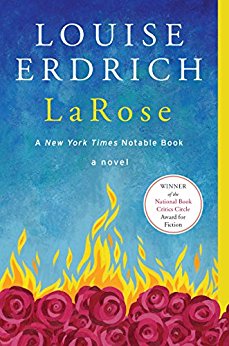 This is a fantastic Indigenous novel, set in North Dakota in 1999. There is a powerful start to the story, a tragedy on page 2. What follows is an attempted reparation, guilt and paralyzing grief; a long-standing grudge which leads to revenge; and a gradual reconciliation. The story shifts back and forth in time, and has a mystical element. There is, amidst all this angst, a delightful plainness, a simplicity that engages and delights. For example, there is a transcendent passage about a volleyball game that captures the psychology of young adolescents perfectly! Although this is a multi-generational story, it is the children who are the most complex characters, particularly in circumstances where they are forced to be mature beyond their years (similar to Glass Castle). This book is wonderful storytelling.
This Is Happy – Camilla Gibb
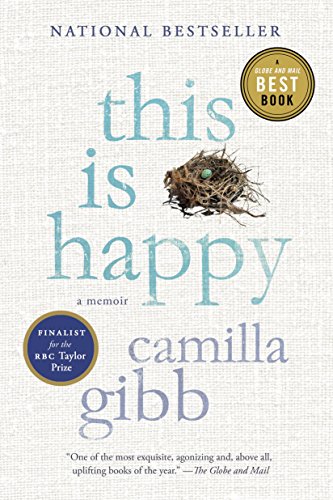 Camilla Gibb is a very fine novelist (Sweetness In The Belly, for example). This remarkable book is a memoir that is brutally honest and uncomfortably candid. There are heartbreaking descriptions of loneliness and alienation leading to profound depression and suicide attempts, of feelings that she does not deserve happiness. Single motherhood provides an incredible challenge. The adage that “it takes a village to raise a child” is proven true as single mother Gibb constructs a unique extended family to help her care for her daughter: this is a compelling story.
The Child – Fiona Barton
 Barton’s very successful debut novel, The Widow, was going to be a tough act to follow, and admittedly The Child is not as good. However, there are some very strong aspects to this second novel. Once again, this is a well-written psychological thriller/mystery. What is the relationship between skeletal remains of a child found in a construction site with a child abduction case from the 1970s? Also this is a story almost entirely about women including Kate, the intrepid reporter from The Widow. Male characters other than the plodding police are either inconsequential or sleaze balls. And finally, one of the female characters has incredibly poor parenting skills, setting up the engrossing question – what will she say/do next? Overall, this is a book that becomes hard to put down.
Sailor Girl – Sheree-Lee Olson
 Sometimes a story can capture time and place perfectly, and this book is a prime example of that success. The time is 1981; the place is a Great Lakes steamship. And Kate is a rebellious 19 year-old: too much drinking, too much casual sex in a very sexist environment. Her reckless lifestyle has an incredible intensity that is intoxicating. A very good read.
 What David Read