
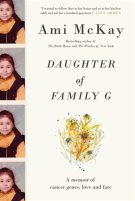
 Simply put, this is an amazing book. Ms. McKay is an excellent novelist (The Birth House, The Virgin Cure, Witches of New York). Her new book is a memoir with a unique context. Her great-great-aunt, Pauline Gross, confided to a pathology professor in 1895 that she expected to die young because she had observed a very strong family history of cancer. This statement led to a cancer genealogy study that ultimately resulted in the discovery of a gene mutation that creates a devastating cancer susceptibility, now known as Lynch Syndrome. Part of the book imagines the lives of Pauline and sister Tillie, the direct ancestor of Ms. McKay. Along this history, there are some dedicated physician-scientists but the ugly reality of eugenics is part of this quest. Much of the book is deeply personal since Ms. McKay also has the Lynch Syndrome mutation. What thought process informs the decision to undergo genetic screening? How does one live with this knowledge, with implications for your children (there is a 50% risk of transmitting the mutation)? And finally, there is Ami’s deeply moving and loving relationship with her mother so this is also a memoir of love and fate, tremendous family resilience, the link between the genes we inherit and the life we choose. This is a fantastic read.
Category: Best of 2019
The Innocents – Michael Crummey
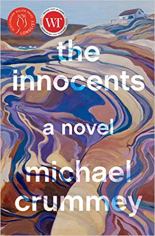 Two children, Evered (maybe age 12) and sister Ada (maybe 10) are orphaned after the sudden deaths of their parents and infant sister. And they are isolated on a rocky cove somewhere on Newfoundland’s northern coast. They live in almost total isolation with only the visit of a supply ship twice a year. Crummey’s brilliant descriptions of their numerous hardships becomes a profound story of resilience. But the title of this book is perfect, as these children are total innocents because of profound ignorance through lack of adult human contact. Importantly there is the strong bond of loyalty between brother and sister which becomes complicated with the onset of puberty and emerging sexuality. This is a brilliant book that I hope will be a powerful contender for the Giller Prize.
The Testaments – Margaret Atwood
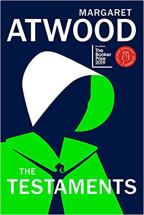 As a sequel to The Handmaid’s Tale, The Testaments is equally compelling but with a very different tone. Whereas The Handmaid’s Tale had a single narrator (Offred), The Testaments (set 16 years later) has three voices: two very different young women, one raised in Gilead and one raised outside, and the notorious Aunt Lydia. The resulting story is less introspective with more action, thus less reactive. The seeds of dissent are outlined clearly and logically with some Machiavellian motivations. This is a page turner, a completely engrossing read.
Dual Citizens – Alix Ohlin
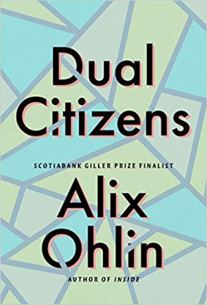 Regular readers of this book blog know that I have a specific affection for introspective relationship books. This book by Ms. Ohlin is a perfect read, in my opinion. The story enters on two sisters, Lark and Robin, from their early childhood in Montreal and their complicated relationship with their mother Marianne, to adulthood in New York and the Laurentians. Lark is the main character, someone who hopes that silence will produce invisibility. The story contains vivid descriptions of art, music and film, motherhood and even wolves. The writing is divine; highly recommended.
Everything Under – Daisy Johnson
 This is a really excellent novel set in contemporary England. The core of the story is a complicated mother-daughter relationship but it is much more: the use of a private language and a river creature and supplemental characters. The timeline is an interesting feature of the story telling. Johnson’s writing reminds me of Sarah Winman, so high praise.
Affinity – Sarah Waters
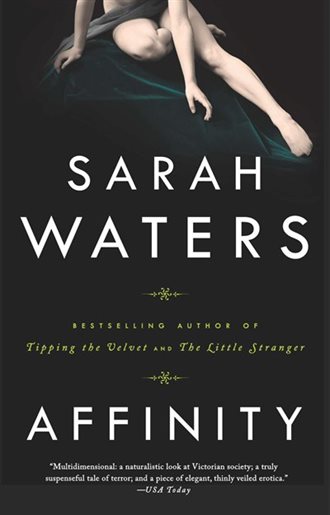 This is an early book of Ms. Waters (1999). The setting is England in 1873-74. Margaret Prior, a 29 year-old woman with a troubled past decides to preoccupy herself with good deeds by visiting women prisoners in at Millbank, a notoriously dark and evil prison. There she becomes entranced by a spiritualist, Salina Dawes. The story slowly and inexorably become one of obsession and almost possession, and has a cracking good ending. This book is from a VPL list of “books that broke our hearts”.
Big Sky – Kate Atkinson
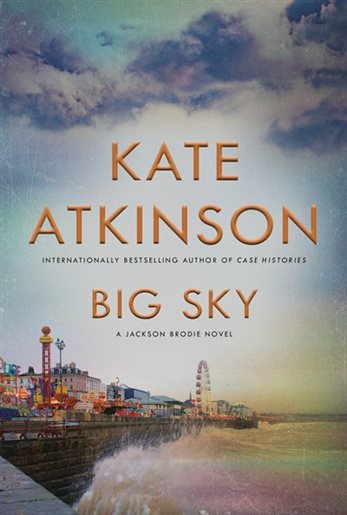 Hurray, Ms. Atkinson has written a fourth Jackson Brodie novel, a much anticipated gift to the detective-mystery genre. Brodie is in North Yorkshire and has time to be unusually introspective, often with hilarious internal dialog punctuated by pithy comments (in parentheses) from ex-partner Julia. The first third of the book is all character development, a rich cast of quirky individuals. Indeed, the first crime does not occur until the end of 100 pages. The story does take a gritty look at topical themes, from child abuse to human trafficking. Brodie is a delightful character and this book is a must-read!
The Silence of the Girls – Pat Barker
A re-telling of the Iliad from the point of view of Briseus, the daughter of the King of Lyrnessus who is awarded to Achilles as a trophy. The best part of this book is the portrayal of the ensuing 9-year Trojan War as the folly of men, waging war because of a mis-guided sense of honour usually manifesting as petulance. Achilles is especially blood-thirsty, driven by a rage and compulsion to kill. The savagery of war is described wonderfully by the author of the Regeneration Trilogy, a masterful treatment of war and its collateral damage.
Smoke – Dan Vyleta
Sometimes speculative fiction creates entire new fantastical worlds. In other examples, like this book, a paradoxical provocation is introduced to a familiar world, in this case England about a century ago. The novel aspect in this story is that evil in thought or deed is manifested by the emanation of smoke from bodies. This produces a class distinction or separation; the upper class aristocrats and gentry generally do not smoke but the lower working classes are drenched in smoke that becomes a dense soot. So London becomes a particularly dark place. The protagonists are three young people exposed to lies, secrets and increasing violence and treachery. The crucial issues: rich versus poor, political differences, right versus wrong, love versus lust, and lots of guilt. This is very fine writing, reminiscent of some of Stephen King’s best stories.
 What David Read