
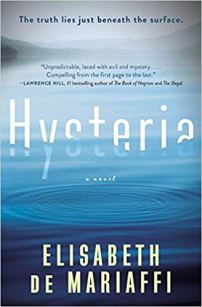
 De Mariaffi was a discovery at the Calgary WordFest in October 2018. This is a very fine mystery because of the context: upper state New York in 1956. There is an early sinister feeling in the book that develops effortlessly. Heike’s husband is very controlling but this was just typical of men in the 1950s. Or is it something more? Or is Heike delusional? The mystery deepens …..
Category: Location / Setting
Machine Without Horses – Helen Humphreys
 Humphreys is a great writer (Nocturne, The Evening Chorus, The Lost Garden). Her new book is fascinating because the first half is a personal account of her writing process: start with an idea, in this case an obituary of a reclusive Scottish woman who was a renowned salmon-fly dresser. Humphreys describes the essential questions: What is the story? Whose Story is it? How are you going to tell the story? The second half of the book is the imagined life of the Scottish woman; very entertaining.
Up From Freedom – Wayne Grady
 Grady was a Calgary WordFest author. His book is set in 1850s America, about slavery and abolitionists. A cracking good court case is at the end of the book, about the illegality of of miscegenation: marriage between white and black races. There is a haunting phrase that is repeated in the book: “some things are forgotten but nothing is ever forgiven”.
The Secrets Between Us – Thrity Umrigar
 A story of two women in contemporary Mumbai India who have a difficult life for three reasons: they are women, they are poor, and they are on their own. This is a powerful story of survival and the struggle to attain some degree of dignity.
The Last Painting of Sara de Vos – Dominic Smith
A fascinating book set in three time periods: 1630s in Holland, 1958 in New York, and 2000 in Sydney. The story divulges impeccable information on art and art forgery, provided in the context of a mystery of how an original painting and its forged copy come to be reunited. Thanks Amy for giving me this book.
Tilly and the Crazy Eights – Monique Gray Smith
 Smith’s first book about Tilly (Tilly: A story of Hope and Resilience) was largely about recovery from addictions. This second book has Tilly driving eight Indigenous elders from Canada to a pow-wow in Albuquerque. Along the way, each of the elders has a bucket-list destination. There is both laughter and tears in this unashamedly sentimental book with significant insights into Indigenous spirituality. The spectre of residential school abuse looms in the background of some of the elders, but the story is mainly about resilience.
Amy notes; we saw her speak at the Vancouver Writers Fest.
Songs For The Cold Of Heart – Eric Dupont
 This Giller short-listed book by a Quebec author is hard to describe. It is epic story-telling told with great detail, so there is much content about many many topics. Sometimes I wished that some of the content had been edited out as this is a very long book. Part of the book takes place in Quebec and it is very French-Canadian, with complex family dynamics, wicked nuns, etc. The last half takes place in Berlin and Rome, albeit with characters that are linked by family to the first part of the book. The Lamontagne family is always surprising; the writing is imaginative and often dark.
There There – Tommy Orange
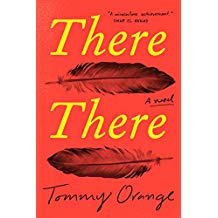 Orange is one of a group of impressive Indigenous authors introduced to me during the Calgary Word Fest. This is a superb first novel with intersecting characters assembling in Oakland for a Pow-wow. These individuals have links to the Cheyenne and Arapaho tribes of Oklahoma but their Indian identity is very limited: these are urban Indians. For example, a young boy, Orvil Red Feather, learns pow-wow dancing from YouTube videos. The intersecting multi-generational story-lines can be complicated to follow sometimes because of uncertain or unknown parentage, but the culminating climax is presented powerfully. This is excellent story-telling about identity, violence and recovery, of belonging and un-belonging, loss and hope.
A Gentleman in Moscow – Amor Towles
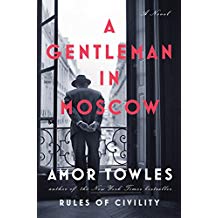 In 1922, Count Alexander Roskov, a member of the Russian aristocracy, is declared an enemy of the state and subjected to “house” arrest in the Hotel Metropol. The description of his demeanour and manners is exquisite and impeccable, hardly surprising for an author whose previous book was Rules of Civility. Alexander creates new and changing relationships with individuals who work in the hotel over the next 32 years. The prose illustrates beautifully the importance of virtues like loyalty. The Soviet Union undergoes dramatic change in this post-revolution period, so Alexander has to be adaptable. The most impactful change occurs when he becomes guardian of a 6-year-old little girl. This is a wonderful book with masterful writing, so a joy to read.
 What David Read