
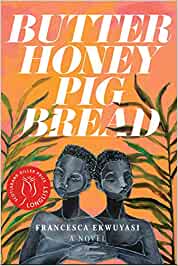
A superb relationship book set mostly in Nigeria with some Canadian content. The memorable characters: a mother with an uneasy existence with the spirit world, and her twin daughters. The twins exhibit a special closeness but also a requirement for space away from each other, especially after a childhood trauma to one of the twins. And one of the daughters has an apparition to consult with and offer comment. An interesting feature of the story is that the context is Nigeria of privilege. There is lots of Nigerian cooking too. From the Giller long-list.
Category: Location / Setting
The Finder – Will Ferguson
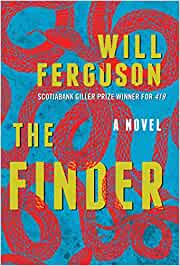
Ferguson has written a very enjoyable mystery-thriller. There are four principal characters: an Interpol officer pursuing a mysterious “finder” who locates lost treasures, plus a jaded travel writer and a photojournalist. One of the joys of this entertaining story are the locations: the southern-most island of Japan, New Zealand, and the Australian outback. So, a winning combination of memorable characters with exotic locations. Ferguson’s writing blends wit with adventure; highly recommended.
Ridgerunner – Gil Adamson
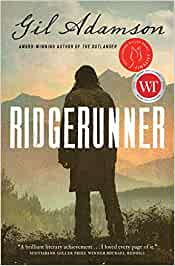
This is a beautifully written book set in 1917. After the death of his mother, 12-year-old Jack is delivered to the care of Sister Beatrice while his father, William Moreland, leaves to raise money to support Jack. However, Moreland’s only skill is as a thief; some of his escapades are Butch Cassidy-like. Much of the setting is the Banff-Lake Louise corridor with the World War in the background. The characters are rich, and the depictions of the natural world are breath-taking. Hopefully, this book will be a strong Giller contender. Ms. Adamson previously wrote the well–regarded The Outlander.
The Pull of the Stars – Emma Donoghue

Not surprisingly, this is another superb historical fiction story by Ms. Donoghue, a writer who never fails to entertain. Dublin in 1918 is suffering the ravages of the Spanish flu pandemic. The story follows three women over just 3 days in a small Maternity/Fever ward: a nurse, volunteer, and physician. There is impeccable medical detail. But the dominant theme is hopelessness – an inability to effectively treat influenza patients with an over-arching issue of mistreatment of orphans and children of unwed mothers by Catholic residentials schools/homes. Highly recommended but be prepared for some profound sadness.
How a Woman Becomes a Lake – Marjorie Celona
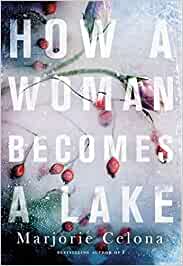
A beautifully written story set in a small town in Washington state in 1986, a mystery about a missing person. Celona’s description of flawed family relationships is harrowing; guilt, shame, grief, and blame are all factors. The merciless weight of carrying secrets and the ongoing cost of keeping these secrets are dominant themes. And there is an intriguing treatment of an after-death perspective. Highly recommended.
Mexican Gothic – Silvia Moreno-Garcia

Mexico 1950: Noemi goes to see her cousin Catalina who is living in a creepy old mansion called the High Place. The story has a slow beginning but then accelerates to become a true gothic thriller. Can a house have a malevolent purpose, to possess humans? What will humans sacrifice for immortality? Can you distinguish a dream from a hallucination? Small spoiler alert: readers of this thoroughly creepy book will never again view mushrooms as innocuous things!
A Large Petal of the Sea – Isabel Allende
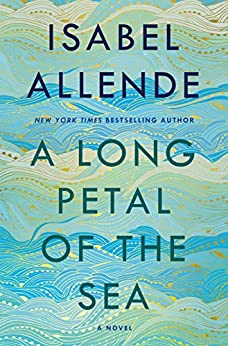
Allende’s latest historical fiction novel follows two young Spanish people as they flee the Spanish Civil War in 1938. Roser is a pregnant widow; Victor is the brother of her deceased lover. Their flight to the French border is harrowing. Eventually they are chosen by the great Chilean poet Pablo Neruda to immigrate to Chile but must be married to qualify for the journey. Thus, a long caring relationship is initiated in a new country. A replay of the Spanish Civil War conflict is encountered by the military overthrow of the Allende government in 1973, another battle between freedom and repression. After a 12-year exile in Venezuela, Roser and Victor return to Chile which is their true home. This is an epic story told with Allende’s typical lucidity.
The Eighth Life – Nino Haratischvili
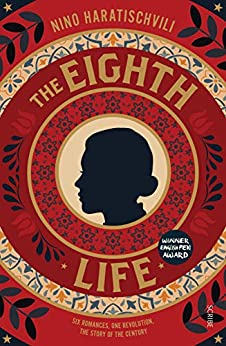
This remarkable book needs two initial comments. First, the e-book version is 1904 pages (the longest book I have every read), so any reader needs to commit to a substantial amount of time for reading. And second, there are some unspeakable acts of brutal violence and cruelty. Given these comments, the story is compelling, and the writing is excellent. At its core, this is a relationship book covering five generations and about 100 years of history for a family living in Georgia, initially part of the Soviet Union. There are fractious family relationships, some vicious acts. Intense feelings, fear and self-loathing dominate some characters. And an important context is the rise and fall of the Soviet Union. The greatness of this book is in the psychological point of view. Can the cause(s) of misfortune be identified? Are motives ever truly understood or explained? A fantastic read, highly recommended; thanks, Renee, for bringing this book to my attention.
The City We Became – NK Jemisin

A very imaginative example of speculative fiction about the soul of cities, specifically New York which is protected by five avatars in the five boroughs: Manhattan, Brooklyn, the Bronx, Queens and Staten Island. The personalities of the avatars reflect the borough characteristics. But there is conflict, a city takeover by malevolent forces! Highly entertaining with extraordinary visual scenes. Thanks Amy for this recommendation.
 What David Read