
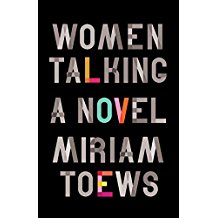
 A fictionalized account of a true story, that women in a strict Mennonite community in Bolivia were repeatedly sexually assaulted while drugged, by men in their own community. The women are having introspective existential conversations: to stay (and fight) or leave? They also discuss moral issues of faith and forgiveness. The only periodic male point-of-view is the transcriptionist who is translating their conversations into English and who occasionally offers comment. The context is a conservative patriarchal society where women have no rights. They want safety for their children, the ability to practise their faith and to think for themselves. Powerful writing.
Category: Genre
Stray City – Chelsey Johnson
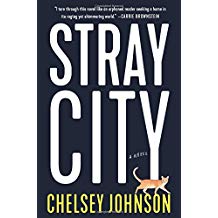 This book was a chance discovery at the library, so was read without expectations. Therefore the pleasure of reading a very fine first novel was palpable. Andrea leaves a strict childhood in Nebraska to be immersed in Portland’s lesbian life. A bad breakup results in a brief hookup with a man, and a pregnancy results. Much of the book details the difficulty of relationships, in particular the idealized fantasy of a relationship. There are funny parts and sad portions but the core of the book is about the family that we choose, for an excellent story.
The Good People – Hannah Kent
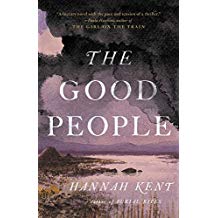 This is Ms. Kent’s second novel; her first was the excellent Burial Rites. Her two books have two characteristics: they are about women, and feature impeccable historical research. The Good People takes place in Ireland in 1825-26. The story is about the conflict between folklore and the emerging modern world of religion and law. The practice of folk knowledge to counter-act the actions of evil fairies leads to superstition, and gossip become malicious. All the characters are rich and compelling: an old crone, a grieving widow, a young maid, and an afflicted child thought to be a changeling. The story is both bleak and beautiful; highly recommended.
Heart Berries, A Memoir – Terese Marie Mailhot
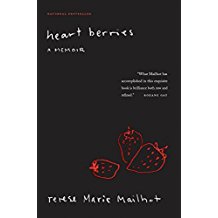 An ongoing quest to read more indigenous authors can be complicated because there can be a vast gap in the ability of a non-Indigenous reader to grasp meaning. This book by Ms. Mailhot produced an uncomfortable feeling because of her raw and uncompromising writing. The narrative unfolds as a stream-of-consciousness confession of many difficulties: foster care, parenthood and removal of children, substance abuse, complicated and often destructive relationships, mental illness, suicidal ideation … the list goes on. Although short in terms of pages (132), this book is thought-provoking and intense, and is best read in short segments (like poetry). Highly recommended but be warned that this is a tough read.
Day of the Dead – Nicci French
 This is the 8th and final book in the Dr. Frieda Klein series, and so provides a powerful climax with respect to Klein’s arch-nemesis, the serial killer Dean Reeve. Klein remains an enigmatic figure, for sure. Radical plot changes occur to make this a very satisfying read. I look forward to what this husband/wife team write in the future. Thanks Joyce, for your original recommendation of this series and for your enthusiastic thumbs-up for this last book.
Two Steps Forward – Graeme Simsion and Anne Buist
 An engrossing story of two people’s 2000-km 90-day journey from Cluny, France to Santiago de Compostela in Spain, the Chemin St. Jacques aka Camino de Santiago. Zoe is a 45 year old Californian whose partner has died recently. Martin is a 52 year old recently-divorced engineer from Yorkshire, England. Their separate but interlinked journeys offer introspective musings on human truths: that life is complicated and that relationships can be difficult. Nothing earth shattering in the content but presented in a very pleasing and satisfactory manner, and the context of the journey is superb.
(Graeme Simsion wrote the The Rosie Project and The Rosie Effect)
Tin Man – Sarah Winman
 Ms. Winman has written two fabulous books: the hilarious When God Was A Rabbit, and the poignant A Year Of Marvellous Ways. Her latest book is entirely different but also brilliant in an understated and quiet fashion. Ellis and Michael have been best friends since they were twelve years old. Eventually Ellis meets and marries Annie which produces an interesting and dynamic 3-way friendship. The story unfolds in non-linear time and because the writing is spare, some attention is required to appreciate the vibrant storytelling. Some key things are left without explanation or detail, which is perfect for a book about love and loss.
The Punishment She Deserves – Elizabeth George
 This may be the 20th Inspector Lynley mystery book and they are a continuing joy to read. At about 700 pages, the story is rich in detail. The portrait of the English countryside (Ludlow) is impeccable, as always. But the core of this novel is the unlikely partnership of the urbane and cultured Lynley with the impulsive Barbra Havers, his assistant. Their repartee as they investigate a crime is simply wonderful to read. And until 8 pages from the end, there is only a single death so a nice change from crime books about brutal serial killers with more detail than one would like about blood spatter analysis.
Amazing Grace – Lesley Crewe
 Sometimes it is worthwhile to read a cathartic story that makes you cry, and the life of Gloria Fairchild, told in flashbacks, fulfills that occasional need. Grace’s life is an emotional roller-coaster, with desperate lows and transcendent highs. The picturesque setting is rural Cape Breton with some excursions to New York, Toronto and New Brunswick. Thank you Mary, for this recommendation.
 What David Read