
 Brilliant story-telling about a Metis woman’s search for her husband, a quest complicated by the sinister presence of a rogarou, a man/dog monster. And there is a travelling missionary tent show using the historical role of religious conversion to steal land and resources from Indigenous people. Finally, the book becomes a flat-out thriller. Very strong writing, better than The Marrow Thieves.
Category: Contemporary
The Rosie Result – Graeme Simsion
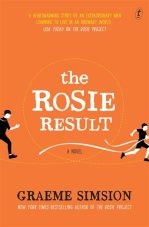 The concluding book of the Don Tillman Trilogy finds Don, Rosie and their 11-year old son Hudson relocating to Melbourne. Hudson’s school observes some social troubles and requests an autism assessment. This stimulates Don’s formidable problem-solving abilities, the Hudson Project, to aid Hudson in acquiring skills to fit in. The story addresses important questions: is labelling useful in terms of identity; should people on the autism spectrum adjust their behaviour and thinking to match neuro-typical norms? And there is bullying and a confrontation with an anti-vaxxer parent. Overall, a compelling read, with humour and psychological insight into the complexity of human behaviour. Highly recommended.
Normal People – Sally Rooney
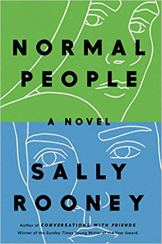 This is a superbly-written relationship book. The story covers four years in the lives of Connell and Marianne, one year at high school in the west of Ireland followed by University at Trinity College in Dublin. Rooney’s writing illustrates perfectly that relationships are complicated even between two people with undeniable chemistry, complications by miscommunication and misperception of feelings. There is also emotional paralysis by expectations of inadequacy and not belonging. Connell and Marianne are very different people from different backgrounds, resulting in feelings of isolation and disconnection. This is a great book, better than her first book Conversations With Friends.
Olive Again – Elizabeth Strout
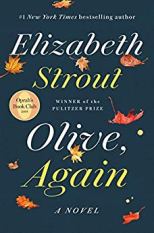 This is a sublime sequel to Ms. Strout’s exquisite Pulitzer Prize-winning Olive Kitteredge. Olive remains a somewhat difficult, direct, honest but unfiltered and often irascible character. Her relationship with her second husband, her son from her first marriage, and the townspeople in a seaside town in Maine are, not surprisingly, complicated but entertaining. The stories show a delightful ordinariness of people. And finally, the book has a powerful treatise on ageing and (the lack of) self-awareness. A superb read.
Patsy – Nicole Dennis-Benn
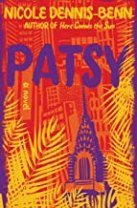 Patsy is a single mother adrift in Jamaica in 1998. When she gets a visa to visit America, she grasps the opportunity to choose herself first, to pursue her dreams and aspirations. However this means abandoning her 5 year-old daughter Tru. Over the next decade, Patsy has to endure the scary realty of being an undocumented individual in Brooklyn. And finally, to paraphrase a statement in the recent Mr. Roger’s movie, it is often tremendously hard to forgive those who you love but have disappointed you. Excellent dramatic writing.
The Great Alone – Kristen Hannah
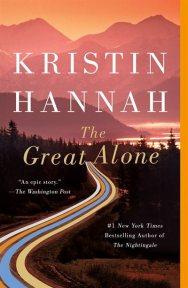 The most important character in this novel is Alaska: majestic beauty coupled with destructive danger. Be warned, Alaska can kill with brutal cold dark winters and savage wild animals. The key plot element in this book is the people that Alaska attracts: rugged individuals, survivalists and some crackpots. The Allbright family travels to Alaska in 1974, woefully unprepared for the harshness of life and survival. What follows is an angst-filed drama that sometimes can approach a soap opera story but the context of Alaska overcomes some plot issues.
The Immortalists – Chloe Benjamin
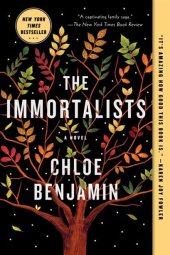 This intriguing novel begins in 1969 when four siblings (13, 11, 9 and 7 years-old) consult a psychic who allegedly tells them individually the day of their death. What follows is a narrative of each sibling that asks a series of questions. What is the nature of belief? Can fate be pre-ordained? What is the line between destiny and choice? Is there a link between reality and illusion? Is there real magic? At its core, this is a family love story even though the siblings appear to be remarkably different, creating complicated complex characters. This is very imaginative story-telling.
Reproduction – Ian Williams
 This is a very interesting first novel that is a Giller finalist. The story is about family, but family that is invented by mostly non-biological relationships. There is much dysfunction, some of it quite hilarious. The two adult men, Edgar and Oliver, are particularly reprehensible. The form if the writing is original and works very well until the final section where the literal subtext becomes annoying. Still, this is an insightful story about unconventional people.
The Dutch House – Ann Patchett
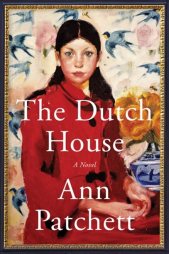 This is a deceptively simple and subtle book about family. The key characters are siblings, Danny and Maeve. There are some astonishing acts of cruelty in their early life but also acts of transcendent kindness. Danny is someone who lacks introspection – he commits to a task like learning chemistry with dogged determination; liking the subject is irrelevant. Unfortunately, he applies the same approach to his relationships, i.e. his wife, so love and happiness are non-factors in his relationships. His true happiness is only expressed to and with Maeve. Consequently, forgiveness is difficult for him, a fact that will complicate his life. Like most of Patchett’s writing, this is very fine story-telling.
 What David Read