
A Giller long-listed book and a recent Canada Reads contender: Muna is a widowed single mother who escapes to Montreal in 1986 from Beirut. What follows is a one-year struggle to find work as an immigrant, to help her son Omar adjust to a radically new environment, to survive her first winter, and to overcome marginalization and prejudice. A compelling story.
Category: Book themes
Permanent Astonishment – Tomson Highway
Highway is a fine novelist (Kiss of the Fur Queen) but this is a memoir, subtitled “Growing up Cree in the land of snow and sky”. Born in 1951, he grows up in remote Indigenous communities in NW Manitoba. The Indian Act declared that status Indian children MUST be sent to residential schools, so at age 6, he is flown to Guy Hill Indian Residential School in The Pas. Over the next 9 years, he describes academic challenges to learn English, but he does NOT experience institutional cultural genocide and has only a brief experience with sexual abuse at age 11. Overall, his residential school experience is positive even for a two-spirit individual, so an important perspective.
VenCo – Cherie Dimaline
This new book by Ms. Dimaline just gets better and better, moving from YA to adult fiction. Imagine a young Metis woman on a search for a spoon to reassemble a coven of 7 witches. Imagine that a deliciously evil male Benanmanti witch hunter pursues her with deadly intent. This is a subversive feminist story that is exciting and compulsively readable, mixing danger with humour. Highly recommended. By the way, the title is an anagram for coven!
In – Will McPhail

A remarkably insightful graphic novel about the difficulty of truly honest communications, leading to the tendency to have meaningless superficial encounters. The black-and-white drawings are interspersed with colour drawings to create a compassionate and sensitive story. Thanks Amy, for this recommendation.
Maureen – Rachel Joyce
In the first book of a trilogy, Harold Fry embarks on a walking pilgrimage to see his dieing friend Queenie. The second book details Queenie’s backstory. And now the trilogy is completed with a novel about Maureen, Harold’s wife, setting out on another journey. Maureen is difficult and damaged, both judgemental and unlikeable. In fact, she is dealing with unprocessed grief over a death that occurred more than 30 years previously. There is a profoundly moving finale with emotional impact: self-discovery and forgiveness and the question – can grief be appropriated? All three books are wonderful; The Music Shop is an unrelated gem.
The Story Of Us – Catherine Hernandez

The author of the acclaimed Scarborough now is writing about MG, a Filipina caregiver with problematic times as a nanny in Hong Kong and Canada. Her story turns dramatically when MG begins to care for Liz, a transgender woman with Alzheimer’s, to become an achingly beautiful homage to resilience and inclusion. Finally, the story is told from a unique point-of-view, a brilliant literary device which shall remain a mystery until the book is read.
The Night Travelers – Armando Lucas Correa
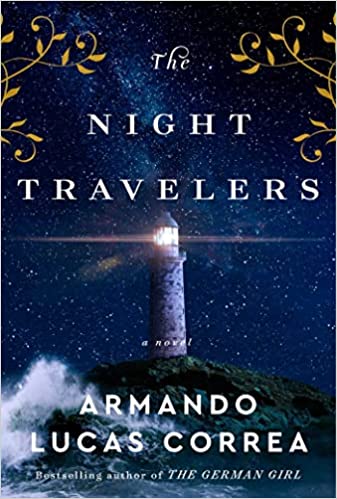
An angst-filled story of 4 generations of women: sometimes daughters have to be sent away to save them. What are the motivations of the mothers? Lilith, an 8-year-old mixed-race child (mischling), is sent from Germany to Cuba in 1939. Her daughter, Nadine, is born in 1959 in the midst of the Cuban Revolution and must be sent to the USA at age 3. Nadine and her daughter Luna complete the research of family endurance and sacrifice.
When Women Were Dragons – Kelly Barnhill
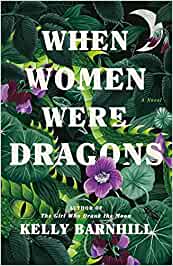
This is a brilliant book of speculative fiction. Imagine America in 1955 – more than 640,000 women undergo a Mass Dragoning. Alex is an almost 9-year-old girl who asks the sensible question – why did some women transform into dragons (her aunt) but not others (her mother)? What if the official response is denial? Information is ignored and suppressed – this is the McCarthy era after all. Suffice it to say that these are not Game of Thrones dragons, and many return to their communities, but for what purpose? And finally, libraries and librarians have important roles! Although there is much feminist rage, this is ultimately about women having choices. HIGHLY recommended.
The Dickens Boy – Thomas Keneally
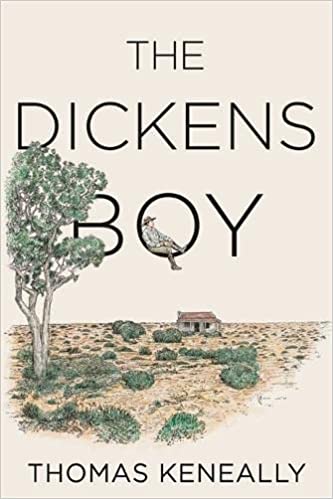
The acclaimed author of Schindler’s List and The Daughters of Mars (just 2 of his 33 books) has turned his attention to his Australian homeland. Edward Dickens, the 10th and youngest child of his father Charles Dickens, travels to Australia in 1868 at age 16 to make something of himself in the outback. What follows is written with impeccable detail of the following two years: sheep shearing and cricket, encounters with Aboriginals (darks), colonialists and criminals. Very entertaining.

