
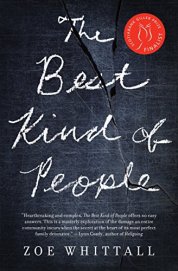
 This powerful book is about rape culture. George, a revered high school teacher, is accused of sexual misconduct and attempted rape; the complainants are 12-14 year-old school girls. George then recedes into the background as the book vividly details the collateral damage to his family who want to be supportive of a good husband/father but powerful emotions like guilt over suspicion, anger and confusion are inevitably present. Feelings of powerlessness are described evocatively. The consequences of living in a small judgemental town with attendant lies and betrayal is another vivid characteristic in this fine novel (Giller nominee). In fact, the verdict delivered by the end of the book is inconsequential: lives have been changed irrevocably.
The Trespasser – Tana French
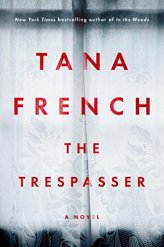 Another superb mystery thriller in the Dublin Murder Squad. The procedural detail in staging an interview, for example, is fascinating. But the best feature of this novel is the description of the head-space of Detective Antoinette Conway, the only female in the Murder Squad, so she is faced with Prime Suspect-like intrigue from the good-old-boys. French is a great crime writer; all her books are highly recommended.
The Wonder – Emma Donoghue
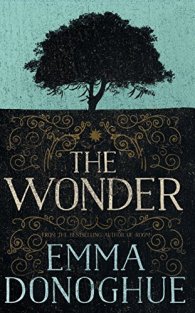
Set in Ireland in the 1860s (not long after the famine), this book provides impeccable detail into an investigation into a fantastical claim that an 11 year-old girl hasn’t eaten for four months: a miracle or a scam? The investigation requires close observation (24/7) and as Margaret Mead postulated long ago – observation changes behaviour. One of the observers is an English nurse, so there are Irish-English issues as well. There are strong religious overtones but at its heart, this is a story about motherhood (so in that regard, somewhat similar to The Room). Donoghue is a fabulous story teller, nominated for the Giller.
Winner of the National Book Award – Jincy Willett
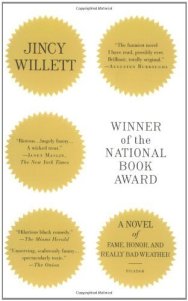
A story of two fraternal twin sisters, both remarkably similar and dissimilar, and a misogynistic psychopath whose relationships with both sisters are both bizarre and sinister. This is an excellent read, some really funny parts, and some creepy parts.
Vinegar Girl – Anne Tyler
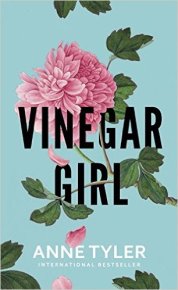
A man has two daughters, the oldest is Kate, there is an attempted arranged marriage – yes, this is a delightful retelling of Shakespeare’s Taming Of The Shrew by Anne Tyler, an American treasure as a novelist. A total hoot.
Sleep – Nino Ricci
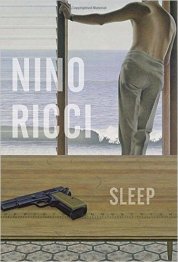
Ricci is a fine Canadian writer (the excellent Lives Of The Saints). In this novel, David is a life-long jerk whose bad behaviour is exacerbated by a sleep disorder. David has addictive self-destructive impulses so his life is an endless series of bad choices. There is a fascinating excursion into an obsession with guns. So powerful story-telling.
King John Of Canada – Scott Gardiner
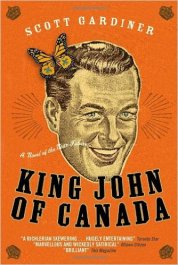 What with the recent fuss over the royal visit, this book presents the case for a Canadian monarchy, chosen by lottery! There is some very funny satirical writing about Canadian politics: Quebec separation and the Rest Of Canada, Alberta and Toronto politics – these sections are written perfectly. There are also some interesting contrasts with American politics (gun control, etc). My only issue with the book is that I didn’t like the ending. Nevertheless, a fun read so thank you Amy.
Purity – Jonathan Franzen
 Franzen writes about dysfunctional relationships (The Corrections) and this new book is no exception, the most dysfunctional being the marriage of Tom and Annabel. Indeed, there are NO normal simple relationships which becomes somewhat tiring. On the plus side, the story has more depth than his previous novels in part because of multiple locations. So not a must read but a challenging and interesting read. In fact, this is my favourite Franzen book but this recommendation is almost reluctant.
The Marriage of Opposites – Alice Hoffman
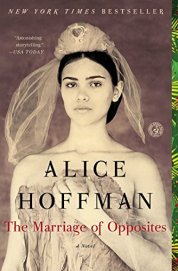 Hoffman writes meticulous historical dramas. This book tells the story of Rachel, growing up in St. Thomas in the Caribbean in the 1800s. Eventually she becomes the mother of Camille Pissarro who eventually becomes an important impressionist painter. Rachel and Camille are both head-strong and strong-willed which predictably creates conflict. The context of the early Caribbean life and Paris briefly is beautiful, and the story-telling is worthwhile.

