
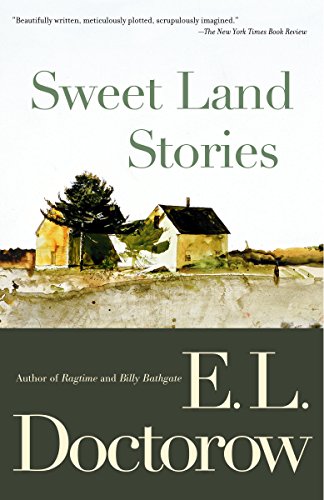
Generally, I don’t read short stories because they are … too short to be engaging (with Alice Munro stories a notable exception). This collection of five stories is also an exception: varied narratives with different times and locations, but with remarkable insight into who we are as a people and how we live. Thanks Hilary and Gerry, for the loan.
The Employees – Olga Ravn
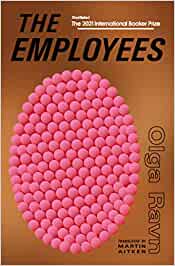
This is a fascinating and original story. The Six Thousand spaceship has both a human and humanoid crew. The ship removes strange objects from the planet New Discovery. The story is told as a series of statements, like an HR debrief. Is this part of an investigation? What causes tension among the humanoids? Is this an existential nightmare? Much is left to our imaginations; very entertaining.
A Complicated Kindness – Miriam Toews

A re-read of this brilliant 2004 book reveals themes that feature prominently in her subsequent books: family relationships, especially between sisters, and the cruelty of religious fundamentalism. Nomi is 16 years old and living a stultifying life in a strict Mennonite community characterized by sin, shame, powerlessness, fear, and punishment by silence (shunning). In short, this is a chilling portrayal of adolescent angst in an extreme context, with some inspired comic interludes – a must-read book.
Something To Hide – Elizabeth George
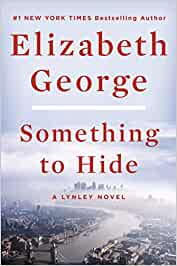
The latest Inspector Lynley book is, as always, a joy to read. Barbara Havers is reasonably well-behaved although considerable attention is given to her appalling diet! Lynley has issues in his personal relationships which reveal much about his personality. This long book (1263 pages as an e-book) has only one murder, so considerable attention is focussed on the context: female genital mutilation in London.
The Map Of Lost Memories – Kim Fay

This excellent first novel is an exciting adventure story. Set in 1925, action takes place in Shanghai, Saigon, and various locations in Cambodia. A disparate group led by a woman, Irene Blum, search for a lost Khmer temple. This is Indiana Jones-style archeology, meaning the objective is temple looting. What elevates this adventure story are discussions about the moral issues of looting and removal of treasures from their home location, and the lingering effects of French colonialism in SE Asia. Descriptions of jungle travel (heat, insects, snakes …) are vivid. Thanks Joyce, for this recommendation.
They Called Us Enemy – George Takei, with Justin Eisinger, Steven Scott, and Harmony Becker
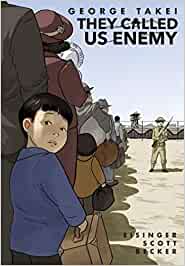
A graphic memoir of the Takei’s family incarceration into internment camps with other Japanese Americans from 1942-45. The stark black and white illustrations are particularly effective in showing the injustice of racism applied to innocent families. Indeed, the political rationale for these incarcerations is appalling. This racial injustice also happened in Canada, an important reminder of how mass hysteria can lead to overt racism. Thanks Rhoddy, for this gift.
Sea of Tranquility – Emily St. John Mandel

Another brilliant book by Ms. Mandel, a sweeping epic that spans from Vancouver Island in 1912 to a moon colony in 2401. Intriguingly, there are links to Mandel’s previous novel, The Glass Hotel, and to post-pandemic literature in general. And there is an author on a book tour and a time traveller. Absorbing and immersive, this is a fantastic futuristic novel that eerily captures our current reality. Highly recommended.
The Paradox Hotel – Rob Hart
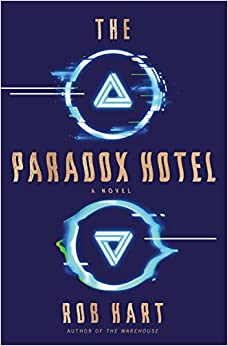
A fascinating speculative-fiction story: the time is 2072 and the place: The Einstein Intercontinental Time-Port and associated Paradox Hotel. Yes, there is time travel for tourists, to visit, for example, Ancient Egypt or the Triassic Period. January Cole works for the Time Enforcement Agency providing hotel security and she has an extraordinary caustic and acerbic personality. The story is really about the nature of time, but also grief and memory. And there are murders, dinosaurs and maybe ghosts: a thrilling read.
The Dictionary of Lost Words – Pip Williams
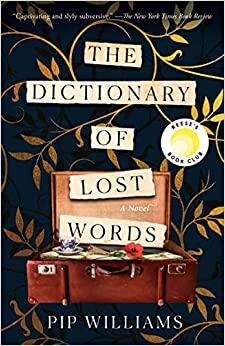
Full Disclosure: this fabulous book is about two of my favourite things; words and Oxford. The story covers the more than 40-year feat to assemble the Oxford English Dictionary (1886-1928). Words selected for dictionary entry are given context, mainly by white Victorian men. Esme is first brought to the Scriptorium as a young child by her widowed father, a lexicographer. She begins to collect “women’s words”, first those discarded by the male lexicographers and later from conversations with women. And this awareness of the importance of the context for words is influenced by the suffragette movement. A great story – highly recommended but be prepared for some very sad moments.
 What David Read