
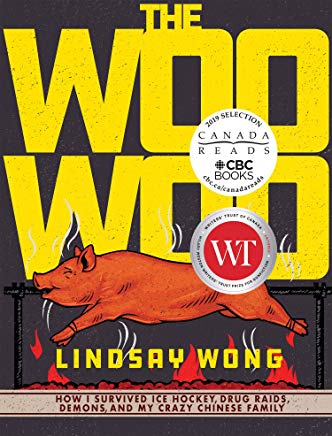
 Canada Reads contender. This is an extraordinary memoir about a Chinese-Canadian family in a Vancouver suburb. The Wong family is remarkably dysfunctional; Lindsay regularly received the following comments as a child: “you are fat, lazy and retarded”! She describes her upbringing with candour and does not flinch from castigating her own poor behaviour. Her mother is consumed by fears of demonic possession by malevolent ghosts, the woo-woo. This fear means that mental illness is treated as a woo-woo possession and thus is not treated except with ineffective exorcism attempts. And unfortunately there is a clear family history of untreated mental illness: a paranoid schizophrenic grandmother, a mother and aunt who may be bipolar. When Lindsay is afflicted by a rare medical condition (migraine-associated vestibulopathy), her woo-woo fears reappear. This is a disturbing story with harrowing details of abnormal psychology, interspersed with some splendid examples of comic relief. How does someone overcome such an upbringing? A challenging book, an uncomfortable read but worthwhile.
Category: Prizes, Awards & Contests
Giller, Govener
Big Island,Small – Maureen St. Clair
 This is a relationship story of two women with shared Canadian (Big Island) and Caribbean (Little Island, Grenada) backgrounds. The relationship is complex and complicated; there are some cases of persistent poor choices even though the person is conscious of this reality. Secrets and personal history are revealed slowly. This is excellent writing which deservedly won an award for social justice literature.
An Ocean of Minutes – Thea Lim
 This Giller short-listed first novel is fabulous. The setting is 1980. To obtain medical treatment for her partner who has been stricken with a virulent flu, Polly agrees to time travel 12 years into the future to work for the TimeRaiser Corporation to rebuild America. So this is debt bondage, a form of indentured labour. The issue of time is considered in two ways: more time for her partner and time in the sense of memory. Will Polly be reunited with her partner Frank in 12 years, when he will have aged and she will not? The future is decidedly dystopian and so this book successfully melds several genres: what will you do to survive a pandemic, the dislocating effects of time travel forward and the return to your home, social issues of income inequality, the power of memory and the complexity of enduring love. This is just excellent story-telling.
Songs For The Cold Of Heart – Eric Dupont
 This Giller short-listed book by a Quebec author is hard to describe. It is epic story-telling told with great detail, so there is much content about many many topics. Sometimes I wished that some of the content had been edited out as this is a very long book. Part of the book takes place in Quebec and it is very French-Canadian, with complex family dynamics, wicked nuns, etc. The last half takes place in Berlin and Rome, albeit with characters that are linked by family to the first part of the book. The Lamontagne family is always surprising; the writing is imaginative and often dark.
Autumn – Ali Smith
 This is a beautifully written introspective book about friendship, aging, art and so much more. Conversations are amplified by dreams, day dreams and wakeful imagination. This is a thoughtful and imaginative book that is often surprising, so a great read.
The Boat People – Sharon Bala
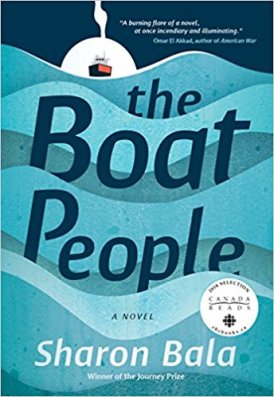 This is a novel created from a Canadian story – what happens to a boatload of Sri Lankans who arrive in Vancouver as refugees. The novel addresses a number of critical and important questions. What would you do to escape a deadly civil war? What would you reveal during the Immigration and Refugee Board hearings? How can the adjudicators determine what is truth from what might be lies or at least omission of facts? Part of what makes this book great is the detail of the chaotic refugee bureaucracy, and the ease of subverting refugee claims by politicians arguing that terrorists must be within the refugee population. So the context is vivid and important, and the three central characters are complex. Another remarkable first novel, this is the best of the Canada Reads books, in my opinion.
American War – Omar El Akkad
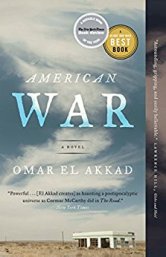 This is a remarkable book about a second American civil war (2075-95). The power is in the chilling demonstration of the cost of war to common people; this is not a story about soldiers. This war is driven by ecological issues and extreme partisanship, so very topical and prescient. Above all, this is a tough angry story about revenge and retribution. This is a debut novel that should be a formidable Canada Reads contender.
Brother – David Chariandy
 This is an outstanding book that everyone in Canada should read for its insight into the world of ethnic immigrant families. The place is Scarborough; the principal family has Trinidadian origins: two brothers and their mother. The fragility and vulnerability of their lives is captured vividly. There are issues of poverty and violence, and most chillingly, dangerous encounters with police. All the honours that this books has received (Rogers Writers’ Trust Fiction Prize, etc) are richly deserved. This will be a formidable contender in the upcoming Canada Reads competition.
Transit – Rachel Cusk
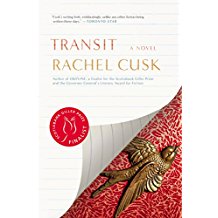 This is a fascinating book. The central character is never named: she is an author, divorced with two sons, and renovating a new home in London. Almost nothing else is revealed in the book. She listens carefully to conversations and sometimes asks cogent questions so we learn much about the speaker but nothing about the listener. Many conversations are wonderfully philosophical. The writing is elegant: “Amanda has a youthful appearance on which the patina of age was clumsily applied, as if rather than growing older, she had merely been carelessly handled like a crumpled photograph of a child.” There is also a wonderful description of authors attending a literary festival. This book (Giller short-listed) is much better than her previous book Outline (also a Giller finalist in 2015).
 What David Read