
 This is an excellent example of speculative fiction. Imagine if young women acquire/discover a new physical power, an electrical discharge so by touch they can inflict agonizing pain and even death. This is the ultimate manifestation of girl power! Now imagine the impact of this fierce new female power on religion, politics and crime. This book takes us on an imaginative journey into an alternate reality with many elements that resonate in today’s world. Thanks to Chris/Amy for this recommendation.
Category: Science Fiction
An Ocean of Minutes – Thea Lim
 This Giller short-listed first novel is fabulous. The setting is 1980. To obtain medical treatment for her partner who has been stricken with a virulent flu, Polly agrees to time travel 12 years into the future to work for the TimeRaiser Corporation to rebuild America. So this is debt bondage, a form of indentured labour. The issue of time is considered in two ways: more time for her partner and time in the sense of memory. Will Polly be reunited with her partner Frank in 12 years, when he will have aged and she will not? The future is decidedly dystopian and so this book successfully melds several genres: what will you do to survive a pandemic, the dislocating effects of time travel forward and the return to your home, social issues of income inequality, the power of memory and the complexity of enduring love. This is just excellent story-telling.
All Our Wrong Todays – Elan Mastai
 This first novel is an exemplary example of speculative fiction at its best. The story is complicated: time travel creating multiple alternate realities. And there is much philosophy about the nature of self, plus a love story to boot.
Tess Of The Road – Rachel Hartman
 This is a YA fantasy story set in medieval times with dragons, etc. Tess is a 17 year-old misfit, an obnoxious headstrong anarchist-in-training who invariably chooses to behave in a way that produces trouble and discord. Because of particularly scandalous behaviour, according to the norms of the day when women are supposed to lead constrained and subservient lives, Tess leaves on a journey of discovery, a pilgrimage of sorts. She is accompanied on part of this journey by a quigutl, a flightless sub-species of dragon (readers should consult the Glossary at the end of the book). Surprisingly, the story then becomes quite introspective about the nature of bad behaviour and finding one’s ash in the world, and thus more interesting than the average fantasy story. Overall, a very fun read.
A Darker Shade of Magic – V E Schwab
 This is a terrific fantasy novel, set in London in 1819. Except that there are 4 versions of London, completely different worlds so multiple parallel universes. A small number of magicians can travel between the different Londons, but there is black magic and tragedy. Full disclosure, there is a significant kill count with collateral damage to some very sympathetic characters (the kindly innkeeper, for example), so this is not Harry Potter magic. Best of all, there is a great character called Lila, a feisty pick-pocket and wannabe pirate. This is a very imaginative and enjoyable read that is often philosophical; thanks Amy for this recommendation.
Arcadia – Iain Pears
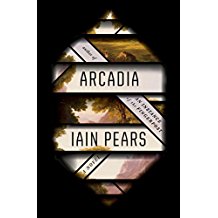
 This is a wonderfully imaginative novel that represents a superb example of speculative fiction, with both time travel and travel to a parallel universe. The parallel universe is created from a writer’s imagination so there are allusions to CS Lewis, Tolkien and Shakespeare (a central character is a young woman called Rosalind who disguises herself as a boy while living in a forest!). All the characters are memorable and the story telling is complex because of multiple time periods – a very enjoyable read.
The Historian – Elizabeth Kostova
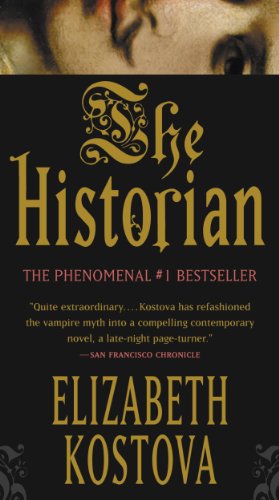 This fascinating book has a Dan Brown-like plot (but with much better writing). Academics search for clues to find missing persons and to research Vlad Dracula’s life (is he still living?). This research is conducted in medieval libraries (yay!) with much travel: Oxford, Istanbul, Budapest and Bulgaria. Actions happen in three times: the 1930s, 1950s and 1970s, often with parallel stories so the complex plot with much historical detail requires the full attention of readers. This is a really enjoyable read; thanks Steph, for this recommendation.
Lilith’s Brood – Octavia E. Butler
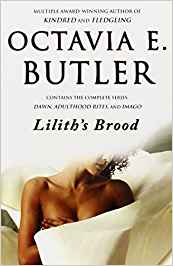 This is a trilogy, comprised of Dawn, Adulthood Rites, and Imago. Earth has had an apocalyptic world war, and the few remaining humans have been “rescued” by aliens and kept in stasis for hundreds of years. What follows is a brilliant description of the human instinct for violence, and the complexity of feelings when humans encounter the aliens for the first time. Lilith is utilized to choose humans to be re-animated, and so there is the strong psychology of humans learning about aliens and distrusting Lilith’s role. The aliens have breath-taking powers or healing, aka resurrection, but have their own agenda. The human-alien relationships are an imaginative form of symbiosis with genetic sharing in offspring. Thus there is yet another interesting new relationships, that of parents and offspring. Butler wrote these books almost 30 years ago, so she anticipated and described genetic engineering very accurately. She also wrote the great Kindred which is in the archives of this blog. Thanks Amy, for sharing this imaginative and compelling book.
Making History – Stephen Fry
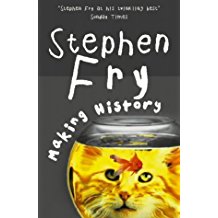 What if you had access to a “Temporal Imaging Machine” and could send a male contraceptive back in time to a village in Austria in June 1888, to prevent the birth of Adolf Hitler? This would be a good outcome, right? What could go wrong? This inventive novel shows that the Law of Unintended Consequences is diabolically operative and so history should not be tampered with. Thanks Amy for this recommendation. Although sometimes Fry’s writing is too cute, this is a very entertaining book.
 What David Read