
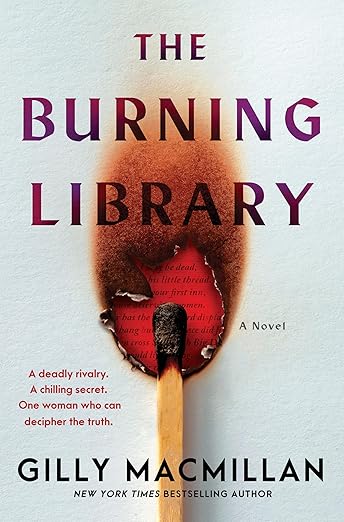
Reading this book produced vivid memories of Dan Brown’s The Da Vinci Code, except women take centre stage. Two rival organizations of women, The Fellowship of the Larks and the Order of St. Katherine, are in a bloodthirsty race to recover an ancient medieval manuscript. And there are puzzles and a protagonist with an eidetic memory, and settings that include Scotland, England and finally Verona. Ruthless ambition and obsessions include murder, so entirely entertaining.
Category: Female author
Book of Lives – A Memoir of Sorts – Margaret Atwood
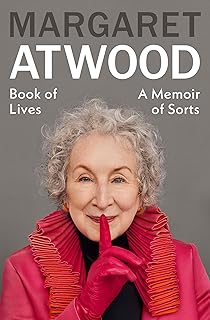
Ms. Atwood is, of course, a Canadian literary treasure with books of poetry, fiction and non-fiction. Her memoir is, predictably, fascinating with her droll sense of humour. First, there is her somewhat unconventional childhood with summers spent in remote northern bush country with her entomologist father and resourceful mother. Second, key moments in her life are linked to books, like writing the Handmaids Tale in 1980s Berlin. And finally, the important people in her life are acknowledged, especially Graeme Gibson. Overall, an insightful and often very funny memoir from an imaginative and thoughtful author. Highly recommended.
Unless – Carole Shields
Sometimes when the CPL hold system fails to provide a new book, it is a great pleasure to revisit a classic book from my personal library, like this great novel from 2002 by Ms. Shields, a Canadian literary icon. Full disclosure: this is a book about and for women. Reta is a 44-year-old married mother with three daughters, and a writer/translator. Her female relationships are complex. Notably, her 19-year-old daughter Norah is living on the street; her motivation of choose a path of self-abnegation is a mystery. And Reta’s interactions with her female fiends and colleagues are also complex with profound feelings of powerlessness. As always, Ms. Shields’ writing is exquisite; for example, the description of a library trip is sublime.
My Name Is Emilia Del Valle – Isabel Allende
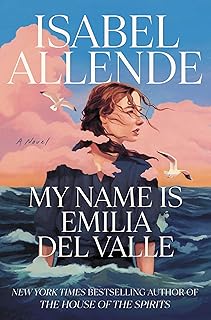
Another excellent novel of historical fiction by Ms. Allende. Emilia is born in San Francisco in 1886 after her Irish mother was abandoned after a brief affair with a Chilean aristocrat. She grows up to become a strong self-sufficient young woman and an independent thinker. She begins to write pulp fiction and then turns to journalism, all using a male pen name. In 1891, she travels to Chile and becomes embroiled in a brutal civil war. Her war experiences are truly harrowing; overall, this novel is spellbinding.
A Truce That Is Not Peace – Miriam Toews
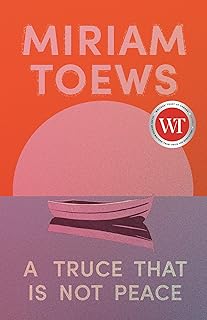
This exceptional book is hard to describe – a stream-of-consciousness memoir, perhaps, featuring electrifying honesty. There are questions like why does she write? There are letters to a silent sister. And there is profound melancholy when acknowledging the suicides of her father and sister (Page 31: “I was crazy with grief, guilt and dread”). But there are very funny excerpts about a European trip in 1988, and hilarious observations about the current domestic life in her multi-generational Toronto home. Bottom line- this is a powerful story that is both heart wrenching and joyful, in other words, Ms. Toews at her best.
Pick A Colour – Souvankham Thammavongsa

Remarkably, this first novel has been Giller short-listed. Importantly, there is much left unsaid in this accounting of a single day in a Nail Salon in an unnamed city. The three manicurists speak an unnamed language that allows them to talk and gossip freely about their clients. The owner Ning is an self-contained observer, so there is a seductive intimacy to common events. Overall, masterful writing as one might anticipate from a former Giller winner for short stories (How To Pronounce Knife).
The Bookbinder – Pip Williams
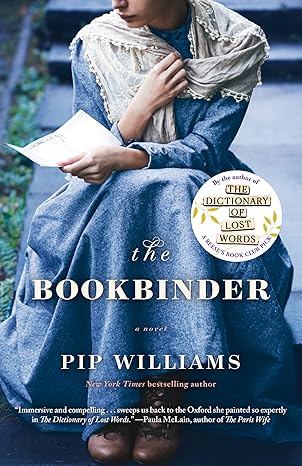
This is a fine example of historical fiction by the author of The Dictionary Of Lost Words. Once again, the setting is Oxford, but the time is 1914-18. Peggy and Maude are 21-year-old twin sisters working as bookbinders at the Clarendon Press. Peggy is driven by her love of books and a desire to study literature at university; Maude is a special extraordinary woman, vulnerable with an honest simplicity. Their lives are disrupted by the war and an influx of injured Belgian soldiers, and then by the influenza epidemic. This is a story about the love of books, about knowledge that is withheld if you are female, and the formidable barriers experienced by women. Highly recommended.
Miss Morgan’s Book Brigade – Janet Skeslien Charles
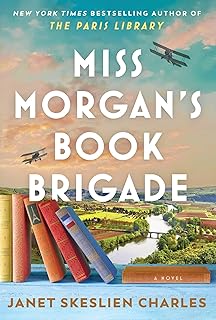
Anne Morgan, the daughter of the financier J.P. Morgan, established the American Committee for Devastated France (Le Comite americain pour les regions devastees, or CARDs). In January 1918, Jessie Carson leaves her NYPL librarian post to travel to Blerencourt in Northern France to establish children’s libraries, sometimes using bookmobiles from converted ambulances. Her efforts are complicated by ongoing and brutal WWI actions requiring temporary resettlement in France. Ms. Carson’s notable achievements are researched in 1987 by Wendy Peterson also working at the NYPL. This story is a tribute to human resilience.
Tell Me Everything – Elizabeth Strout

Sometimes a new book by a favourite author can only be described as an exquisite pleasure. Ms. Strout’s novel returns to the town of Crosby Maine with a beloved cast of characters: the iconic Olive Kitteridge, lawyer Bob Burgess, and the author Lucy Barton. This is a story of empathy and pathos; the intimacy of shared stories and experiences; the importance of being seen so one’s life is not unrecorded; the paralysis of grief; the relationship between friendship and love; loneliness, sadness and beauty; and finally the significance of the very human desire to leave a mark on the world.
 What David Read