
 De Bernieres wrote the delightful Corelli’s Mandolin, and his latest book is also excellent. The setting is Britain in 1914. The horror of WWI, the mud and stink and brutal death, is described vividly. Also, very precise details of flying are detailed. But this is a book about relationships within the McCosh family, in particular the 4 sisters. At times, the book is a tender love story that also touches on grief and religion. The relationships are often complicated: a sister loves someone who does not love her in return, and vice versa. There is some wry humour, particularly the class-conscious matriarch Mrs. McCosh who should be played by Maggie Smith if this story is ever adapted for film or theatre. Overall, a very entertaining story.
Category: relationships
Stag’s Leap – Sharon Olds
 I read novels almost exclusively because generally short stories are too short for plot development and context (Alice Munro’s writing is an obvious exception). And because I read quickly, I typically do not read poetry where so much meaning is often attached to a single word. However, a fellow reader (Renee) who I respect greatly told me about Stag’s Leap, a Pulitzer Prize winner, and it is fantastic. The poems tell the story of the ending of the author’s 30-year marriage. The poem “Last Look” will take your breath away and probably make you cry. The poems are an insightful look at loss and resulting invisibility – remarkable emotional poetry.
Serial Monogamy – Kate Taylor
 This is a new author for me, from the CBC Books winter reading list (thank goodness for CBC’s literary interest). This is an excellent book about relationships, my favourite topic. The central character is a wife/mother/author who writes a serialized fictional account of a long-standing affair that Charles Dickens had with Nellie, a young woman. This seems an unlikely focus for a novel but the writing is flawless with some time wrinkles that sometimes makes the reading complicated but very enjoyable.
Her – Harriet Lane
 A dark psychological drama about the relationship between two women, based on a one-sided memory. This is a sisterhood story with a riveting examination of the tyranny of motherhood. Really fascinating how the story unfolds.
Commonwealth – Ann Patchett
 Patchett is a great writer and this latest book is a wonderful story of what appears to be entirely dysfunctional families. A blended family with step-children united in their dislike of their parents, and each other, is described wonderfully. Then over 5 decades, relationships change and evolve. A favourite sentence that encapsulates how relationships change: “She had loved Bert Cousins, and then grown used to him, then was disappointed in him and then later, after he left her, with five small children, she had hated him with the full force of her life”. Wow.
Swing Time – Zadie Smith
 An un-named narrator tells a story that alternates between two times: childhood in NW London in the 1980s, and adulthood in the 2000s. All the important relationships in the narrator’s life are with women: her mother, her friend Tracey, and her employer Aimee, a Madonna-like rock star. A sub-plot in Africa is especially rewarding. Smith’s prose is insightful, she is an acute observer of the narrator’s world. This is sensational writing, the best of Smith’s books so far.
An Uncommon Education – Elizabeth Percer
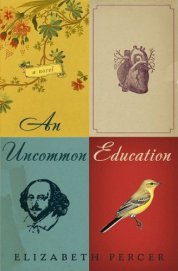 This is a remarkable first novel about relationships (my favourite topic): Naomi and her parents; Naomi and her childhood friend; Naomi and her fellow Wellesley College students. Parts of this book reminded me of Donna Tartt’s The Secret History, which is high praise.
Purity – Jonathan Franzen
 Franzen writes about dysfunctional relationships (The Corrections) and this new book is no exception, the most dysfunctional being the marriage of Tom and Annabel. Indeed, there are NO normal simple relationships which becomes somewhat tiring. On the plus side, the story has more depth than his previous novels in part because of multiple locations. So not a must read but a challenging and interesting read. In fact, this is my favourite Franzen book but this recommendation is almost reluctant.
Who By Fire by Fred Stenson
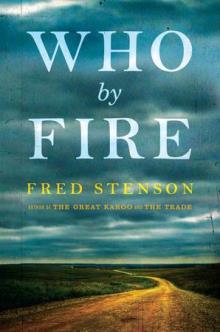 This is a very fine book by one of Alberta’s best writers. First the settings of a 1960s farming family next to a sour gas plant in Southern Alberta and contemporary Fort MacMurray are described perfectly, especially the farming story. And second, the complex relationships are rich with nuance: husband-wife, parents-children, siblings, and so forth. This is excellent story telling on an increasingly relevant topic.

