
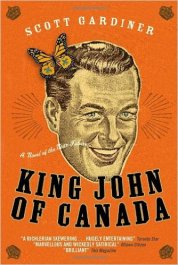
 What with the recent fuss over the royal visit, this book presents the case for a Canadian monarchy, chosen by lottery! There is some very funny satirical writing about Canadian politics: Quebec separation and the Rest Of Canada, Alberta and Toronto politics – these sections are written perfectly. There are also some interesting contrasts with American politics (gun control, etc). My only issue with the book is that I didn’t like the ending. Nevertheless, a fun read so thank you Amy.
Author: AJ
Purity – Jonathan Franzen
 Franzen writes about dysfunctional relationships (The Corrections) and this new book is no exception, the most dysfunctional being the marriage of Tom and Annabel. Indeed, there are NO normal simple relationships which becomes somewhat tiring. On the plus side, the story has more depth than his previous novels in part because of multiple locations. So not a must read but a challenging and interesting read. In fact, this is my favourite Franzen book but this recommendation is almost reluctant.
The Marriage of Opposites – Alice Hoffman
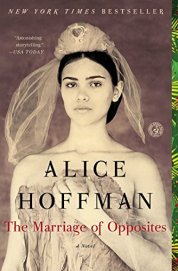 Hoffman writes meticulous historical dramas. This book tells the story of Rachel, growing up in St. Thomas in the Caribbean in the 1800s. Eventually she becomes the mother of Camille Pissarro who eventually becomes an important impressionist painter. Rachel and Camille are both head-strong and strong-willed which predictably creates conflict. The context of the early Caribbean life and Paris briefly is beautiful, and the story-telling is worthwhile.
NOS4A2 – Joe Hill
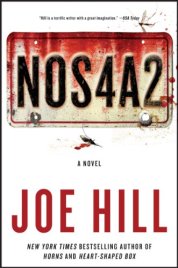 Sometimes a fantasy book written in the horror genre is just so appealing and Hill (Stephen King’s son) is a go-to author (previous recommendation for Heart Shaped Box). In this book, the title is from the license plate on a vintage 1938 Rolls Royce Wraith car, and of course stands for Nosferatu (German for vampire). This is an imaginative story with portals between the physical world and the mind, with child abductions and serial killings: the story is violent with many vivid descriptions of pain and quite a few deaths, so be warned. If you like (occasional) horror books, this is a cracking good read.
Kitchens Of The Great Midwest – JR Stradal
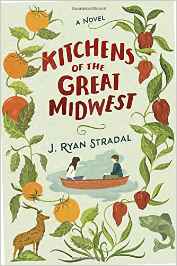 What’s not to love about a book with a first chapter entitled Lutefisk, when a Danish-Norwegian marriage is described as mixed race, and two children are named Rothko and Bracque (OK, the father is an art history professor). This is a book about the modern foodie culture, with a wise treatment of life in the Mid-West. The reading is very satisfying with some ridiculously funny parts and then amazingly poignant sections.
The Three Sisters Bar and Hotel – Katherine Govier
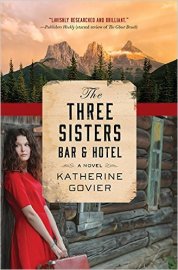 An epic story of the Western Rocky Mountains, with the setting of Gateway (actually Canmore). The story covers 100 years, from 1911 with guides taking pack-horse expeditions into the mountains. The core story is the disappearance of an American fossil-hunting expedition. The history of Canadian National Parks is presented as an evocative back story. This is a very good read, capturing the romance (literal and figurative) of mountains and the men and women who blazed the trails.
The Past – Tessa Hadley
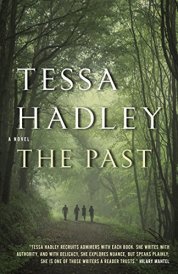 This is a perfect introspective story of family relationships in the present and past. There are secrets, things that are observed but not spoken of. The point of view of the children is most extraordinary – what they observe and what they keep secret. This is a very English story with some surprises – overall a very fine read.
A Little Life – Hanya Yanagihara
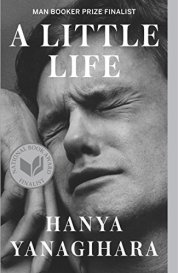 This is a powerful and also profoundly disturbing book, a guy book about 4 male college friends, with a detailed (1352 pages in my digital library copy) account of their relationships with each other mostly: intense friendship and sometimes love. There are essentially no important relationships with women. At the core of the book is Jude, who undergoes horrific abuse as a child that will bring you to tears. Predictably, Jude suffers pronounced attachment disorder which makes his subsequent relationships with his friends very complicated. One of the brilliant features of this book is the ability to illustrate how someone who is very very intelligent can repeatedly engage in completely irrational behaviour: Jude knows this but can’t stop. This should produce a pause in those who think that abuse can be trivialized by “just get over it”. This is a tough read for emotional reasons but very worthwhile. This book is a Man Booker finalist.
The Girl With All The Gifts – MR Carey
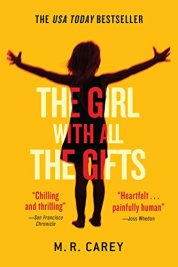 A variation on zombies: a fungus has created the “hungries”. Twenty years after the outbreak, there are very few survivors but this includes some children who have the infection but retain brain function, especially the ability to learn. Not surprisingly, these children are the subject of intensive scientific investigations in a secret army location. The best aspect of this book is the treatment of the sociology of an infection. A major part of the book details a journey with a disparate group of distrustful people who have to cooperate. Overall, a very interesting story.
 What David Read