
 This delightful novel is a modern retelling of Pride and Prejudice. The Bennett family lives in Cincinnati and Pemberly is an estate near San Francisco. The descriptions of the Bennett family antics are divine, especially Mrs. Bennett and the two youngest sisters, Lydia and Kitty. To underscore the modern context, a reality TV show plays a prominent role in the plot progression. Ms. Sittenfeld is a very fine writer (American Wife); her ability to construct vivid characters reminds me of Lionel Shriver. The shift from acute antipathy to love for Liz and Darcy is described wonderfully; this book is a real joy to read.
Category: Location / Setting
The Ministry of Utmost Happiness – Arundhati Roy
 A sweeping saga of India, mostly in contemporary times (1984-2014). Part of the book is set in Delhi but much takes place in Kashmir (topical given today’s political events). Ms. Roy’s writing is exceptional; impeccable detail means that the reader can feel the sensations of noise, heat, pollution and misery, violence and ethnic cleansing. Her vivid writing captures the chaotic complexity of India. And the main characters are women.
The Home for Unwanted Girls – Joanne Goodman
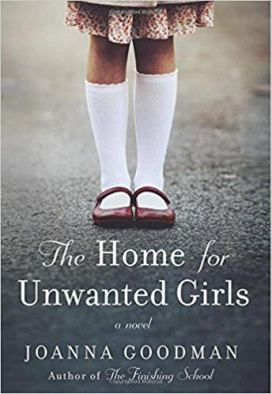 One of the things we learned from Heather O’Neill’s very fine The Lonely Hearts Hotel was that Quebec orphanages were tough places. Goodman’s novel reinforces that reality, beginning in 1950. Even worse, the Duplessis Quebec government transferred illegitimate orphans to mental institutions in order to obtain more federal money for institutions. So this is an angst-filled story over 20 years, the mother who was forced to give up her illegitimate daughter and the daughter’s experience in horrible institutions, so be warned.
Grief Cottage – Gail Godwin
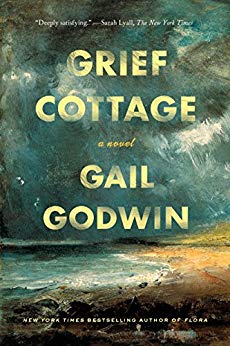 Sometimes a book can provide a perfect reading experience, a confluence of literary merit and also the receptivity of the reader. Godwin’s book was a perfect read for me. Marcus, an 11 year-old boy, has to live with his Great Aunt after the accidental death of his mother. His Great Aunt is a stranger, a painter who lives on a beach in South Carolina. Given the circumstances and his inherent inclinations, Marcus is wildly self-absorbed and introspective despite his young age. His journey through the summer, largely left to his own devices, is remarkable, both compelling and profound. This is a great read, see also Godwin’s previous book Flora.
A Matter of Malice – Thomas King
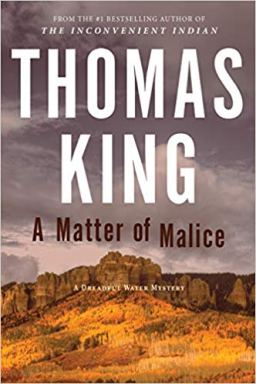 Thumps DreadfulWater (wonderful name) is a Cherokee ex-cop trying to live a quiet life in a small town in Montana. Thomas King is a very fine writer (The Back of the Turtle, An Inconvenient Indian) so the writing is much better than the average murder mystery. King captures the world-weary aspect of DreadfulWater, how a mind can wander and then snap back into focus. Now I am going to read the first three books in this series.
Woman at 1000 Degrees – Hallgrimur Helgason
 One of my goals is to read Icelandic literature and this is an epic story, deathbed recollections by an 80 year-old woman who has had a remarkable life. She is a unique individual: sardonic and above all, a survivor. Her existence as a young girl in WWII is harrowing and disturbing. The storyline is non-linear, like the ramblings of an old woman. This books gives some significant insight into the Icelandic psyche, an isolated under-populated island, plus varied experiences in places like Argentina.
Keeper n’Me – Richard Wagamese
 In the tributes to the late Richard Wagamese at literary festivals in Calgary and Vancouver, several Indigenous authors said that this book had a huge influence on their lives. Garnet Raven is a young child in an Ojibway-Anishanabe community in Northern Ontario. He is a victim of the sixties scoop, essentially a kidnapping, and so grows up without any sense of being an Indian. In fact, there are some hilarious instances of his attempts at cultural appropriation. After 20 years, he is reunited with his family and begins to lean the Indian way with an elder named Keeper. It is easy to understand why this book, published in 1993, became so important to Indigenous youth. This book should be essential reading for everyone, to appreciate a way of living in harmony with the land and the important of silence, of a slow pace of life and a solid sense of humour.
Our Homesick Songs – Emma Hooper
 This is an exquisite, enchanting book about Newfoundland written in two timelines: the early 70s and 1992-93 when people are fleeing the outports because the fish are gone. It is about family and love and the power of music: the title is perfect.
Hysteria – Elisabeth de Mariaffi
 De Mariaffi was a discovery at the Calgary WordFest in October 2018. This is a very fine mystery because of the context: upper state New York in 1956. There is an early sinister feeling in the book that develops effortlessly. Heike’s husband is very controlling but this was just typical of men in the 1950s. Or is it something more? Or is Heike delusional? The mystery deepens …..
 What David Read