
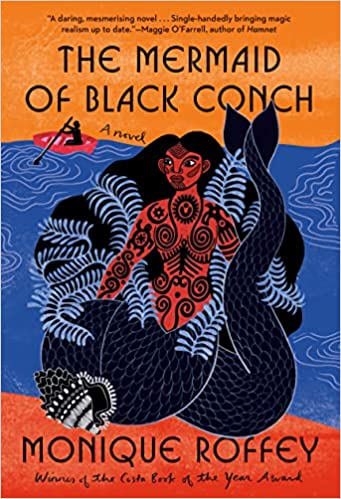
Aycayia was once an indigenous Taino woman in the Caribbean. What curse transformed her into a mermaid? If she is captured, will she re-transform into a woman? What will be her fate? How are the island lives changed by this phenomenon? This is a great story, no surprise since it is a Heather O’Neill recommendation.
Category: Location / Setting
The Christmas Bookshop – Jenny Colgan
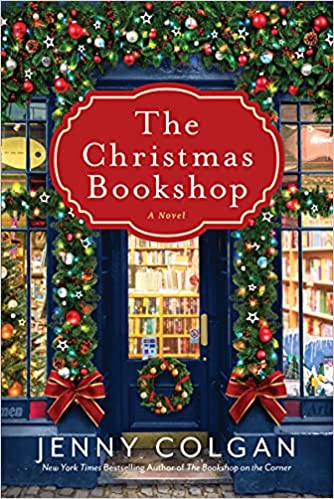
You may wonder why I liked this book because the story is entirely predictable, and the plot is sweetly sentimental. On the other hand, the word “bookshop” is in the title and the setting is contemporary Edinburgh. What can I say – it is a relationship book that is entirely satisfying.
The Strangers – Katherena Vermette
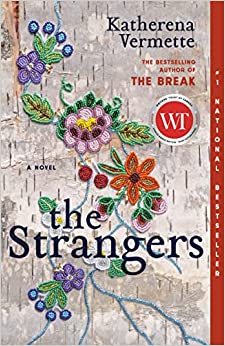
Like the companion novel The Break, this book begins with a Trigger Warning. The Strangers are a multi-generational Metis family living in Winnipeg: the story focusses on grandmother Margaret, daughter Elsie and children Phoenix and Cedar. Powerful emotions characterize these women: anger, shame in addictions, feeling invisible. Reflecting on sad stories, Margaret concludes (page 316) that “only Indians, Metis … had sorrow built into their bones, who exchanged despair as exclusively as recipes, who had devastation after devastation after dismissal after denial woven into their skin”. Compelling sentiments in the setting of important and necessary stories – a must read for all Canadians.
Fifty-Four Pigs – Philipp Schott
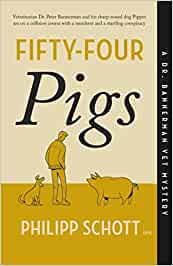
Mystery-crime stories are influenced markedly by context (time and place) and the “amateur sleuth” (think Miss Marple and Jessica Fletcher) is a special genre. This intriguing first novel is about a crime-solving veterinarian in Manitoba who uses logic and his dog Pippin’s remarkable nose to investigate when a swine barn explodes, revealing a murder victim. Totally charming.
Circus of Wonders – Elizabeth Macneal
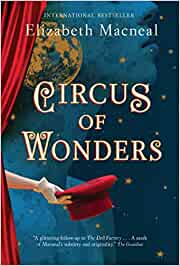
In Victorian England, the circus featured “human curiosities”, aka the freak show. The “performers” are exploited and objectified but also experience fame as someone no longer relegated to the shadows. There is also an interesting back-story of the Crimean War. A richly detailed historical novel, an enthralling slice of Victoriana.
The Good Women of Safe Harbor – Bobbi French
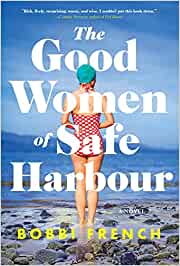
There is much to admire in this first novel. First, it is a female relationship book that deals with gritty subjects: teenage pregnancy, suicide, and medically assisted death. And second, the setting is Newfoundland. Some core values: friendship and forgiveness, the decision to love and be loved.
The Personal Librarian – Marie Bennett and Victoria Christopher Murray
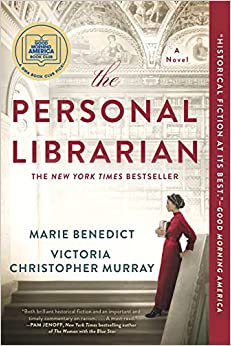
This is a fascinating fictionalized story of a real woman, Belle da Costa Greene, who in 1906 became the personal librarian to J. P. Morgan as he built the Pierpoint Morgan Library in New York city. Her expanding role in acquiring rare books, manuscripts and artwork is astonishing. But her prowess came at a deep personal cost; as a light-skinned African American woman, she had to masquerade as a white woman for her entire life. An insightful look at identity and legacy in America.
Astra – Cedar Bowers

This is a very fine relationship book. Astra has had an unconventional childhood on a BC commune, essentially growing up without security or love. This creates a defensive and needy personality, someone who is defined by her relationships. Thus, each chapter is presented from the point-of-view of 10 people who interact with her. Excellent storytelling.
They Called Us Enemy – George Takei, with Justin Eisinger, Steven Scott, and Harmony Becker
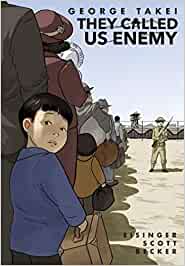
A graphic memoir of the Takei’s family incarceration into internment camps with other Japanese Americans from 1942-45. The stark black and white illustrations are particularly effective in showing the injustice of racism applied to innocent families. Indeed, the political rationale for these incarcerations is appalling. This racial injustice also happened in Canada, an important reminder of how mass hysteria can lead to overt racism. Thanks Rhoddy, for this gift.

