
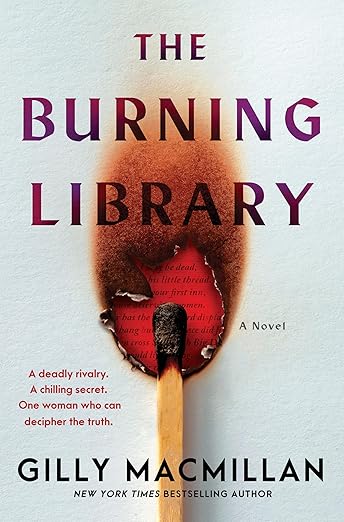
Reading this book produced vivid memories of Dan Brown’s The Da Vinci Code, except women take centre stage. Two rival organizations of women, The Fellowship of the Larks and the Order of St. Katherine, are in a bloodthirsty race to recover an ancient medieval manuscript. And there are puzzles and a protagonist with an eidetic memory, and settings that include Scotland, England and finally Verona. Ruthless ambition and obsessions include murder, so entirely entertaining.
Category: art
My Friends – Fredrik Backman
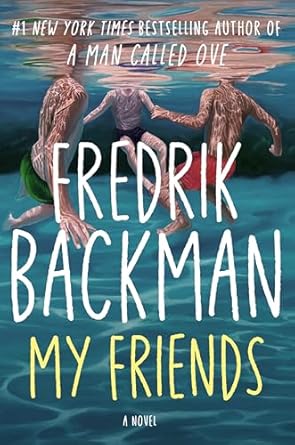
Simply put, Backman has produced a work of exceptional storytelling. First, there is a famous painting that shows three friends at the end of a pier, a work of art that illustrates friendship and laughter. And 25 years later, a 17-year-old young woman Louisa learns the backstory during a trip with Ted, one of the friends on the pier. The magic reality of relationships is paramount, especially the reckless exuberance of 4 young 14-15-year-olds. Full disclosure: the unfolding story cannot be read without tears; there is fear and profound sadness with cruelty. But there is also great love, both explicit and unspoken. Backman’s prose is evocative and poignant, so the importance of the translator, Neil Smith, must be acknowledged and celebrated. One of my best reads this year – highly recommended.
People Of The Book – Geraldine Brooks

In 1996, an Australian rare book conservator travels to Bosnia to inspect the Sarajevo Haggadah, a 500-year-old book with illuminated Hebrew text. The history of the book is presented as historical fiction: creation in Spain in the late 15th century, rebinding in Vienna in 1844, and preservation from Nazis in World War II. Importantly, there are critical roles for Muslims and Catholics in the history of this book. Mysteries are revealed, with a backdrop of contemporary intrigue. Overall, very entertaining.
The Blue Hour – Paula Hawkins
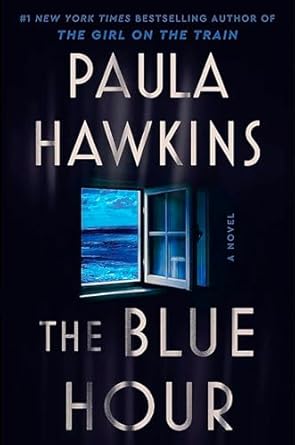
By the acclaimed author of The Girl On The Train, this new psychological thriller about art has complex and often toxic relationships with a shifting female friendship confronting the power and entitlement of the patriarchy (aka the art establishment), with a web of lies and secrets and yes, infidelities. Key events occur on a Scottish island isolated from the mainland by the tide and severe weather. Suffice it to say that there is missing art and a missing person and much more. Can neediness by pathological? Surprises persist right to the end of the book which makes for a very entertaining read.
A World Of Curiosities – Louise Penny
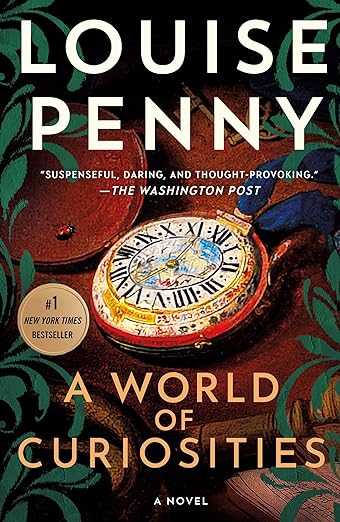
This 18th Inspector Gamache mystery is genuinely suspenseful with some eery parts. The complicated but compelling plot combines elements of a cold case with current crimes. Gamache and Beauvoir are revealed to have blind spots, so very human characteristics. There is art, and finally, a strong theme of forgiveness despite considerable darkness. This is one of Ms. Penny’s best Three Pines novels.
All The Colour In The World – CS Richardson
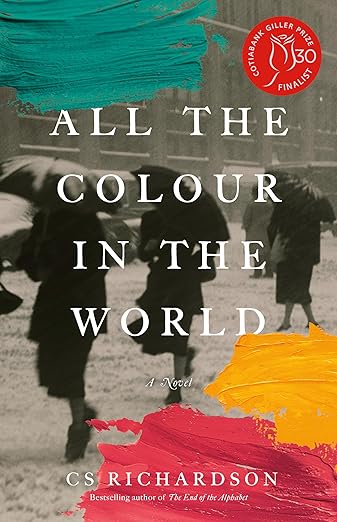
Henry is born in 1916, and raised by a Shakespeare-quoting grandmother. His artistic talent is colouring and copying which leads him to art history. Marriage to Alice ends with a tragic accident and a disastrous war experience leads to PTSD. Best of all, art and history permeates Richardson’s writing: Giller short-listed and highly recommended.
The Department of Rare Books and Special Collections – Eva Jurczyk
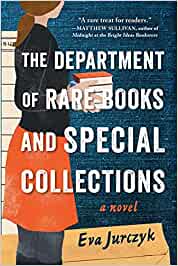
A rare book collection at a University Library become a vehicle for prestige, resulting in cut-throat politics in academia. And when a rare book goes missing, the plot thickens to become an intriguing mystery. The politics of gender, academic rivalries, suspicions, and the uncomfortable relationship with donors are all described perfectly.
The SubTweet – Vivek Shraya

A very contemporary story about the complicated relationships between two persons-of-colour singers. Their relationship is mainly online where short texts can be misinterpreted. Artistic insecurity is described brilliantly with lots of self-doubt and jealousy. Excellent story telling.
Cat’s Eye – Margaret Atwood
 Elaine, a middle-aged painter who lives in Vancouver, returns to Toronto (where she grew up) for a retrospective show of her paintings. This causes her to reminisce about her life. The entire book is great but for me, the first 1/3 is perfect. Atwood wonderfully captures the relationships between 8- to 10-year-olds, alternating between friendships and toxic competitions. School with corporal punishments and skipping grades, shopping and shoplifting things at Woolworths. And how children acquire (mis)information in an era when parental communication was non-existent. Another gem.
 What David Read