
 Previously, I used the words “brutally honest and uncomfortably candid” to describe Camilla Gibbs’s memoir This Is Happy, and the same descriptors can be applied emphatically to this memoir by Roxane Gay. Gay is subjected to a brutal sexual assault at age 12; she discusses being both a survivor and a victim. There are two dramatic aspects to the aftermath: her silence and her reaction to eating, to become fat and undesirable in order to be safe. Gay vividly describes living in a wildly undisciplined body as she becomes categorized as morbidly obese. The cruelty of public opinion of her appearance (i.e. fat shaming) is tragic. Her own analysis of her psychology is self-loathing. This is a deeply personal memoir that is often disturbing but occasionally comic as she describes how much she hates exercise. An amazing story.
Category: Best of 2017
LaRose – Louise Erdrich
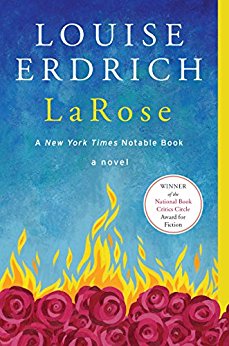 This is a fantastic Indigenous novel, set in North Dakota in 1999. There is a powerful start to the story, a tragedy on page 2. What follows is an attempted reparation, guilt and paralyzing grief; a long-standing grudge which leads to revenge; and a gradual reconciliation. The story shifts back and forth in time, and has a mystical element. There is, amidst all this angst, a delightful plainness, a simplicity that engages and delights. For example, there is a transcendent passage about a volleyball game that captures the psychology of young adolescents perfectly! Although this is a multi-generational story, it is the children who are the most complex characters, particularly in circumstances where they are forced to be mature beyond their years (similar to Glass Castle). This book is wonderful storytelling.
Indian Horse – Richard Wagamese
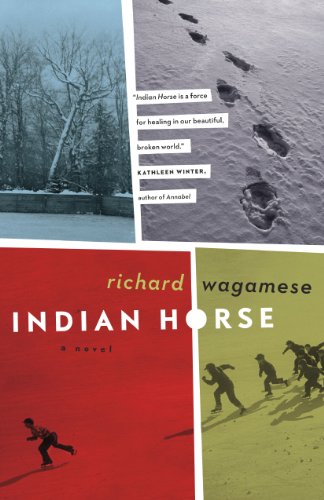 This is the second time that I have read this book (previously in May 2013) and the story is even better the second read. Saul Indian Horse is a victim of a 1960s scoop and suffers the horrors of a Catholic residential school (truly a cultural genocide). A redemptive time with hockey (beautiful descriptions of the game, of vision to see plays unfolding) is terminated by racism, and there is a late reveal of a brutal betrayal. But Saul becomes a survivor, not a victim. Wagamese was one of Canada’s best Indigenous writers and this is a must-read book.
Moonglow – Michael Chabon
 Chabon has written many imaginative novels: The Yiddish Policeman’s Union, Telegraph Avenue, etc. Moonglow is a fictionalized memoir, ostensibly based on his grandfather’s life. The writing is superb: his grandfather’s experiences in WWII and a lifelong interest in rocketry; a poignant story of his grandmother’s mental illness. A powerful aspect of the story telling is the consequences of keeping secrets and telling lies. This is an excellent read; thanks Renee, for this recommendation.
By Gaslight – Steven Price
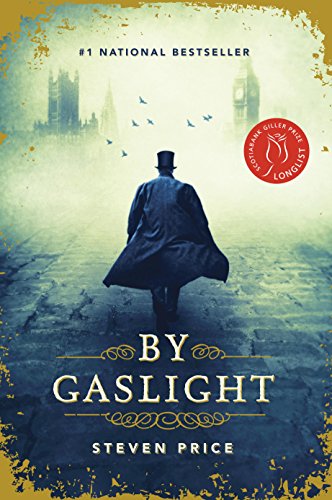 Generally I read mostly contemporary fiction but the historical fiction presented in this book is fascinating and entertaining because of a vivid description of context: the American Civil War with violence and sickness and cruelty, and London in 1885 with orange-yellow fog and a trip into the sewers! The book describes an intricate cat-and-mouse conflict between two men over several decades: a master and mysterious thief and an obsessed detective (a Pinkerton). The back story unfolds in many flashbacks, the classic slow reveal of motives and actions. Very enjoyable.
The Conjoined – Jen Sookfong Lee
 What if you are cleaning the basement of your family home after the death of your mother, and you find the bodies of two foster-children in a basement freezer who went missing 28 years ago? This is an intriguing book that examines family secrets and the social welfare system. Some of the ideas reminded me of Zoe Whitall’s book The Best Kind Of People where suspicion is directed to “good” people. What is the cost of bringing foster children into a home for all concerned? Highly recommended.
Precious Cargo – Craig Davidson
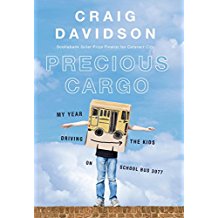 Davidson usually writes gritty guy-books (e.g. Cataract City) that are fiction. In contrast, this new book is non-fiction, an account of a year spent driving a school bus for five special-needs kids in Calgary. There are some very funny parts, such as the perils of substitute driving a school bus at Halloween, but Davidson takes a thoughtful look at how people with disabilities are viewed by the non-disabled, in school and in society in general. The book also includes an introspective examination of himself as a struggling writer at the time – overall, a very worthwhile read.
The Break – Katherine Vermette
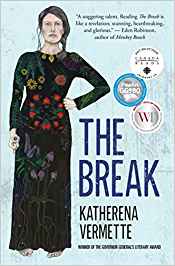 It is inexplicable to me that The Break was the first book eliminated from the Canada Reads 2017 competition. Admittedly this is a tough book to read, and the first in my experience that has on the cover page: “TRIGGER WARNING: This book is about recovering and healing from violence. Contains scenes of sexual and physical violence, and depictions of vicarious trauma”. This is a timely book about Indigenous women survivors, specifically 4 generations of women survivors who are flawed and damaged. This is a sisterhood book about resiliency – powerful storytelling but take the trigger warning seriously.
The Little Red Chairs – Edna O’Brien

An astonishing book: the seduction by an evil person, the desperate lives of the displaced and dispossessed. The title refers to a 2012 commemoration of the siege of Sarajevo: 11,514 red chairs were placed in rows, one for each person killed in the siege that lasted for almost 4 years. What is remarkable about this book is that it is an Irish woman, Fidelma, who is the central core to the story which takes place in Ireland and England. Thanks Mike, for this recommendation.
 What David Read