
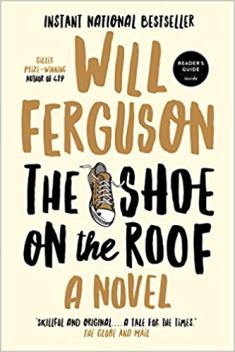
 A comic treatment of the neurobiology of behaviour. Thomas is a medical student who initially uses his knowledge of neurobiology for hook-ups with women. He then digresses to try and “cure” three delusional homeless men. Not surprisingly, much chaos ensues. This book has a very entertaining treatment of sanity versus madness, with a bit of magic reality at the end. Overall, a fun alternative for those readers stuck with too many angst-filled plots!
Tess Of The Road – Rachel Hartman
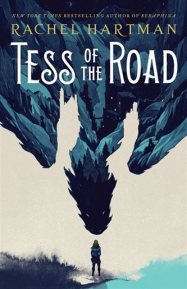 This is a YA fantasy story set in medieval times with dragons, etc. Tess is a 17 year-old misfit, an obnoxious headstrong anarchist-in-training who invariably chooses to behave in a way that produces trouble and discord. Because of particularly scandalous behaviour, according to the norms of the day when women are supposed to lead constrained and subservient lives, Tess leaves on a journey of discovery, a pilgrimage of sorts. She is accompanied on part of this journey by a quigutl, a flightless sub-species of dragon (readers should consult the Glossary at the end of the book). Surprisingly, the story then becomes quite introspective about the nature of bad behaviour and finding one’s ash in the world, and thus more interesting than the average fantasy story. Overall, a very fun read.
The Temptation of Forgiveness – Donna Leon
 This is the 27th Leon novel set in Venice with Commissario Brunetti solving crimes, and each one is a joy to read. The key is context. Venice is a delightful setting, and the crimes, although serious, are not desperate (no blood spatter analysis, for example). The pace of the investigation is relatively relaxed (Brunetti only seems toward on one case at a time), and Brunetti has a normal happy home life (unlike so many conflicted and tortured detectives like Harry Hole and Wallender). Finally, the women in this story, specifically Ms. Elletra and colleague Griffoni, are becoming increasingly important to the story and plot. Importantly, this story centres on moral ambiguities when characters do something wrong (illegal) but for the right reason. As an example of fine writing, this is a description of a Brunetti encounter with his hapless superior (page 253): “Brunetti applied psychic botox to his smile and nodded while turning his attention to Saint Antonio, patron saint of lost things and lost causes”.
Principles To Live By – David Adams Richards
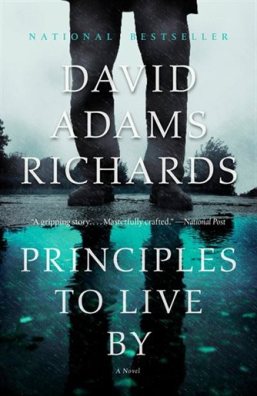 Richards has written a number of acclaimed, albeit angst-filled, novels set in the Miramichi region of New Brunswick. This brilliant story is more global, based in New Brunswick but including New York and the genocide in Rwanda. The core of the book is a dogged search for a missing boy by a near-retirement policeman. The quest for truth is confounded by lies, treachery and deceit with some conspiracy aspects as well. A politically complex (and often corrupt) world is outlined in convincing detail. The incredible intuition of the policeman is sometimes hard to believe, but the storytelling is vivid and compelling.
Egg On Mao – Denise Chong
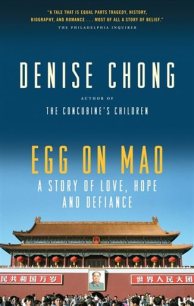 Ms. Chong wrote the wonderful The Concubine’s Children some time ago. This new novel is historical, focussing on a young man, Lu Decheng, in South China who travels to Beijing in May 1989 to anticipate in the student pro-democracy movement. The story unfolds impeccably with two parallel stories: Decheng’s life leading to his fateful decision to go to Tiananmen Square, and his subsequent betrayal by the student leaders and his imprisonment for defacing a portrait of Mao. The complexity and chaos of the student revolution is described graphically, both the highs and the lows. Overall, this is a stunning story that provides a brilliant counterpoint to Madeleine Thien’s Do Not Say We Have Nothing.
The Female Persuasion – Meg Wolitzer
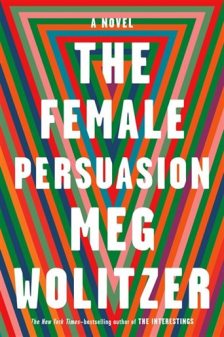 Ms. Wolitzer is a very fine writer (e.g. The Wife) but this is her best book so far. This is a sensational relationship book: relationships between men and women, but most importantly, between women. The themes of feminism and an apparently supportive sisterhood are linked to some astonishing acts of betrayal. The characters are vivid and realistic and the progression of the story is superb. Highly recommended; one of the best in 2018 so far.
Macbeth – Jo Nesbo
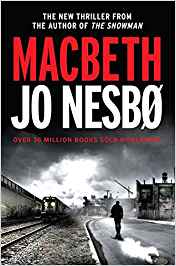 The Hogarth Press has undertaken The Shakespeare Project in which contemporary authors rewrite Shakespeare classics (see an earlier review of Margaret Atwood’s Hagseed, a retelling of The Tempest). Nesbo is a fantastic Nordic Noir writer, so he gleefully tackles the topic of police corruption and power struggles. The story is set in Scotland at a time that is near-contemporary. Interestingly, Nesbo uses all the Shakespearean characters: Macbeth, Duncan, Malcolm, Banquo, Duff. In the hands of a master writer, the allure of power is a powerful drug.
Little Fires Everywhere – Celeste Ng
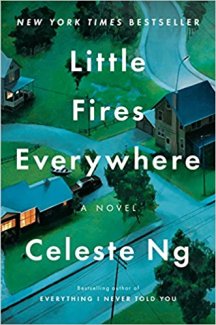 This is a relationship book, a favourite topic for me. The story describes the relationship between two families in a Cleveland suburb. The key relationships are between the two mothers and their children. There are secrets and divided loyalties, free-living versus a life bound by rules, with a sub-plot of a custody battle that divides the community. Ms. Ng writes like Anne Tyler: deceptively simple writing that is incredibly perceptive – highly recommended, one of my best reads in 2018.
The Golden Age – Joan London
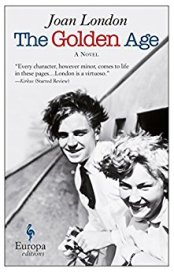 The Golden Age is a Convalescent Hospital for children with polio in Western Australia (1949-1959). This is a remarkable and compelling story of children forced to endure a wicked disease, an experience that makes some of the children wiser than adults. This is also a story of how children with a dread disease are treated by children, by their parents and by society at large. There are radiant and touching moments in this splendid book – highly recommended.
 What David Read