Another brilliant book about Inspector Arkay Renko in the depths of a Russian mystery: missing people, murder, corruption. The context of modern Russia in winter is perfect. Smith’s first Renko book is Gorky Park; Red Square is also brilliant as is Three Stations but it is worth reading the whole list, in sequence.
Category: Location / Setting
Orphan Train by Christina Baker Kline
The story of Irish immigrants to NY tenements in the 1920s. Parents and siblings die in a fire so Niamh/Dorothy/Vivian at age 9 is loaded onto the orphan train and sent to the mid-west for hopeful adoption which generally becomes indentured servitude. The story is told as 1929-1943 flashbacks as the 91 year old Vivian is telling her story in 2011 to a contemporary participant in foster care. Parts of the story have a somewhat predictable Charles Dickensian feel, especially of the sad story of hopeless and cruel care at ages 9-10 but overall this is a very satisfying read.
The Age by Nancy Lee
First novel by a creative writing professor at UBC (her first book was the acclaimed collection of short stories = Dead Girls). The setting of this novel is 1984 Vancouver, a perfect portrayal of protests and terrorism, with a concurrent post-apocalyptic fantasy. Lee describes adolescent recklessness perfectly.
Leaving Tomorrow – David Bergen
This is an insightful and introspective book, typical of Bergen’s novels. The first part of the book is a perfect recounting of growing up in rural Alberta. Arthur describes his influences: isolation, books and school, religion, sibling rivalry, and conversations that leave much more unsaid than stated explicitly. The latter part of the book is a coming-of-age story in Paris. Just an excellent read.
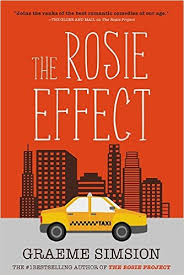
The Rosie Effect – Graeme Simsion
This is the sequel to The Rosie Project. Don and Rosie are now living in NY. Rosie is pregnant and so Don’s already complicated life becomes even more complex. This book describes a common plot line, when an essentially good person makes a mistake and then covers up, resulting in much confusion.
Note from Amy. David reviewed the Rosie Project earlier in the year.
The Ever After Of Ashwin Rao – Padma Viswanathan
A Giller finalist and another WordFest author. This is a sweeping story from the early 1980s in India to the 1985 Air India bombing, and the aftermath leading to the trial in 2004. A search for coping mechanisms for grief produces a very strong story with distinctive characters, both in India but mainly in Canada.
A Sunday At The Pool At Kigali by Gil Courtemanche
Full disclosure – this is a disturbing book and not for the faint-hearted. The book details the events in early 1994 in Rwanda: the AIDS epidemic and mainly the Hutu-led genocide against the Tutsis. Amidst much death and brutal violence is a love story, the tender relationship between a Canadian journalist and a Rwandan woman who is Hutu but looks like a Tutsi. Issues of identity are crucial in the genocidal purge of “cockroaches”, the term the Hutu use to describe Tutsis to justify their extermination. Indifference from the UN and Western powers is described in detail, along with rampant corruption. This is a powerful book: how can love exist in this Rwandan hell?
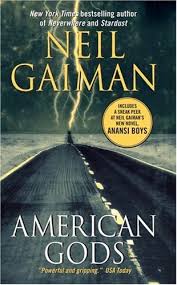
American Gods – Neil Gaiman
American Gods – Neil Gaiman (the author’s preferred text). This is a fascinating book about America, an imaginative fantasy with old gods and new gods and their conflict. How can you not love a book with a central character named Shadow? Gaiman’s writing reminded me of Stephen King’s The Stand (this is meant to be a compliment). Gaiman readily acknowledges that reaction to this book has been mixed: some readers love the book and some hate it! Mark me down in the “loved the book” camp.
A Good Death – Gil Courtemanche
A Good Death – Gil Courtemanche (perhaps best known for A Sunday At The Pool In Kigali). This is a very well-written story of a dysfunctional large family in Montreal. The patriarch has always been a mean—spirited nasty individual who now has had a stroke with the onset of Parkinson’s. Some members of his family speculate that everyone would be better off if he died. The question of how his death might be facilitated becomes an important theme. His eldest son states that “you can only kill individuals that you love or hate. In this case, the son has never loved his irascible father but can’t hate him because of his illness. This dilemma is resolved in an interesting ending.