

This charming book is about complex family relationships – the good, bad and ugly. Astrid has three children and three grandchildren, and lives in the Hudson Valley in New York state. Astrid is somewhat closed and flinty: “She believed pets were useful only in teaching young children about death. She knew this was an unpopular opinion”. This multi-generational story is about delayed adolescence with some persistent poor decision making, but also about love and resilience. Finally, there are some inspired comic situations – highly recommended.
Category: Location / Setting
April in Spain – John Banville
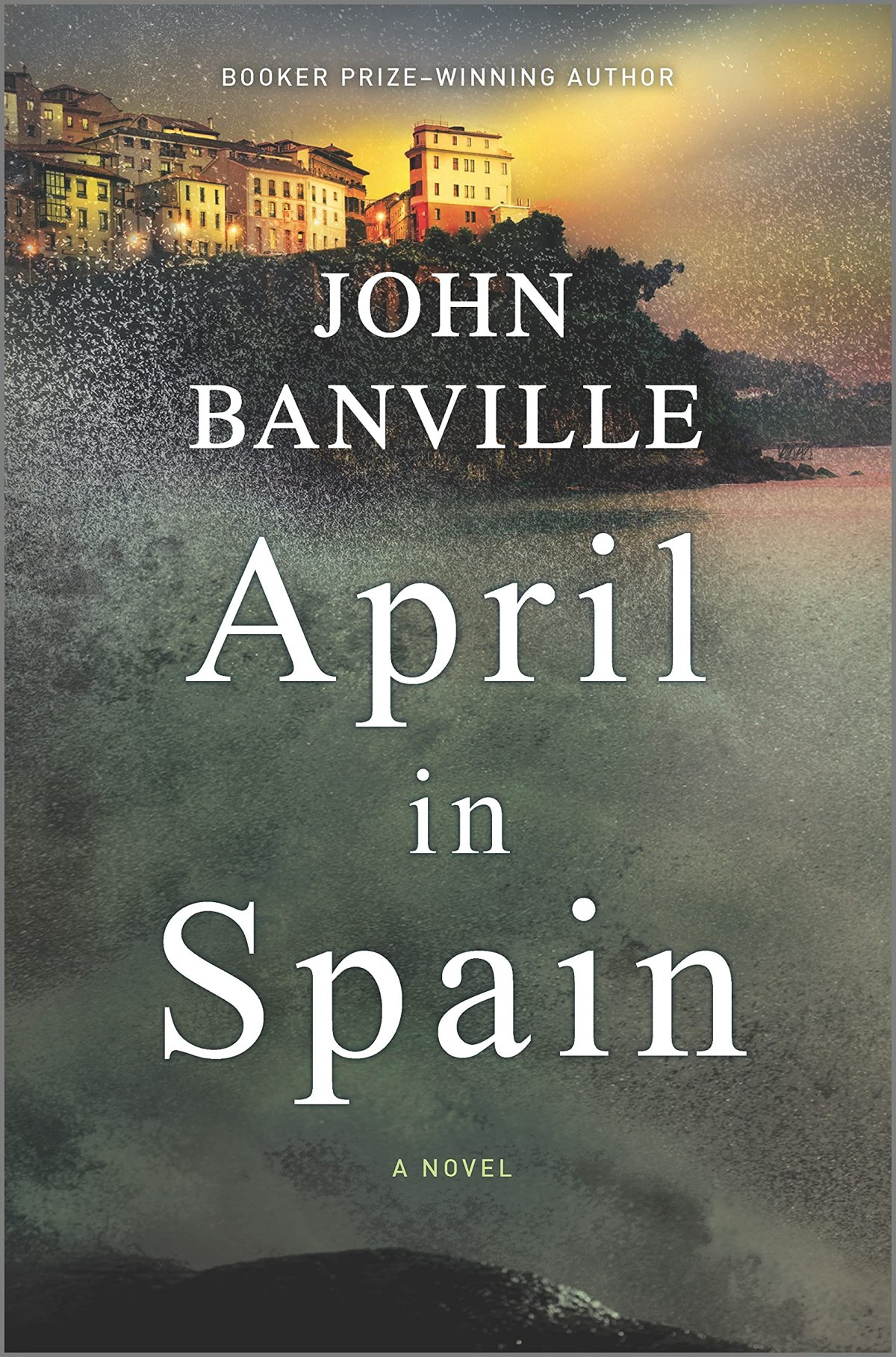
Banville is a superb writer, a Booker Prize winner. This book is a mystery, so the key elements are time (early 1950s) and place (Dublin and Northern Spain). Banville writes beautifully descriptive phrases; a character is described by “petulance was a pastime”. With such good writing, the plot exposition becomes subtle and effortless – very enjoyable.
Scarborough – Catherine Hernandez
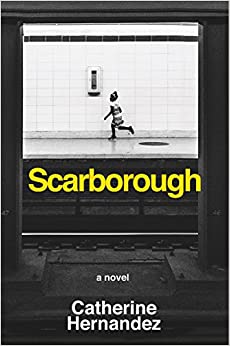
Scarborough is a low-income culturally diverse suburb of Toronto. This novel graphically describes a troubled community struggling against poverty, racism, and urban blight, mainly through the experiences of children. Often sad but also hopeful, this is a powerful story. Thanks Steph, for this recommendation. Scarborough is a Canada Reads 2022 contender.
The Last Chance Library – Freya Sampson
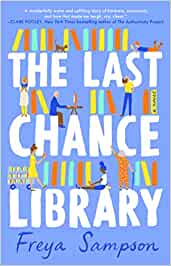
Full disclosure: I read any book with “Library” in the title. This book is an unabashedly sentimental and schmaltzy story about a campaign to prevent the closure of a small-town library in England. There is an emphasis on books and literacy, but also on the role of a library as a community location. The plot has many predictable tropes but still …. this is a book for library lovers.
When We Lost Our Heads – Heather O’Neill
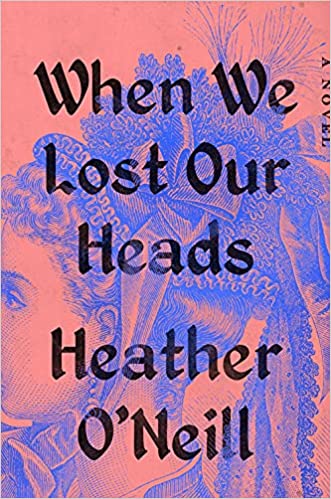
Simply put, this is a wonderful book about compelling and complex women in Montreal at the end of the 19th century. Men in the story are mostly inconsequential, despite some appallingly boorish behaviour. Marie and Sadie are best friends as children, but theirs is a classic love-hate relationship (“Every decent friendship comes with a drop of hatred. But that hatred is like honey in the tea. It makes it addictive”). Marie is spoiled and entitled; Sadie is subversive and dangerous. Ms. O’Neill‘s writing is enchanting with exquisite similes describing disparate worlds: life in a brothel, exploitive factory work (the Squalid Mile). Female relationships are infinitely complex with righteous anger, pettiness and jealousy, and a self-absorbed woman who has no empathy toward other women. Powerful feminist themes abound: the invisibility of marriage, sexual awareness leading to female empowerment. And finally, anticipate a late plot twist and an extraordinary ending. This is O’Neill at her best, a Montreal noir story.
Forest Green – Kate Pullinger

A story of Art Lunn in different BC locations. His life is defined by a tragic incident at 8 years of age, which he blames himself for the rest of his life. Consequently, he is unable to make commitments to other people, and descends into alcoholism and eventual homelessness, an acute example of how early trauma can initiate a life-long feeling of worthlessness. Actually, the story is less depressing than the above description implies, so worth a read.
Apeirogon – Colum McCann
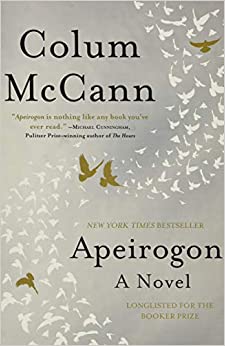
Simply put – this is a remarkable book, one that must be read slowly and savoured. First, a definition: an apeirogon is a shape with a countably infinite number of sides. Thus, a perfect title for a book addressing the complex many-faceted Israel-Palestine situation. Bassam is Palestinian; his daughter Abir was killed by a rubber bullet fired by an Israeli border guard. Rami is Israeli; his daughter Smadar was killed by Palestinian suicide bombers. They separately deal with perceptions of revenge and justice, and the many versions of truth. And unexpectedly, they become friends. Their stories unfold in a non-linear manner with incredible detail. Overall, a breathtaking narrative that merges fact with imagination, violence and grief.
So Much Life Left Over – Louis De Bernieres
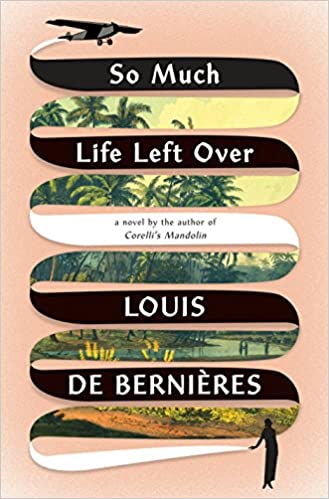
Daniel Pitt is a WWI flying ace who struggles to fid purpose after surviving the war – what to do with life inexplicably left over. His story from 1925-45 includes Ceylon, England, France and Germany. His marriage to Rosie slowly disintegrates, and Rosie acquires a remarkably mean-spirited persona. And there are Rosie’s three sisters, each strong individual characters. The story evolves in short chapters with different points-of-view. Overall, a compelling story of complex relationships in post-war and pre-war contexts.
Amy adds: Louis De Bernieres also wrote The Dust that Falls from Dreams, and the excellent Captain Corelli’s Mandolin
The Son of the House – Cheluchi Onyemelukwe-Onubia

Also Giller short-listed: a Nigerian story of two women, Nwabula and Julie; their two seemingly independent lives intersect dramatically at the end of the book. The story begins in the 1970s, and then jumps forward to 2011.The book has two strong features. First, there is the Nigerian context, with both exotic and frustratingly corrupts aspects. But mostly this is about the resilience of women in an intense human drama.
 What David Read