
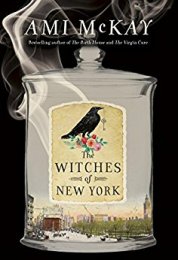
 This book takes place in 1880 New York, with Moth from The Virgin Cure as one of the central characters. Witches abound in New York, along with ghosts and spirits. The practise of witchcraft is mostly folk magic. The story-telling is excellent, with some peril of course for the sisterhood. And there is an alienist. Will there be another sequel?
Category: Historical fiction
The Wonder – Emma Donoghue
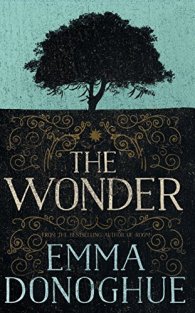
Set in Ireland in the 1860s (not long after the famine), this book provides impeccable detail into an investigation into a fantastical claim that an 11 year-old girl hasn’t eaten for four months: a miracle or a scam? The investigation requires close observation (24/7) and as Margaret Mead postulated long ago – observation changes behaviour. One of the observers is an English nurse, so there are Irish-English issues as well. There are strong religious overtones but at its heart, this is a story about motherhood (so in that regard, somewhat similar to The Room). Donoghue is a fabulous story teller, nominated for the Giller.
The Marriage of Opposites – Alice Hoffman
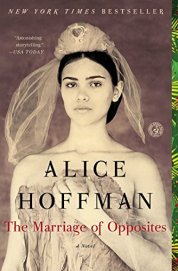 Hoffman writes meticulous historical dramas. This book tells the story of Rachel, growing up in St. Thomas in the Caribbean in the 1800s. Eventually she becomes the mother of Camille Pissarro who eventually becomes an important impressionist painter. Rachel and Camille are both head-strong and strong-willed which predictably creates conflict. The context of the early Caribbean life and Paris briefly is beautiful, and the story-telling is worthwhile.
The Three Sisters Bar and Hotel – Katherine Govier
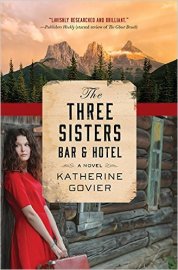 An epic story of the Western Rocky Mountains, with the setting of Gateway (actually Canmore). The story covers 100 years, from 1911 with guides taking pack-horse expeditions into the mountains. The core story is the disappearance of an American fossil-hunting expedition. The history of Canadian National Parks is presented as an evocative back story. This is a very good read, capturing the romance (literal and figurative) of mountains and the men and women who blazed the trails.
Do Not Say We Have Nothing – Madeleine Thien
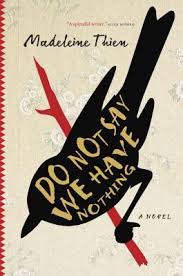 Thien has written some fine books (Dogs At The Perimeter, Certainty), but this new book is her best yet – an epic story of China. The evocative writing describes the agony of the Cultural Revolution in the 1960s leading up to the horror of the Tiananmen Square massacre. There are three central characters that are linked by their passion for music.
The coda at the end of the book describes the first time a lost composition for violin and piano is played: “At first, the violin played alone, a series of notes that slowly widened. When the piano entered, I saw a man turning in measured elegant circles, I saw him looking for the centre that eluded him, this beautiful centre that promised an end to sorrow, the lightness of freedom. The piano stepped forward and the violin lifted, a man crossing a room and a girl weeping as she climbed a flight of steps; they played as if one sphere could merge into the other, as if they could arrive in time and be redeemed in a single overlapping moment. And even when the notes they played were the very same, the piano and violin were irrevocably apart, drawn by different lives and different times. Yet in their separateness, and in the quiet, they contained one another”.
This book has great story telling with some transcendent writing – highly recommended.
The Summer Before the War by Helen Simonson
 Simonson wrote the delightful “Major Pettigrew’s Last Stand“, and this book, only her second, is even better. The story takes place in an English village (Rye, in Sussex) before WWI, with all the snobbery and vicious gossip that characterized Downton Abbey. The description of the limited role of women is particularly well-told in this pre-suffragette era. The book ends with a graphic description of the horrors of trench warfare; belligerent and ignorant troop commanders are particularly odious. This is an excellent read.
Kindred by Octavia E. Butler
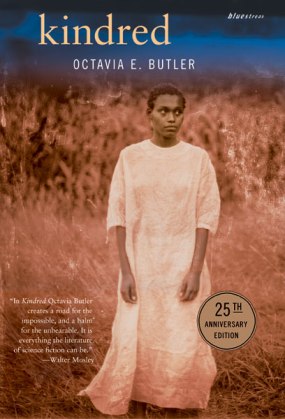
Butler’s imaginative novel, written in 1979, uses time travel to explore two very different times and places: 1976 LA and Maryland in the early 1800s. Specifically, an African-American woman is transported multiple times to a time and place of slavery. The book explores how behaviour is influenced by context, of how a modern woman is required (or coerced) to take actions that enable slavery because of complex relationships and situations. This book has strong and compelling story-telling.
Wild Rose by Sharon Butala
Butala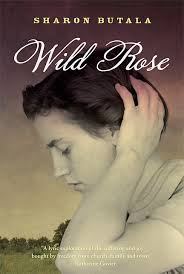 writes wonderfully about the beauty of Saskatchewan, especially her descriptions of the grasslands flowing in the wind (e.g. Perfection of the Morning). This book describes the adventures of a French-Canadian newly-wed couple as they travel west from Quebec to homestead in Saskatchewan in the early 1880s. Butala’s description of the isolation and hardship of homesteading is beautifully written and compelling; the bitter cold of winter is especially evocative. The core of the book is a story of resilience for a headstrong young woman, Sophie. This is a great read. (As an aside, Butala has recently relocated to Calgary).
https://www.goodreads.com/book/show/25842762-wild-rose
Circling The Sun by Paula McClain
McClain is an excellent writer (The Paris Wife) and Circling The Sun is also a very good book – a fictionalized account of Beryl Markham’s life in Kenya in the 1920-30s. Beryl interacts with the characters from Out Of Africa – Karen Blixen, Denys Finch-Hatton, etc. The book is unabashedly romantic in the treatment of complicated human relationships and the mystery of Africa.
 What David Read