
 There is much to admire in this book. First, it is set in Vancouver, particularly the city core, so much is familiar. Second, as is evident from the title, Vancouver experiences an infectious disease disaster but the storyline is novel. Rather than focus on the cause and search for a cure (vaccine), the story is about the aftermath of the plague: how do people cope? There are three distinct points-of-view for coping: a family doctor who experiences directly the expanding disease first hand, and two people who are trapped in Vancouver’s core when a quarantine is put in place: a newspaperman who can’t return to his home in the suburbs, and an American writer on a book tour. Explorations of their behaviours in the face of suffering and futility, together with the psychological stress of quarantine, makes this an excellent read – highly recommended.
Amy notes: in 2011, there was a riot in Vancouver after the Canucks lost the final game for the Stanley Cup. The downtown peninsula was closed off by the police; people who had watched the game at friends apartments unable to leave, for example. An inspiration for this downtown quarantine?
 This remarkable book is about two young people in Washington DC. Niro is a 17-year-old African-American who is graduating from High School and then on to Harvard. But Niro has a painful secret – he is gay, a wicked abomination to his conservative Nigerian parents. Niro’s best friend is Meredith but she is unable to provide Niro with the help and support that he needs. Niro is emotionally lost and conflicted with heartbreaking self-loathing and his relationship with Meredith comes to a tragic ending: powerful storytelling.
 Kerr has written a number of novels about a German police detective, Bernie Gunther, and this is the best so far, in my view. Gunther is the epitome of the hard-boiled Philip Marlowe-like PI. The context of the BG plots is Nazi Germany; Prussian blue takes place in 1939. Gunther is a socialist and anyone not a member of the Nazi party will always be viewed with suspicion by Gunther’s superiors. Then add in the characteristic that Gunther is a Berliner, which makes him flippant, disrespectful, subversive, sarcastic – the list goes on! But he is a good cop in difficult times, and his deductive skills force the Nazi superiors to use him in difficult and sensitive investigations. The novel dwells on the existential crisis of investigating a murder in the Nazi context. This is mystery writing at its best.
 This is the 27th Leon novel set in Venice with Commissario Brunetti solving crimes, and each one is a joy to read. The key is context. Venice is a delightful setting, and the crimes, although serious, are not desperate (no blood spatter analysis, for example). The pace of the investigation is relatively relaxed (Brunetti only seems toward on one case at a time), and Brunetti has a normal happy home life (unlike so many conflicted and tortured detectives like
  Richards has written a number of acclaimed, albeit angst-filled, novels set in the Miramichi region of New Brunswick. This brilliant story is more global, based in New Brunswick but including New York and the genocide in Rwanda. The core of the book is a dogged search for a missing boy by a near-retirement policeman. The quest for truth is confounded by lies, treachery and deceit with some conspiracy aspects as well. A politically complex (and often corrupt) world is outlined in convincing detail. The incredible intuition of the policeman is sometimes hard to believe, but the storytelling is vivid and compelling.
 Ms. Chong wrote the wonderful The Concubine’s Children some time ago. This new novel is historical, focussing on a young man, Lu Decheng, in South China who travels to Beijing in May 1989 to anticipate in the student pro-democracy movement. The story unfolds impeccably with two parallel stories: Decheng’s life leading to his fateful decision to go to Tiananmen Square, and his subsequent betrayal by the student leaders and his imprisonment for defacing a portrait of Mao. The complexity and chaos of the student revolution is described graphically, both the highs and the lows. Overall, this is a stunning story that provides a brilliant counterpoint to Madeleine Thien’s
 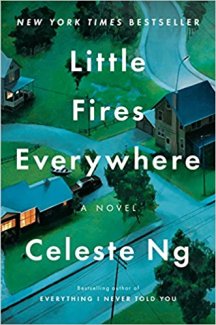 This is a relationship book, a favourite topic for me. The story describes the relationship between two families in a Cleveland suburb. The key relationships are between the two mothers and their children. There are secrets and divided loyalties, free-living versus a life bound by rules, with a sub-plot of a custody battle that divides the community. Ms. Ng writes like Anne Tyler: deceptively simple writing that is incredibly perceptive – highly recommended, one of my best reads in 2018.
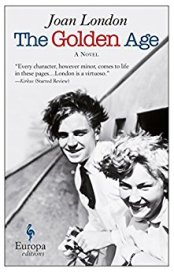 The Golden Age is a Convalescent Hospital for children with polio in Western Australia (1949-1959). This is a remarkable and compelling story of children forced to endure a wicked disease, an experience that makes some of the children wiser than adults. This is also a story of how children with a dread disease are treated by children, by their parents and by society at large. There are radiant and touching moments in this splendid book – highly recommended.
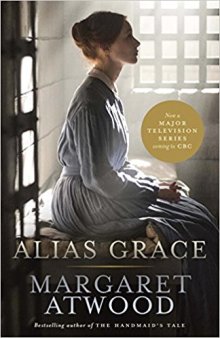 This book has been on a bookshelf in my home since 1997 but somehow I have never read it, to my chagrin.
  What David Read