
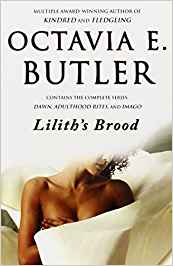
 This is a trilogy, comprised of Dawn, Adulthood Rites, and Imago. Earth has had an apocalyptic world war, and the few remaining humans have been “rescued” by aliens and kept in stasis for hundreds of years. What follows is a brilliant description of the human instinct for violence, and the complexity of feelings when humans encounter the aliens for the first time. Lilith is utilized to choose humans to be re-animated, and so there is the strong psychology of humans learning about aliens and distrusting Lilith’s role. The aliens have breath-taking powers or healing, aka resurrection, but have their own agenda. The human-alien relationships are an imaginative form of symbiosis with genetic sharing in offspring. Thus there is yet another interesting new relationships, that of parents and offspring. Butler wrote these books almost 30 years ago, so she anticipated and described genetic engineering very accurately. She also wrote the great Kindred which is in the archives of this blog. Thanks Amy, for sharing this imaginative and compelling book.
Category: Contemporary
The Nest – Cynthia D’Aprix Sweeney
 This is an entertaining story about a dysfunctional family, the Plumb siblings (Johnathan Franzen territory). The core character is the oldest, Leo, a prodigal brother who is charming but dishonest and deceitful. The plot has a number of surprising turns to make this a very enjoyable read. Leo’s siblings are variably desperate and entitled and conniving. This is another amazing first novel that is highly recommended.
May We Be Forgiven – A.M. Homes
 Harold has a younger brother, George, who has exhibited psychopathic tendencies his whole life. When George commits an unspeakable act of violence, Harold is thrust into being responsible for George’s two children, a responsibility for which he is woefully unprepared. Initially Harold is very annoying because of poor impulse control resulting in very bad decisions, especially with his relationships with women. However, he slowly grows into his role of protector and confidant. The setting is NY with an interesting excursion into South Africa. This is a very good book about how complex behaviours can evolve. A sub-plot about Richard Nixon is totally entertaining.
Ruby – Cynthia Bond
 This is a tough read because of disturbing content. Set in an all-Black community in East Texas in the 1950-70s, there is blatant racism, violence and tremendous cruelty. Well-written but be warned … This doesn’t sound like much of a recommendation but in this new era of increasing intolerance, it is worthwhile, I think, to try and learn from historical precedent and ask the question: are we really moving forward?
The Geography of Genius – Eric Weiner
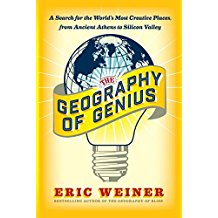 Weiner previously wrote the very entertaining Geography of Bliss where he related happiness to geographical places: Bhutan = very happy; Moldava = very unhappy. In this book he examines places notable for genius (aka creativity). Some are predictable (Ancient Athens, Florence at the time of Leonardo and Michelangelo, present day Silicon Valley) but some are surprising (Edinburgh, Calcutta). Part of his thesis is that genius is urban and dependent on lively conversations – the importance of formal discussion groups or informal discussions at coffee shops or even pubs (The Inklings discussing writing in an Oxford pub). Therefore, environment is key and genetics plays a minor part. Of course he is selective in presenting studies that support a subjective point of view. Nevertheless, the book is entertaining with much self-deprecating humour. Thanks Mary for this recommendation.
The Conjoined – Jen Sookfong Lee
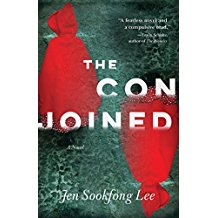 What if you are cleaning the basement of your family home after the death of your mother, and you find the bodies of two foster-children in a basement freezer who went missing 28 years ago? This is an intriguing book that examines family secrets and the social welfare system. Some of the ideas reminded me of Zoe Whitall’s book The Best Kind Of People where suspicion is directed to “good” people. What is the cost of bringing foster children into a home for all concerned? Highly recommended.
Precious Cargo – Craig Davidson
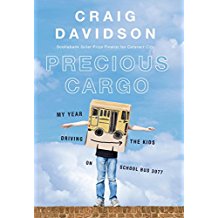 Davidson usually writes gritty guy-books (e.g. Cataract City) that are fiction. In contrast, this new book is non-fiction, an account of a year spent driving a school bus for five special-needs kids in Calgary. There are some very funny parts, such as the perils of substitute driving a school bus at Halloween, but Davidson takes a thoughtful look at how people with disabilities are viewed by the non-disabled, in school and in society in general. The book also includes an introspective examination of himself as a struggling writer at the time – overall, a very worthwhile read.
The Break – Katherine Vermette
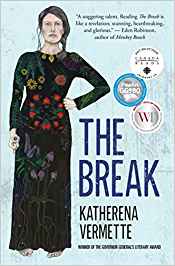 It is inexplicable to me that The Break was the first book eliminated from the Canada Reads 2017 competition. Admittedly this is a tough book to read, and the first in my experience that has on the cover page: “TRIGGER WARNING: This book is about recovering and healing from violence. Contains scenes of sexual and physical violence, and depictions of vicarious trauma”. This is a timely book about Indigenous women survivors, specifically 4 generations of women survivors who are flawed and damaged. This is a sisterhood book about resiliency – powerful storytelling but take the trigger warning seriously.
Barkskins – Annie Proulx
 This is a sweeping Michener-like novel that spans over 300 years, with two family trees at the back of the book to keep track of multiple characters. The novel begins with two men from France who go to New France (Quebec) in 1693 to make a new life in the new world. Their lives diverge remarkably. Charles Duquet/Duke is driven by greed and opportunity to establish a huge and prosperous timber empire; Rene Set marries an indigenous woman so his story takes a very different path. Exploitation of forests is a major theme, not just in North America; the story also extends to China and New Zealand (the giant kauri trees). The book has a satisfying ecological message at the end – overall, a very good read.
 What David Read