
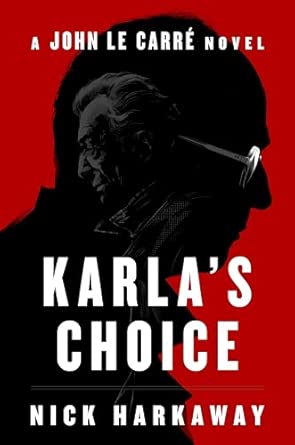
The subtitle “A Novel of John LeCarre’s Circus” is not surprising because Harkaway is the son of the late John LeCarre. Nevertheless, it is remarkable that the author can resurrect the character of George Smiley so perfectly. It is 1963, the missing decade between “The Spy Who Came In From The Cold” and “Tinker, Tailor …”. Smiley epitomizes watchfulness, the exercise of paranoia, and the awareness of constant danger. The plot is, of course, complex with a missing spy and action in London, Berlin and Vienna – very enjoyable.
Category: war
My Name Is Emilia Del Valle – Isabel Allende
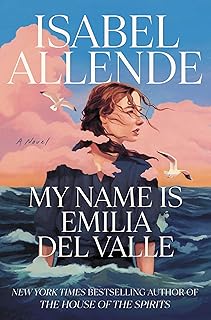
Another excellent novel of historical fiction by Ms. Allende. Emilia is born in San Francisco in 1886 after her Irish mother was abandoned after a brief affair with a Chilean aristocrat. She grows up to become a strong self-sufficient young woman and an independent thinker. She begins to write pulp fiction and then turns to journalism, all using a male pen name. In 1891, she travels to Chile and becomes embroiled in a brutal civil war. Her war experiences are truly harrowing; overall, this novel is spellbinding.
Juiceboxers – Benjamin Hertwig

Simply put, this amazing first novel is one of the best books I have read this year. It is unquestionably a “guy book” because all the major characters are male. In 1999 in Edmonton, four remarkably different “boys” meet as cadets; they are not really friends but have a type of camaraderie. Then there is army training and finally deployment to Afghanistan in 2005. Hertwig describes the Army mood and male behaviour perfectly: boredom, a lack of purpose, too much drinking and pornography, and yes, racism and bloodlust. And then there is the senseless violence of war, the chaos of conflict. Finally, there is the brutal aftermath of war, with PTSD. Hertwig’s writing is evocative with brilliant metaphors. Highly recommended, a must read book.
The Bookbinder – Pip Williams
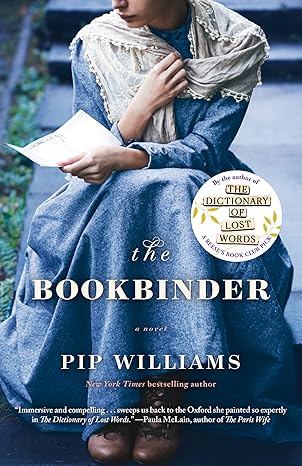
This is a fine example of historical fiction by the author of The Dictionary Of Lost Words. Once again, the setting is Oxford, but the time is 1914-18. Peggy and Maude are 21-year-old twin sisters working as bookbinders at the Clarendon Press. Peggy is driven by her love of books and a desire to study literature at university; Maude is a special extraordinary woman, vulnerable with an honest simplicity. Their lives are disrupted by the war and an influx of injured Belgian soldiers, and then by the influenza epidemic. This is a story about the love of books, about knowledge that is withheld if you are female, and the formidable barriers experienced by women. Highly recommended.
The Reader – Bernhard Schlink
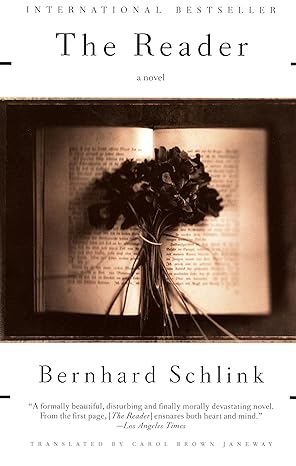
Some of you may have seen the 2008 film based on this book, starring Kate Winslet. I respectfully submit that this 1995 book is far superior. This is Michael Berg’s book, both reflective and introspective. In 1958, 15-year-old Michael has a short tempestuous affair with an older woman, Hanna. Eight years later, Michael is a law student who learns that Hanna is on trial for being an SS guard responsible for the deaths of many women and children in a World War II concentration camp. The writing raises important questions about how beautiful memories can be shattered in hindsight, along with issues of betrayal, guilt and shame. Overall, the story is a metaphor for the complexity of present-day Germany’s relationship to its Nazi past – highly recommended.
Landbridge – Y-Dang Troeung
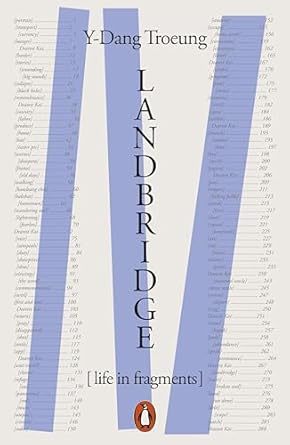
Simply put, this is an exceptional book that is heartbreaking to read. Ms. Troeung was born in a Thailand refugee camp, one of the last Cambodian refugees admitted to Canada in 1980. This is an autobiographical story of her life in Canada and Hong Kong with frequent trips to Cambodia to research the genocidal history. So it is about refugee histories, about refugee survival, to research the lives of the lost during the Cambodian genocide. And it is deeply personal, in part because letters written to her son Kai are included. Tragically, Ms. Troeung died of cancer in 2022. Overall, this is a work of outstanding humanity and honesty, a must-read book.
Miss Morgan’s Book Brigade – Janet Skeslien Charles
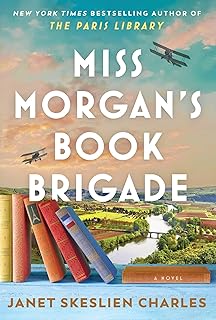
Anne Morgan, the daughter of the financier J.P. Morgan, established the American Committee for Devastated France (Le Comite americain pour les regions devastees, or CARDs). In January 1918, Jessie Carson leaves her NYPL librarian post to travel to Blerencourt in Northern France to establish children’s libraries, sometimes using bookmobiles from converted ambulances. Her efforts are complicated by ongoing and brutal WWI actions requiring temporary resettlement in France. Ms. Carson’s notable achievements are researched in 1987 by Wendy Peterson also working at the NYPL. This story is a tribute to human resilience.
The Eye In The Door – Pat Barker
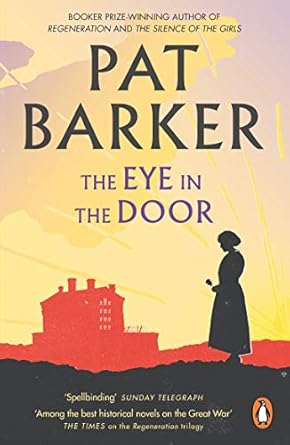
It is 1918, and the vengeful English public seeks scapegoats; pacifists and homosexuals are targeted for persecution and prosecution. The brutality of trench warfare leads to war neurosis (PTSD). The book title refers to being watched. The social stigma directed to “conchies” (conscientious objectors) is profound. This brilliant antiwar book is a worthy companion to Regeneration.
The Orphan Girl – Kurt Palka
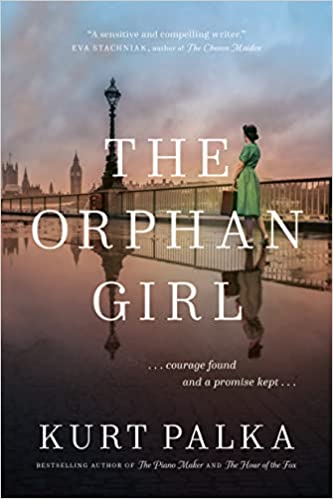
Sometimes a sentimental historical novel fits the bill perfectly. The time period is 1944-46. Kate survives a London bomb but then circumstances force her to live with a doctor friend, Claire. Complex issues complicate their lives: a murdered father and the return of Claire’s troubled husband from the war. This story is about friendship, promises, courage and independence. Key details are left unexplained, to make for a very satisfying plot.
 What David Read