
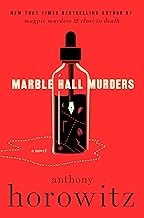
Although this book has classical crime fiction tropes, the structure is unique because it is a book within a book. An editor is hired to help an author complete a whodunnit in 1955, but the unfinished manuscript contains clues as to the possible murder of the author’s grandmother. In other words, there are many clues about his grandmother’s death in his manuscript. And there are lots of clues that are red herrings, and there are even anagrams! Overall, a very entertaining read.
Month: June 2025
Last Chance To See – Mark Cawardine
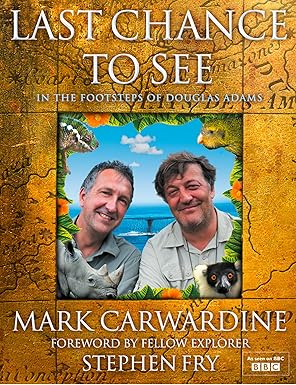
In the original Last Chance To See (1990), zoologist Cawardine described travel with the late Douglas Adams, to visit exotic locations with endangered species (sad note, the Yangtze river dolphin has now been declared extinct). Now twenty years later, this book is subtitled “In the footsteps of Douglas Adams”; now Cawardine is travelling with the comic genius Stephen Fry, to view rare and peculiar animals (African white rhinos, Kakapo birds in New Zealand, lemurs in Madagascar …). Six chapters outline their travels to 8 countries in 5 continents.
This book has a unique view of a disappearing world: always informative, often hilarious, but mostly thought provoking.
Juiceboxers – Benjamin Hertwig

Simply put, this amazing first novel is one of the best books I have read this year. It is unquestionably a “guy book” because all the major characters are male. In 1999 in Edmonton, four remarkably different “boys” meet as cadets; they are not really friends but have a type of camaraderie. Then there is army training and finally deployment to Afghanistan in 2005. Hertwig describes the Army mood and male behaviour perfectly: boredom, a lack of purpose, too much drinking and pornography, and yes, racism and bloodlust. And then there is the senseless violence of war, the chaos of conflict. Finally, there is the brutal aftermath of war, with PTSD. Hertwig’s writing is evocative with brilliant metaphors. Highly recommended, a must read book.
The Bookbinder – Pip Williams
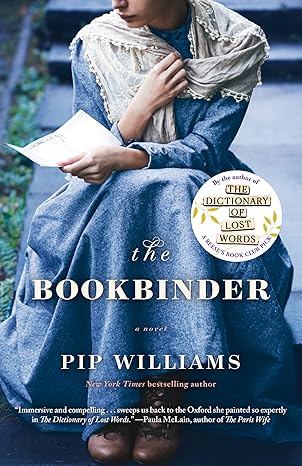
This is a fine example of historical fiction by the author of The Dictionary Of Lost Words. Once again, the setting is Oxford, but the time is 1914-18. Peggy and Maude are 21-year-old twin sisters working as bookbinders at the Clarendon Press. Peggy is driven by her love of books and a desire to study literature at university; Maude is a special extraordinary woman, vulnerable with an honest simplicity. Their lives are disrupted by the war and an influx of injured Belgian soldiers, and then by the influenza epidemic. This is a story about the love of books, about knowledge that is withheld if you are female, and the formidable barriers experienced by women. Highly recommended.
The God Of The Woods – Liz Moore
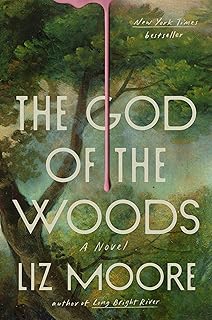
This is a superb thriller. In 1975, a teenager (Barbara) disappears from her Adirondack summer camp. Eerily, Barbara’s older brother vanished from the same camp in 1961. This is an extraordinary story of both investigations, and of course complicating secrets abound. The characters are richly described, both well-meaning (but flawed) people and some dastardly villains. Highly recommended – very entertaining.
 What David Read