
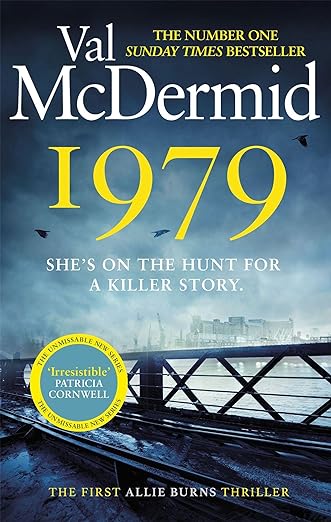
Context is everything in this gritty crime story: Glasgow in 1979, with investigative journalists working in a newsroom filled with cigarette smoke and the din of typewriters. Tax avoidance with greed and Scottish ultra-nationalists are the nasty villains. A totally entertaining story with an appendix with a top-40 list of music from 1979. Thanks Amy, for this recommendation by the acclaimed “Queen of crime” writer.
Happy-Go-Lucky – David Sedaris
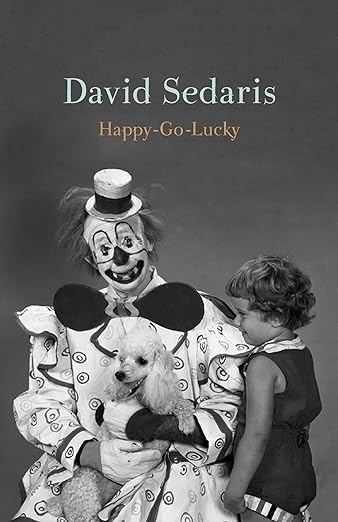
And now for something entirely different: a collection of mostly humorous essays. Sedaris offers wry observations on many topics (e.g., pandemic experiences) but his most poignant essays are about his family relationships, most notably with his elderly father. He is candid and self-deprecating, with the use of wonderful words (one-downsmanship) and phrases (crocheted blanket the colour of sorrow). A very fun read.
A World Of Curiosities – Louise Penny
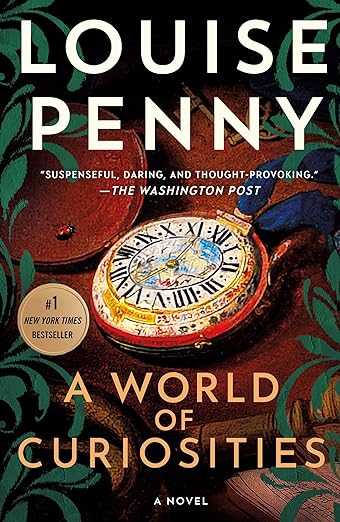
This 18th Inspector Gamache mystery is genuinely suspenseful with some eery parts. The complicated but compelling plot combines elements of a cold case with current crimes. Gamache and Beauvoir are revealed to have blind spots, so very human characteristics. There is art, and finally, a strong theme of forgiveness despite considerable darkness. This is one of Ms. Penny’s best Three Pines novels.
The Fraud – Zadie Smith
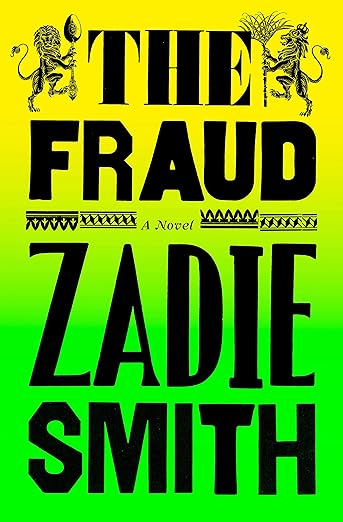
And now for something entirely different: Ms. Smith has written a fantastic novel of historical fiction. The central character, Mrs. Eliza Touchet, is an acid-tongued spinster with abolitionist views, who moves in with her cousin in the 1840s, the hapless writer William Ainsworth, and lives with him for the next 30 years. England is captivated by the Tichborne Affair, in which Arthur Orton, a lower-class butcher from Australia, claims to be Sir Roger Tichborne and thus heir to a sizable estate (ant title). His outrageous claim results in two lengthy trials where a Black Jamaican, Andre Bogle, supports the claim. What is truth in a world of hypocrisy and self-deception? Overall, the writing is rich and detailed, a joy to read.
The Islands – Dionne Irving

Short stories about the Jamaican diaspora, women immigrants or descendants of immigrants. With multiple locations over many years, the poignant stories reveal the complexities of live, issues of identity and belonging, of uncertainty. Overall, very moving and deservedly Giller short-listed.
All The Colour In The World – CS Richardson
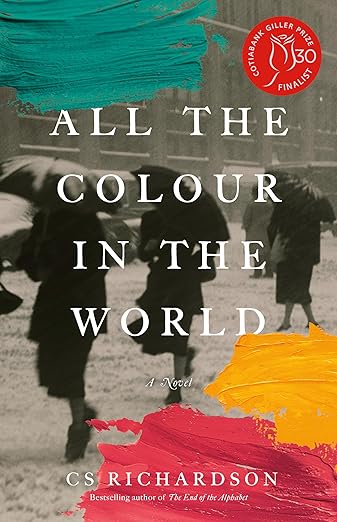
Henry is born in 1916, and raised by a Shakespeare-quoting grandmother. His artistic talent is colouring and copying which leads him to art history. Marriage to Alice ends with a tragic accident and a disastrous war experience leads to PTSD. Best of all, art and history permeates Richardson’s writing: Giller short-listed and highly recommended.
The Mystery of Right and Wrong – Wayne Johnston
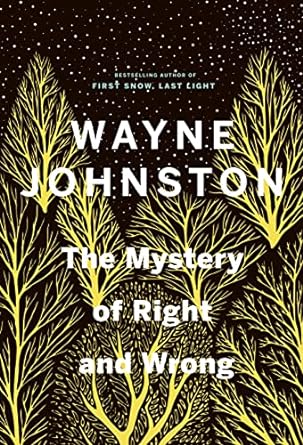
Mr. Johnston has written many fine books about Newfoundland (The Colony of Unrequited Dreams, The Custodian of Paradise), but none so graphic as this new novel. Wade is a young man from a Newfoundland outport, a true provincial in every sense of the word, who meets South African born Rachel in the MUN library. Rachel is a wounded soul, obsessed with reading and re-reading The Diary of Anne Frank; her three sisters are equally conflicted. Most of the book takes place in South Africa and Amsterdam in 1985. Be warned – this story contains some dark and disturbing secrets that are very intense.
Invisible Boy – Harrison Mooney

Subtitle: a memoir of self-discovery. Harry/Harrison is a black child who is adopted by a white evangelical couple in Abbotsford, the BC bible belt. What follows is indoctrination by home-schooling and church fundamentalism, tent revivals, and demon possession and oppression. What is African is explicitly evil. What an adopted Black child learns is shame, confusion and suspicion, and thus is rendered invisible. Can mixed race adoptions ever be successful? Thanks Amy, for this thoughtful memoir.
Demon Copperhead – Barbara Kingsolver
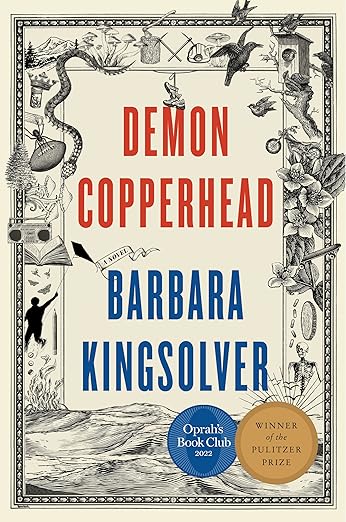
This fascinating book is a retelling of the classic Dickens’ David Copperfield, transposed to contemporary times in rural Appalachia. Demon/Damon has a teenage single mother who subsequently dies. Thus, the story contains crushing poverty, mean-spirited foster care and an indifferent social services system. Most compelling, however, is the descent into addictions prompted by the (mis)use of oxycontin. The perils of Demon’s journey to maturity are profound, given his perception of his own invisibility. Highly recommended.
 What David Read