
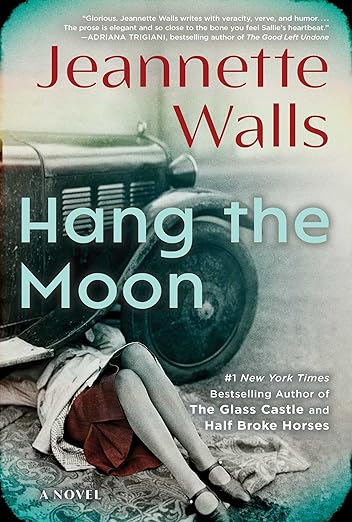
Previously, Ms. Walls has written autobiographical (The Glass Castle) and biographical (Half Broke Horses) books. This new book is a novel that follows the trials and tribulations of Sallie Kincaid in 1920s Virginia. At ages 17-20, Sallie has to deal with family secrets in rural areas dealing with the prohibition. There are conflicts between what is right and wrong, and legal and illegal. Sallie is both clever and quick, but how will she operate in a world that devalues women?
Category: Historical fiction
The Fraud – Zadie Smith
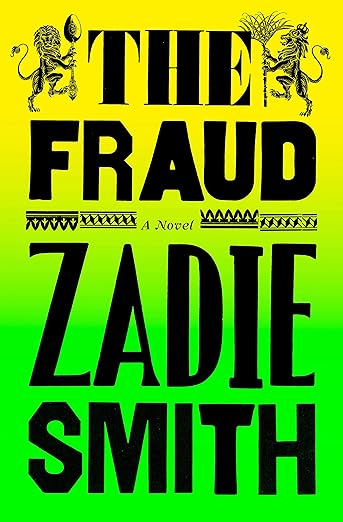
And now for something entirely different: Ms. Smith has written a fantastic novel of historical fiction. The central character, Mrs. Eliza Touchet, is an acid-tongued spinster with abolitionist views, who moves in with her cousin in the 1840s, the hapless writer William Ainsworth, and lives with him for the next 30 years. England is captivated by the Tichborne Affair, in which Arthur Orton, a lower-class butcher from Australia, claims to be Sir Roger Tichborne and thus heir to a sizable estate (ant title). His outrageous claim results in two lengthy trials where a Black Jamaican, Andre Bogle, supports the claim. What is truth in a world of hypocrisy and self-deception? Overall, the writing is rich and detailed, a joy to read.
All The Colour In The World – CS Richardson
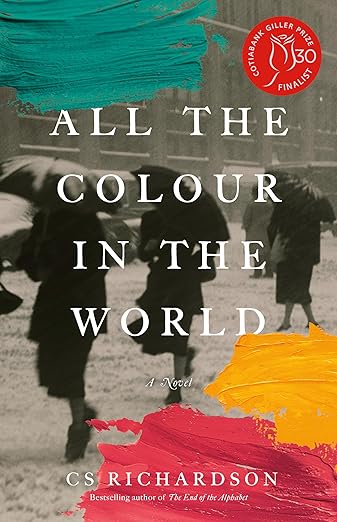
Henry is born in 1916, and raised by a Shakespeare-quoting grandmother. His artistic talent is colouring and copying which leads him to art history. Marriage to Alice ends with a tragic accident and a disastrous war experience leads to PTSD. Best of all, art and history permeates Richardson’s writing: Giller short-listed and highly recommended.
The Mountains Sing – Nguyen Phau Que Mai
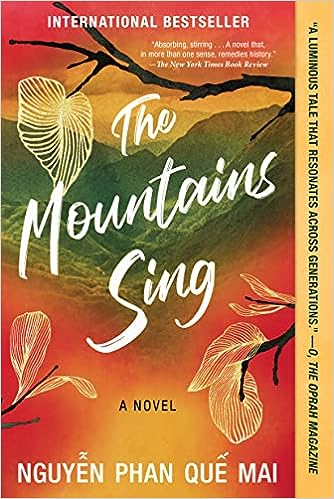
A sweeping saga of Viet Nam told as stories a grandmother tells her granddaughter. The context is the North, mainly from the 1930s to the 80s. Conflicts abound: internal (north versus south) and external (French, Japanese, American influences). But at its core, this story is about the extreme actions a mother takes to ensure survival of her children.
The Paris Bookseller – Kerri Maher
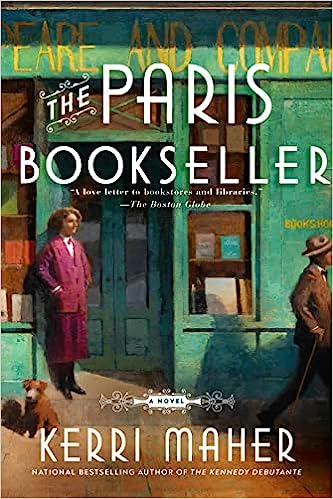
The cover of this book of historical fiction/fact has the phrase: “a love letter to bookstores and libraries” – enough said! This is the story of Sylvia Beach, an American who opens an English language bookstore in Paris in 1920, called Shakespeare And Company. Ms. Beach acquires fame and notoriety by publishing James Joyce’s Ulysses in 1922. Insight into her motivations and candid descriptions of the many writers who frequent her store makes this a treasure to read.
The Girl In His Shadow – Audrey Blake

Nora is a young woman in 1845, a cholera survivor. As the ward of the talented and eccentric Victorian surgeon Dr. Horace Croft, Nora acquires forbidden medical knowledge. But despite her impressive abilities and skills, she will be both persecuted and prosecuted if she is caught practicing medicine. Much like Fayne, the treatment of women at this time is abysmal. Thanks Elliott, for this recommendation.
Fayne – Ann-Marie MacDonald
Full disclosure: this sweeping sage is long (722 pages) but Ms. MacDonald’s exquisite writing makes the reading very worthwhile. The setting: Fayne, an estate straddling the border between England and Scotland. The time: late 19th century. The main players: Lord Henry Bell and wife Mae, and children Charles and Charlotte. The story is rife with family secrets, with cruelty and cowardice in male-female and father-child relationships. A shifting timeline accentuates the drama: highly recommended.
PS: A-MM wrote the wonderful Fall On Your Knees a long time ago.
The Weight of Ink – Rachel Kadish
Be advised: this sweeping story of historical fiction is long (652 pages) but exquisite writing creates a literary mystery. In 2000 in England, an elderly female historian with Parkinson’s and an American graduate student are asked to evaluate a newly discovered cache of Jewish documents from the 1660s, the writings of the blind Rabbi HaCoen Mendes and his scribe Aleph. Eventually, Aleph is discovered to be a woman, Ester Velasquez. There are two critical tensions in this book. First, what are the prospects for a Jewish woman more than 300 years ago in London? Is there a brief bloom of intellectual freedom or is there a longer lasting consequence of a hunger for knowledge and learning? And second, the description of contemporary academic politics is vicious and compelling. This is an astonishing novel about a quest for knowledge: highly recommended.
The Dickens Boy – Thomas Keneally
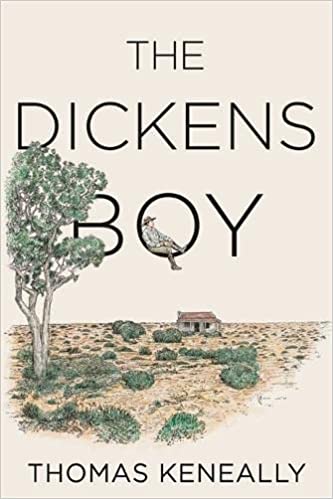
The acclaimed author of Schindler’s List and The Daughters of Mars (just 2 of his 33 books) has turned his attention to his Australian homeland. Edward Dickens, the 10th and youngest child of his father Charles Dickens, travels to Australia in 1868 at age 16 to make something of himself in the outback. What follows is written with impeccable detail of the following two years: sheep shearing and cricket, encounters with Aboriginals (darks), colonialists and criminals. Very entertaining.
 What David Read